

Blog
Rubber Sole Sheets Explained: Durability, Applications and How to Choose the Right Type for Footwear Manufacturing

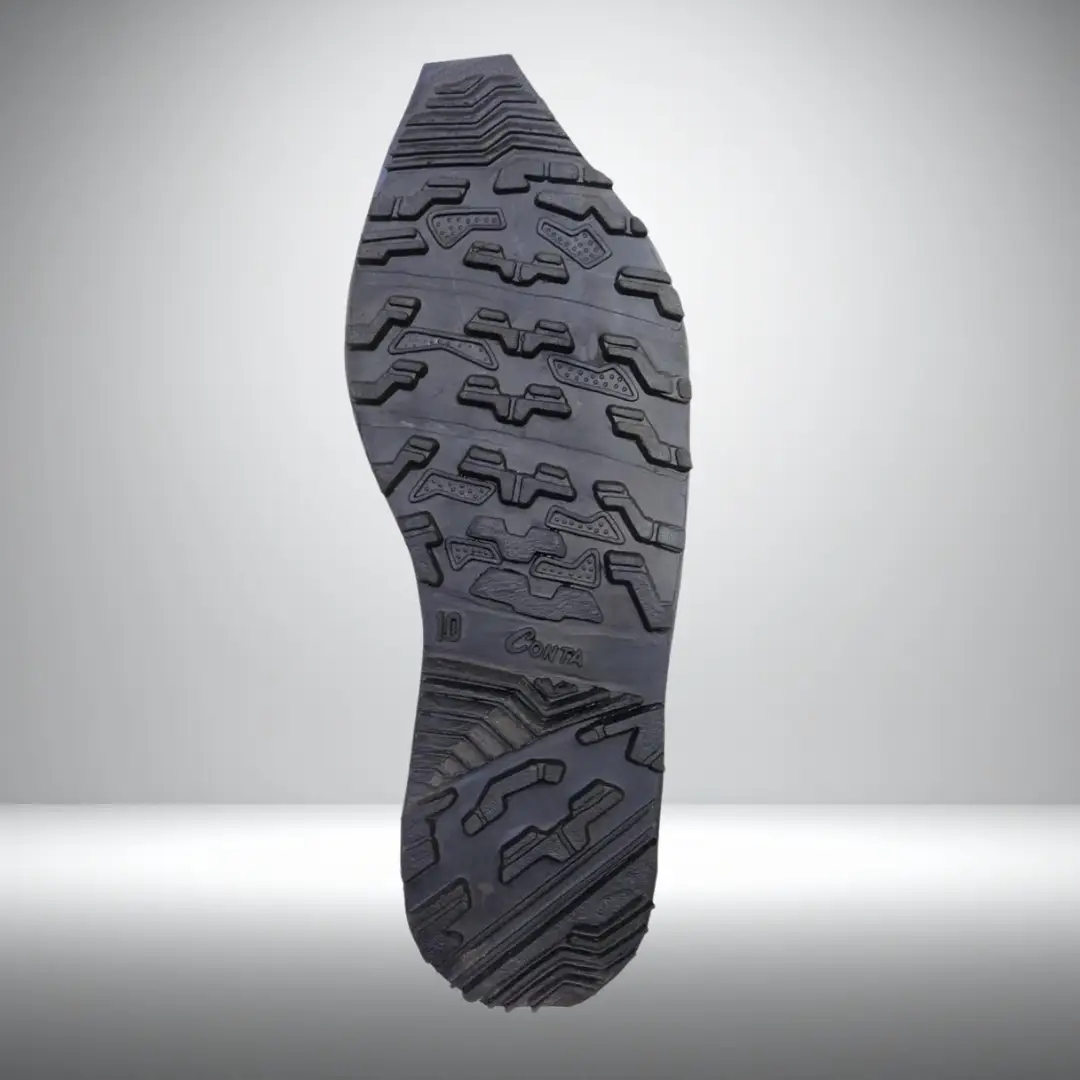
Despite lighter and cheaper alternatives dominating mid-market footwear, rubber sole sheets remain the benchmark specification wherever durability, traction, and long-wear performance cannot be compromised. Safety footwear, formal dress shoes, premium outdoor footwear, school shoes, and the shoe repair industry all rely on rubber sheet because nothing else matches its abrasion resistance, mechanical strength, and ground-contact grip at the densities and thicknesses the outsole demands.
But “rubber sole sheet” is not a single specification. Different zones of the shoe are subject to different stress patterns, and each zone requires a different rubber sheet type, different compound grade, and different thickness range. Specifying the wrong type — or treating all rubber sheets as interchangeable — leads to premature wear, bonding failures, and unnecessary sourcing cost. This guide explains the three rubber sheet types Weston Rubber Industries manufactures, what makes each one right for its specific application zone, and what to demand from a supplier before placing an order. You can explore the full range at Weston Rubber’s rubber sheet range.
What Are Rubber Sole Sheets? Definition, Composition and Why They Outperform Alternatives
Rubber sole sheets are flat sheets of vulcanized rubber — manufactured from natural rubber, synthetic rubber, or engineered compound blends — supplied as raw material for cutting, die cutting, press moulding, or CNC machining into outsole and sole component applications. They are dense, solid material: no foam structure, no cellular air pockets. That density is precisely what gives them their performance advantage over EVA and TPR in high-wear applications.
The three compound types each serve a distinct purpose. Natural rubber delivers the highest grip and flexibility — the traditional premium specification for dress and formal footwear. Synthetic rubber offers engineered consistency and chemical resistance — the specification of choice for safety and industrial footwear where oil resistance and environmental stability are requirements. Compound blends are formulated to specific performance targets, balancing hardness, abrasion resistance, and processing behaviour for the application at hand.
Hardness is measured in Shore A — the correct scale for solid rubber materials, not Asker C, which applies to foam. The Shore A specification determines how a rubber sheet will perform under the specific stress of its position in the shoe: the forefoot needs a softer, more flexible grade to resist fatigue cracking; the heel needs a harder, denser grade to withstand concentrated impact. Matching the Shore A specification to the application zone is the most important single decision in rubber sheet procurement.
Weston’s rubber sheets are available across three product types, each engineered for a specific zone of the shoe construction: rubber sole sheets for full outsole applications, rubber fore parts sheets for the forefoot zone, and rubber top lifts sheets for heel toplift construction.
Key Properties of Rubber Sole Sheets — Translated for Footwear Performance
The table below maps each rubber sheet property to its practical footwear outcome. One figure stands out as a benchmark: a DIN abrasion value of ≤150 cubic millimetres is achievable for heel toplift applications — a specific, verifiable performance standard that most generic rubber guides never cite, and that procurement managers specifying safety or formal footwear will recognise immediately.
| Rubber Sheet Property | What It Delivers in Footwear |
| Superior abrasion resistance | Longer sole lifespan — benchmark: ≤150 cu mm (DIN abrasion) achievable for heel applications |
| High mechanical strength | Withstands repeated impact and friction without deformation; essential for safety and work footwear |
| Flex resistance — no cracking | Resists splitting under continuous bending; critical for forefoot zone in high-movement footwear |
| Superior slip resistance | Reliable traction on concrete, tiles, and outdoor surfaces — the outsole benchmark for ground contact |
| Natural shock absorption | Reduces heel strike stress on the shoe structure; comfort without compromising outsole durability |
| Resistance to moisture, oils, temps | Consistent performance across environments; relevant for safety footwear compliance requirements |
| Shore A hardness — customisable | Matched to application zone: softer grades for forefoot flex, harder grades for heel wear resistance |
| Surface texture options | Functional grip patterns and aesthetic finishes available; customisable per design requirement |
Two properties deserve particular attention for procurement teams deciding between rubber and alternative materials for outsole applications. The first is flex resistance: unlike EVA foam, which compresses permanently under sustained load, and TPR, which can soften under elevated temperatures, vulcanized rubber resists both cracking under continuous bending and deformation under thermal stress. The forefoot zone of a shoe flexes thousands of times per day — a material that cracks at that zone creates both a comfort failure and a warranty liability. The second is slip resistance: rubber’s surface grip on smooth, tiled, polished, and outdoor surfaces is not matched by EVA or TPR at equivalent outsole thicknesses. For any footwear specification that includes a slip-resistance test or rating, rubber sheet is the baseline material.
The Three Types of Rubber Sheets for Footwear: Sole, Fore Parts and Top Lifts
Most rubber sheet guides treat all rubber sheets as a single category. The reality in footwear manufacturing is that different zones of the shoe sole are subject to fundamentally different stress patterns — and each zone benefits from a sheet specifically engineered for its position. The table below summarises the three types before each is covered in detail.
| Criterion | Rubber Sole Sheet | Fore Parts Sheet | Top Lifts Sheet |
| Shoe zone | Full outsole — entire ground-contact surface | Forefoot only — front third of sole | Heel only — strike zone contact |
| Primary stress | Distributed wear across full sole area | Continuous flexing + high friction | Concentrated impact at heel strike |
| Key spec | Compound grade + Shore A + surface texture | Flex resistance + abrasion grade | High density + ≤150 cu mm abrasion |
| Thickness | Multiple — per outsole design requirement | Multiple — per forefoot construction | 3mm to 7mm standard |
| Sheet size | Custom per order | Custom per order | 24” × 36” standard |
| Best footwear | Formal, casual, safety, outdoor, sport | Formal, casual, safety, school | Formal, dress, fashion, repair |
| Processing | Die cut, press mould, CNC, buff | Die cut, press mould, CNC, buff | Die cut, press mould, CNC |
Rubber Sole Sheets — Full Outsole Construction
Rubber sole sheets are the most broadly used of the three types — a full-coverage outsole sheet from which manufacturers cut complete soles or large sole sections. They cover the entire ground-contact surface of the shoe, experiencing distributed wear, friction, and impact across the full footprint. The compound grade and Shore A specification are the primary performance levers: a softer compound for flexible casual footwear; a harder, abrasion-engineered compound for safety and work footwear where outsole longevity under continuous use is a specification requirement. Surface texture — from smooth dress finishes to patterned grip designs — is available across the range.
Rubber Fore Parts Sheets — Forefoot Zone
Rubber fore parts sheets are specifically engineered for the forefoot area of the shoe — the front third of the sole, from just behind the ball of the foot to the toe. This zone experiences the highest rate of flexing in the shoe construction: every walking stride involves a flex cycle at this point, creating a compounding stress load that inferior materials fail through cracking or delamination. The compound formulation for fore parts sheets prioritises flex fatigue resistance without sacrificing abrasion performance, since the forefoot also makes high-friction contact with the ground during the push-off phase of the stride. Available in multiple Shore A hardness levels, surface textures, colours, and thicknesses, fore parts sheets are the standard specification for formal, casual, safety, and school footwear where forefoot durability is a defined product life requirement.
Rubber Top Lifts Sheets — Heel Strike Zone
Rubber Top Lifts Sheets — Heel Strike Zone
Rubber top lifts sheets are high-density rubber sheets engineered specifically for heel toplift applications — the portion of the heel that makes direct, concentrated contact with the ground at every step. The heel strike zone receives the highest impact load concentration of any part of the outsole, and the material here wears faster than anywhere else in the shoe. Weston’s top lifts sheets achieve a DIN abrasion value of ≤150 cubic millimetres — a formally measurable wear resistance benchmark that validates the compound’s performance for this demanding application. Available in 3mm to 7mm thickness and supplied in a standard 24″ × 36″ sheet size, they support both production cutting and repair/resoling operations. Compatible with die cutting, press moulding, and CNC machining for precise heel shape production.
| Specification tip: matching sheet type to shoe zoneMany footwear constructions use more than one rubber sheet type in the same shoe — for example, a fore parts sheet at the ball of the foot and a top lifts sheet at the heel, with an EVA midsole between them and an upper material above. Sourcing all rubber sheet types from a single manufacturer ensures compound consistency, matching colour between zones, and a single quality documentation set for compliance purposes. |
Processing Rubber Sole Sheets: How Manufacturers Cut, Shape and Finish Components
A rubber sheet’s performance in production depends not just on its compound quality but on how consistently it processes across the full range of manufacturing methods used in footwear sole production. Weston’s rubber sheets are engineered for four standard processing methods — each relevant to different production contexts and component geometries.
Die cutting
The fastest processing method for high-volume, consistent-geometry components. A steel-rule die pressed into the sheet produces a clean-edged component in a single stroke. Rubber’s mechanical consistency across the sheet surface ensures predictable cut quality — no deformation at the cut edge, consistent dimensions across large production runs. Suited to sole and fore parts sheet production at volume where component geometry is standardised.
Press moulding / compression moulding
Produces shaped, contoured components under heat and pressure. Used where the sole or heel component requires a profile that flat die cutting cannot produce — bevelled edges, textured surfaces, or three-dimensional heel shapes. Rubber’s thermal stability and compound uniformity ensure consistent moulded dimensions and surface finish across production batches.
CNC machining
Precision profiling for complex geometries, tight dimensional tolerances, and custom designs. Used in premium, orthopaedic, and architectural sole construction where die cutting’s fixed geometry is insufficient. Rubber’s consistent hardness across the sheet surface supports CNC machining without chatter, enabling clean edges and repeatable profiles across multiple sheets.
Buffing
Surface preparation for cement-bonded sole assembly. The bonding face of the rubber component is buffed to a controlled roughness profile before adhesive is applied — a step that directly affects the peel strength of the cemented joint between the outsole and the upper or midsole. Rubber’s compound consistency ensures that buffed surfaces achieve uniform roughness without removing excess material, maintaining component thickness tolerance.
| Why sheet consistency matters for processingTight thickness tolerance and uniform compound distribution across the sheet are not just quality metrics — they are production cost controls. Inconsistent thickness creates rework at the cutting stage. Compound variation causes bonding failures at assembly. Weston’s in-house quality control — material testing, process monitoring, pre-dispatch inspection — ensures the sheet consistency that makes all four processing methods predictable at scale. |
Footwear Applications: Which Categories Specify Rubber Sole Sheets?
Rubber sheet remains the specification of choice across a wide range of footwear categories — particularly wherever durability, traction, and long product life are part of the product brief. Here is how each category maps to the three rubber sheet types.
- Formal & dress footwear — all three rubber sheet types. Rubber’s premium feel, durability, and professional polish match the product tier. Top lifts sheets are critical for heel longevity in leather-soled dress shoes, where the heel is the first component to wear visibly and the one most associated with product quality in the consumer’s perception.
- Safety & work footwear — sole sheets and fore parts sheets primary. Rubber’s oil resistance, slip-resistance credentials, and abrasion performance justify its cost premium over lighter alternatives in categories where outsole failure has safety implications. Compound grade selection is critical: synthetic rubber or engineered compounds for chemical and oil resistance; tested Shore A values for slip-resistance certification.
- Casual & everyday shoes — sole sheets and fore parts sheets at mid-range hardness. Volume production where durability is valued but not at safety-spec compound cost. Die cutting at scale; compound grade balanced for cost and performance.
- School & uniform footwear — fore parts sheets most commonly specified. Children’s footwear experiences an exceptionally high rate of forefoot flexing — running, kneeling, jumping — and the forefoot flex zone is typically the first failure point. Rubber’s flex fatigue resistance makes fore parts sheets the preferred specification over TPR and EVA in this category.
- Women’s heels & fashion footwear — top lifts sheets primary. The heel strike concentration in heeled footwear is higher than in flat shoes — the contact area is smaller, so the impact force is distributed over less surface. High-density top lifts rubber, at the appropriate Shore A and in the 3–7mm thickness range, is the standard specification for heel longevity in this category.
- Outdoor & walking footwear — sole sheets; grip pattern and abrasion resistance are the dominant specification criteria. Natural rubber compound for maximum grip on natural terrain; synthetic or compound blends for all-weather surface performance.
- Shoe repair & resoling — all three types depending on the component being replaced. Repair operations require consistent compound quality to match original sole performance — a supplier with batch-to-batch compound consistency is critical here. Top lifts sheets, fore parts sheets, and sole sheets are all used in resoling and heel replacement services. The standard 24″ × 36″ top lifts sheet size supports efficient layout for repair shop cutting operations.
What to Look for When Sourcing Rubber Sole Sheets — and Why Weston Rubber Delivers It
Rubber sheet procurement decisions are made in detail — compound grade, Shore A value, thickness, surface texture, batch consistency, and supplier reliability all affect the quality of the finished component. Here is the checklist a procurement team should apply, and how Weston Rubber Industries meets each requirement.
- All three rubber sheet types from one facility. Sole sheets, fore parts sheets, and top lifts sheets — manufactured at Weston’s facility in Agra, India. Multi-type orders are handled under one quality system, one documentation set, and one dispatch process. Matching compound grades and colours across types are available for constructions that use more than one sheet type in the same shoe.
- Shore A hardness customisation across application zones. Weston’s rubber sheets are available across multiple Shore A hardness levels per sheet type. Grade selection is advised per application: harder compounds for heel wear resistance, softer compounds for forefoot flex, compound blends for specific performance or chemical resistance requirements.
- Compound grade options. Natural rubber, synthetic rubber, and engineered compound blends are available. Compound selection is advised based on the application category — formal footwear, safety, casual, repair — not applied as a single-grade default.
- Verified abrasion performance. For heel toplift applications, a DIN abrasion value of ≤150 cubic millimetres is achievable. This is a formally measurable, verifiable figure — not a marketing claim — and it supports specifications that include abrasion resistance as a product certification requirement.
- Dimensional specs. Top lifts sheets: 3mm–7mm thickness, 24″ × 36″ standard sheet size. Sole and fore parts sheets: multiple thicknesses per application requirement. Surface textures and colours customisable across all three types.
- Processing compatibility. All Weston rubber sheets are engineered for die cutting, press moulding, CNC machining, and buffing. Consistent thickness tolerances and uniform compound distribution across the sheet surface ensure predictable processing behaviour and low reject rates.
- In-house QC at every stage. Material testing, process monitoring, and pre-dispatch inspection verify compound uniformity, thickness tolerance, and surface consistency before any order is dispatched. Batch-to-batch consistency is the non-negotiable requirement for volume procurement and repair operations equally.
- 37+ years of rubber manufacturing expertise. Weston Rubber Industries has manufactured rubber soling materials since 1987. The compound knowledge accumulated across natural, synthetic, and engineered formulations over four decades translates directly into sheet consistency that newer or generalist suppliers cannot match.
FAQs: What Buyers Ask About Rubber Sole Sheets
What is the difference between rubber sole sheets, fore parts sheets, and top lifts sheets?
Each type is engineered for a specific zone of the shoe sole. Rubber sole sheets cover the full outsole — the entire ground-contact surface. Fore parts sheets are specifically formulated for the forefoot zone, where continuous flexing and high friction demand a compound that resists fatigue cracking without sacrificing abrasion performance. Top lifts sheets are high-density sheets for the heel toplift — the highest-impact zone of the sole, where concentrated heel-strike load demands maximum wear resistance. Using the wrong type for a given zone leads to premature wear or material failure.
What Shore A hardness should I specify for outsole vs heel applications?
For full outsole applications, the Shore A specification depends on the footwear category: softer grades for flexible casual footwear, harder grades for safety and work footwear where outsole longevity and oil resistance are requirements. For heel toplift applications, a harder, higher-density compound is the standard specification — the heel strike zone concentrates impact force on a small contact area, requiring a compound that resists abrasion rather than flex fatigue. Weston’s team advises on grade selection based on the specific application.
Are rubber sole sheets suitable for shoe repair and resoling?
Yes — and the repair and resoling segment is a distinct application for all three rubber sheet types. Top lifts sheets in the standard 24″ × 36″ size are particularly suited to repair shop cutting operations. The critical requirement for repair applications is compound consistency — the replacement sheet must match the original sole material’s Shore A hardness and surface texture to maintain the shoe’s original performance profile. Weston’s batch-to-batch compound consistency supports this requirement.
How is abrasion resistance measured for rubber sole sheets, and what is a good benchmark?
Abrasion resistance in rubber sole materials is typically measured using the DIN 53516 abrasion test (also referenced as ISO 4649), which measures material volume loss under a standardised abrading force. A lower value indicates better abrasion resistance. For heel toplift applications, a value of ≤150 cubic millimetres is a strong performance benchmark — achievable in Weston’s top lifts sheet formulations. For comparison, less durable rubber compounds typically measure significantly above this threshold.
Does Weston Rubber supply all three types of rubber sheets for footwear manufacturing?
Yes. Weston Rubber Industries manufactures and supplies rubber sole sheets, rubber fore parts sheets, and rubber top lifts sheets from a single facility in Agra, India. All three types are available with customisation across Shore A hardness, compound grade, thickness, surface texture, and colour. With 200+ repeat customers across India and overseas since 1987, Weston’s rubber sheet supply capability is proven at production scale for both OEM manufacturers and repair/resoling operations
Conclusion
Rubber sole sheets remain the durability benchmark in footwear sole construction — but the specification is never one-size-fits-all. The forefoot demands flex resistance; the heel demands concentrated impact endurance; the full outsole demands distributed wear resistance and grip. Each zone benefits from a sheet specifically engineered for its stress pattern, and sourcing the wrong type for any zone creates both a performance and a cost problem.
Weston Rubber Industries manufactures rubber sole sheets, fore parts sheets, and top lifts sheets from a single facility — with the compound knowledge, customisation capability, and quality control that 37+ years of rubber soling manufacturing delivers. Whether your brief covers a single sheet type or all three, the specification conversation starts with a quote.