

Blog
What Are TPR Top Lifts? Lightweight Heel Components for Mid-Market Footwear

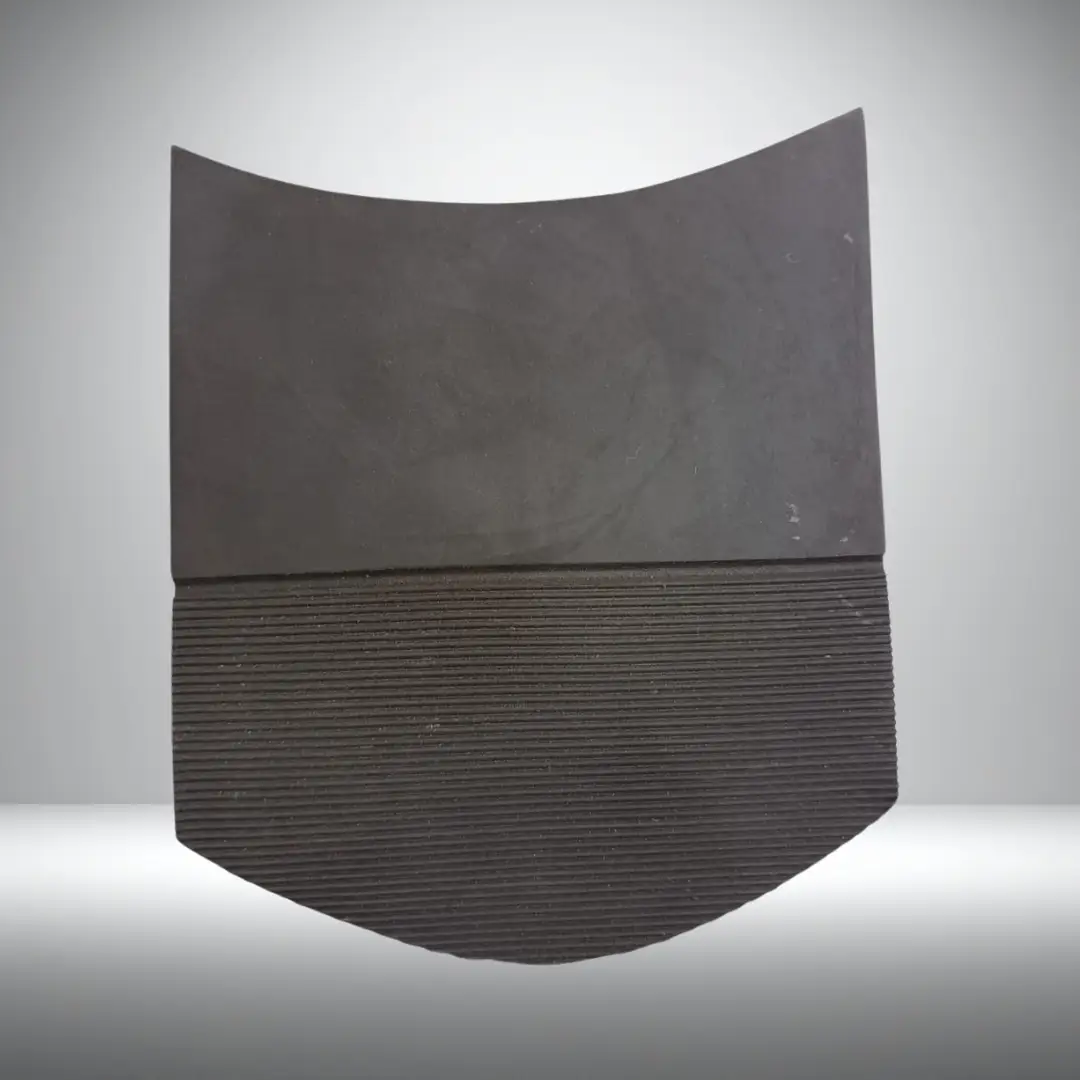
Here’s the question that comes up more often than you’d expect when buyers are specifying heel components: do I actually need rubber here, or am I over-engineering the spec?
For formal dress shoes and safety boots, the answer is usually rubber — the abrasion performance and material credentials justify it. But for casual footwear, school shoes, fashion heels, and mid-market volume production? Honestly, TPR top lifts do the job well. They’re lighter than rubber, they stay flexible in cold temperatures where rubber can stiffen, they’re recyclable, they bond cleanly, and they come in at a cost structure that makes sense for products at a mid-market price point.
This guide explains what TPR top lifts are, where they perform best, and how they compare to rubber top lifts when you’re deciding which spec is actually right for your brief. Weston’s TPR top lifts are finished, ready-to-attach heel components made in Agra, India, available in multiple Shore A grades, colours, and surface textures.
What Is a TPR Top Lift?
A TPR top lift is the outermost ground-contact layer at the bottom of a shoe heel — the component that strikes the ground first with every step. It’s manufactured from thermoplastic rubber, typically by injection or compression moulding, which produces precise dimensions and consistent quality across production runs. It arrives pre-shaped and ready to bond, nail, or stitch to the heel construction without any cutting or further processing on your end.
Thermoplastic rubber is what makes TPR top lifts behave differently from rubber in a few important ways. Unlike vulcanized rubber — which undergoes a permanent chemical cure and can’t be reprocessed — TPR is a block copolymer elastomer that maintains rubber-like elasticity at normal temperatures while remaining thermoplastic above its softening point. That’s what makes it recyclable. And because the polymer chains don’t cross-link the way vulcanized rubber does, TPR retains its flexibility at lower temperatures more reliably — which is a genuine performance difference in cold-climate applications.
The heel is the component that wears fastest in almost every shoe because it concentrates the highest impact force in the smallest contact area. TPR handles that concentrated stress well for the footwear categories it’s designed for. Where it trades against rubber is on abrasion resistance at the very high end — which is why rubber remains the spec for formal footwear, safety boots, and repair applications where material credentials and maximum wear performance are the brief. For everything else, TPR delivers what’s needed at a weight and cost that rubber doesn’t.
| The heel takes the highest impact in the smallest areaEvery stride concentrates the full weight of the body onto the heel contact point first — a smaller area than the forefoot. That’s why the heel wears out before the rest of the sole. The toplift compound determines how quickly that happens and how well the heel profile holds up through extended use. |
What TPR Actually Delivers at the Heel
Here’s the practical breakdown — what each property of TPR means for the heel component in a real shoe.
| What TPR does at the heel | What that means in practice |
| Good abrasion resistance | Holds up through daily heel strike without wearing down rapidly; appropriate for the application categories it’s specified for |
| Lighter than rubber | Less weight per component; relevant for overall shoe weight specs and for footwear that’s worn all day |
| Cold-temperature flexibility | Stays pliable in cold conditions; rubber can stiffen below ~5°C, TPR doesn’t — a genuine advantage for cold-climate markets |
| Consistent impact absorption | Cushions the concentrated heel strike force; balanced resilience that doesn’t compress permanently over time |
| Reliable grip on common surfaces | Tiles, concrete, polished floors — the surfaces most casual and everyday footwear actually encounters |
| Holds its profile under load | Doesn’t flatten or deform permanently; heel shape stays true through extended product life |
| Shore A hardness — customisable | Multiple grades matched to application; firmer for structured footwear, softer where comfort underfoot is the priority |
| Recyclable | Thermoplastic rubber can be remelted and reprocessed; useful for brands with sustainability requirements |
| Strong adhesive bonding | Bonds cleanly with standard footwear adhesives; no surface preparation complications in assembly |
| Colour and surface texture options | Full colour range and texture options; consistent across every production batch, not just samples |
The cold-temperature flexibility point is worth emphasising because it’s the TPR advantage that buyers in temperate markets often underestimate. If you’re producing for markets where winter temperatures drop significantly — Northern Europe, Central and East Asia, high-altitude regions — vulcanized rubber top lifts can stiffen noticeably in cold conditions, changing the feel of the shoe underfoot and, in harder compound grades, potentially developing micro-cracking over repeated cold-weather heel strikes. TPR doesn’t have this issue. Its elastomeric properties are more temperature-stable across the range most everyday footwear encounters.On Shore A: TPR top lifts are specified in Shore A — the correct scale for solid elastomers. Not Asker C, which applies to EVA foam. Weston supplies TPR top lifts across multiple Shore A grades. Firmer grades give the heel structural integrity under sustained load; softer grades are more comfortable for low-heeled casual footwear. The Shore A hardness guide gives the full footwear-specific breakdown if you’re unsure which grade range suits your application.
TPR or Rubber Top Lifts? The Honest Comparison
Weston makes both and sells both. So here’s the genuine picture — where each material has a real advantage at the heel, not a promotional one.
| TPR Top Lifts | Rubber Top Lifts | |
| Abrasion resistance | Good — suitable for casual/school/mid-market | Highest; DIN ≤150 cu mm achievable |
| Weight | Lighter | Heavier |
| Cold-climate flex | Stays flexible — clear advantage | Can stiffen in extreme cold |
| Impact absorption | Good; balanced resilience | Excellent; highest mechanical strength |
| Recyclable | Yes — thermoplastic | No — vulcanized rubber |
| Cost structure | Mid-market efficient | Higher; justified for premium and safety |
| Best categories | Casual, school, fashion, cold climate, OEM volume | Formal, dress, safety, premium, repair |
Go with TPR top lifts when:
- Casual, school, fashion, or lifestyle footwear is the category — TPR delivers sufficient heel durability at lower weight and cost
- Cold-climate markets are in scope — TPR stays flexible where rubber stiffens
- Weight is part of the shoe’s specification or the product’s selling point
- Recyclability is a requirement from retail partners or brand sustainability commitments
- OEM volume production at mid-market price points — TPR’s cost efficiency makes sense here
Go with rubber top lifts when:
- Formal, dress, or premium footwear is the brief — rubber’s abrasion benchmark (DIN ≤150 cu mm achievable) and material credentials justify the spec; see Rubber Top Lifts
- Safety footwear certification requirements specify rubber-grade abrasion performance
- You’re replacing a rubber toplift in a repair job and need compound match
Where TPR Top Lifts Actually Get Specified
The categories below are where TPR top lifts are commonly specified — and the specific reason TPR makes sense in each case.
Casual and everyday footwear
The highest-volume application for TPR top lifts globally. Casual shoes — trainers, loafers, everyday lace-ups, moccasins — need a heel component that holds up through months of daily use without the cost premium of rubber. TPR delivers good abrasion resistance for the surfaces and use patterns casual footwear actually encounters, at a lighter weight and a cost structure that fits the product’s price point. The profile stability over time is good: the heel doesn’t flatten or deform noticeably through a season of regular wear.
School and uniform footwear
School shoes take heavy heel impact — children walk and run more than most adult wearers, and the heel takes a disproportionate share of that. TPR top lifts hold up well for a full school year in most climates, at a cost that’s appropriate for school shoe budgets. The lighter weight is also a genuine benefit: children wearing heavy shoes all day experience more fatigue. And for cold-climate school footwear, TPR’s flexibility advantage over rubber in low temperatures matters in markets like Scandinavia, Russia, or highland South Asia.
Women’s heels and fashion footwear
This is an interesting category for TPR top lifts because high heels concentrate heel strike stress on an even smaller contact area than flat shoes — which you’d think would push the spec toward rubber. But in fashion footwear at mid-market price points, TPR is often the right call. The precision injection moulding process produces clean profiles and consistent dimensions that work well for shaped heel toplifts across a wide variety of heel styles. Colour options and surface textures are fully customisable, which matters in fashion contexts where the aesthetic of the toplift is visible. Rubber is the right call for premium or heritage footwear at this category; TPR is right for contemporary fashion heels at mid-to-accessible price points.
Cold-climate and all-weather footwear
If you’re producing for markets where winter temperatures drop below 5°C regularly, TPR top lifts are the practical choice over rubber. Natural rubber in harder Shore A grades can stiffen significantly in cold conditions — which affects the feel of the heel contact point underfoot and can eventually contribute to surface cracking through repeated cold-weather heel strikes. TPR maintains its elastomeric properties across a much wider temperature range, making it a genuinely better specification for cold-climate casual and school footwear.
Private-label and mass-market OEM production
For high-volume OEM production at mid-market price points, three things matter most: consistent quality across large batches, a cost structure that fits the product, and reliable supply scheduling. TPR injection moulding delivers on all three. The thermoplastic process produces highly repeatable dimensions and compound uniformity across very large production runs — which is the real value for a production manager managing volume OEM contracts where quality drift between batches creates rework and delays.
What to Look for in a TPR Top Lifts Supplier
The same principle applies here as with any heel component: the first batch is never the issue. What reveals a supplier’s actual quality discipline is batch six, twelve, twenty. For a heel component this visible, inconsistency between batches — in Shore A, colour, surface texture, or profile dimensions — creates a visible product quality problem.
- Shore A range with advised grade selection. Multiple grades available, matched to your application rather than defaulted. Firmer grades for structured footwear that needs heel integrity under load; softer grades for casual footwear where comfort underfoot is the priority.
- Precision moulding quality. Injection and compression moulding should deliver consistent dimensions and compound uniformity across every batch. Confirm this with sample validation across multiple production runs before volume commitment, not just initial approval.
- Colour and surface texture consistency across batches. Especially important for fashion footwear where the heel aesthetic is visible and batch colour drift is commercially damaging.
- Adhesive bonding compatibility. TPR top lifts should bond cleanly with standard footwear adhesives in normal assembly conditions. Weston’s TPR top lifts are confirmed for strong bonding compatibility without surface preparation complications.
- TPR and rubber from one facility. If your range uses rubber top lifts for formal lines and TPR for casual, sourcing both from Weston means one QC system, directly comparable compound specifications, and one supplier relationship to manage.
- In-house QC with batch documentation. Shore A consistency, dimensional tolerances, and compound uniformity verified before dispatch. Non-negotiable for OEM volume production; genuinely valuable for every buyer.
- 37 years of compound manufacturing. Weston has been producing TPR soling components since 1987. Process knowledge that takes decades to accumulate — it’s not something a newer supplier can replicate.
Questions People Ask About TPR Top Lifts
What is a TPR top lift?
A TPR top lift is the outermost ground-contact component at the bottom of a shoe heel — the layer that strikes the ground first with every step. It’s made from thermoplastic rubber, manufactured by injection or compression moulding, and arrives pre-shaped and ready to bond or nail to the heel construction without any further processing. TPR top lifts are lighter than rubber equivalents, maintain flexibility in cold temperatures, and are recyclable — making them the standard specification for casual, school, fashion, and mid-market footwear.
What’s the difference between TPR and rubber top lifts?
The main differences are abrasion resistance, weight, cold-temperature flexibility, and recyclability. Rubber delivers higher abrasion performance — the DIN ≤150 cu mm benchmark is achievable in rubber toplift compounds — and is the preferred spec for formal, dress, safety, and premium footwear. TPR is lighter, stays flexible in cold conditions where rubber can stiffen, and is recyclable. For casual, school, fashion, and mid-market categories, TPR typically delivers what’s needed without the cost premium of rubber.
Are TPR top lifts suitable for women’s heels?
Yes, for mid-market and fashion footwear at accessible price points. TPR injection moulding produces precise profiles and consistent dimensions that work well across different heel styles and shapes. Full colour and surface texture customisation is available, which matters in fashion footwear where the toplift is often visible. For premium or heritage dress heels where rubber’s material credentials and maximum abrasion performance are part of the product story, rubber top lifts are the stronger specification.
Why are TPR top lifts better than rubber for cold-climate footwear?
Vulcanized rubber — particularly in harder Shore A grades — can stiffen noticeably below around 5°C, changing the feel of the heel contact point and potentially contributing to micro-cracking through repeated cold-weather heel strikes. TPR’s thermoplastic elastomer structure maintains its flexibility and elastomeric properties across a wider temperature range, making it the more practical specification for footwear sold into cold-climate markets.
Does Weston Rubber supply TPR top lifts in custom Shore A grades and colours?
Yes. Multiple Shore A grades, full colour options, and surface texture customisation are all available. Grade selection is advised per application brief. OEM and bulk orders are supported with in-house QC, batch-to-batch compound verification, and reliable production scheduling from Weston’s Agra facility. Both TPR and rubber top lifts are available from the same facility, which simplifies sourcing for operations specifying both materials across their product range.
The Bottom Line
TPR top lifts aren’t the compromise option — they’re the right specification for a specific and very large range of footwear categories. Casual shoes, school footwear, fashion heels, cold-climate products, and mid-market OEM production are all better served by TPR than rubber at the heel: lighter, more temperature-stable, recyclable, and cost-efficient without meaningful performance sacrifice for those applications.
When the brief is formal footwear, safety boots, or repair work where rubber’s abrasion credentials matter, specify rubber. For everything else, TPR does the job well. Weston makes both from one facility — so whichever spec your range needs, start with a quote.