Rubber Top Lifts
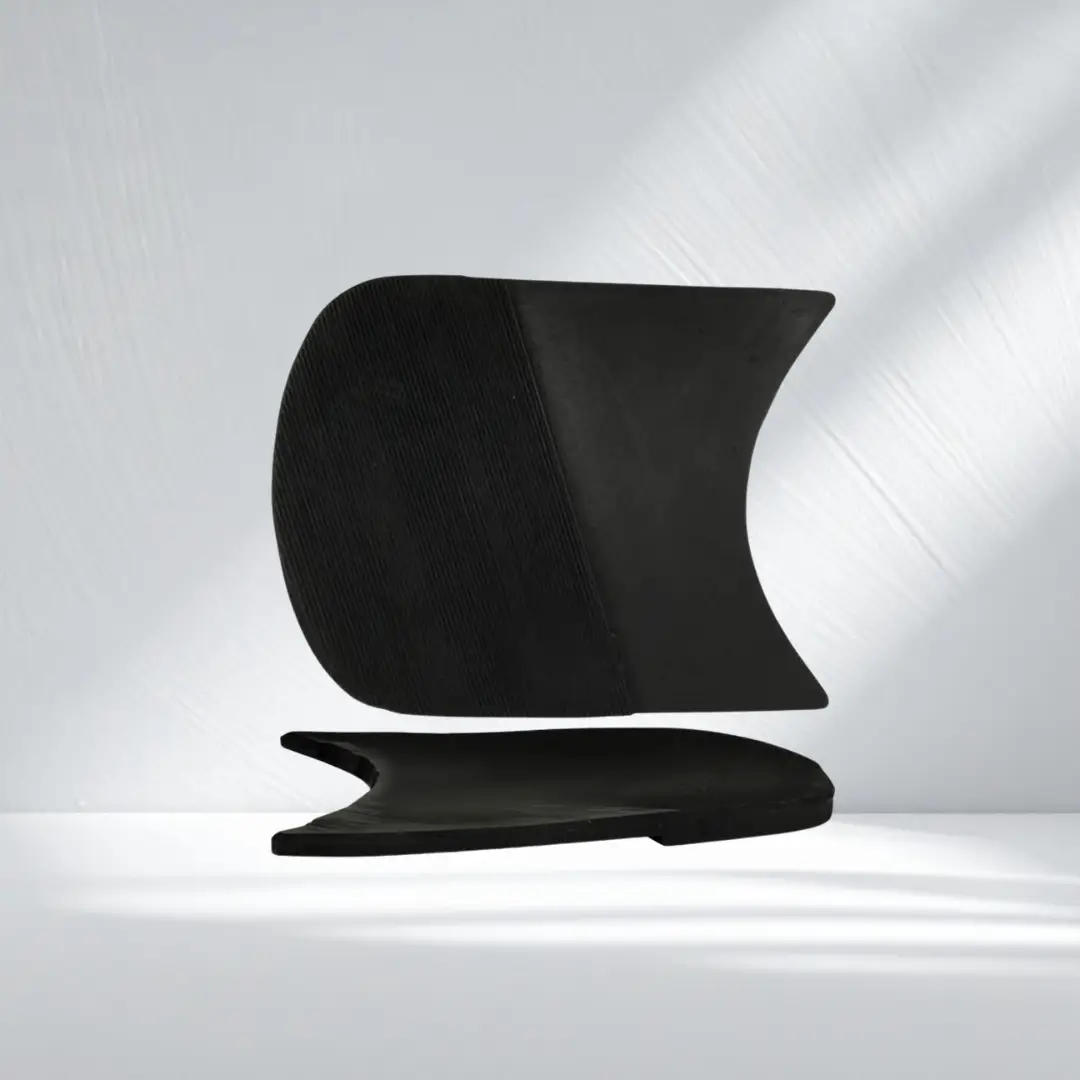
TPR top lifts are a modern footwear component designed to deliver durability, flexibility, and consistent traction at the heel contact point. Made from Thermoplastic Rubber (TPR), these top lifts combine the performance characteristics of rubber with the processing advantages of thermoplastics. For procurement officers, wholesalers, and footwear manufacturers, TPR top lifts offer a reliable, scalable, and cost-effective solution for heel reinforcement across multiple footwear categories.
What Are Rubber Top Lifts?
Rubber top lifts are the outermost heel layer of a shoe — the component that directly contacts the ground with every step. They are produced through compression or die-cutting processes from rubber compound sheets or blocks, and are formulated to resist abrasion, provide traction, and maintain structural integrity under continuous heel-strike impact. Available in standardized shapes or custom-cut dimensions, rubber top lifts are supplied as ready-to-bond components for direct assembly into shoe heels.
Manufacturers who prefer to cut top lifts in-house from raw material can also source our Rubber Top Lifts Sheets — supplied in flat sheet form specifically suited for heel component die-cutting and press operations.
Performance and Material Advantages
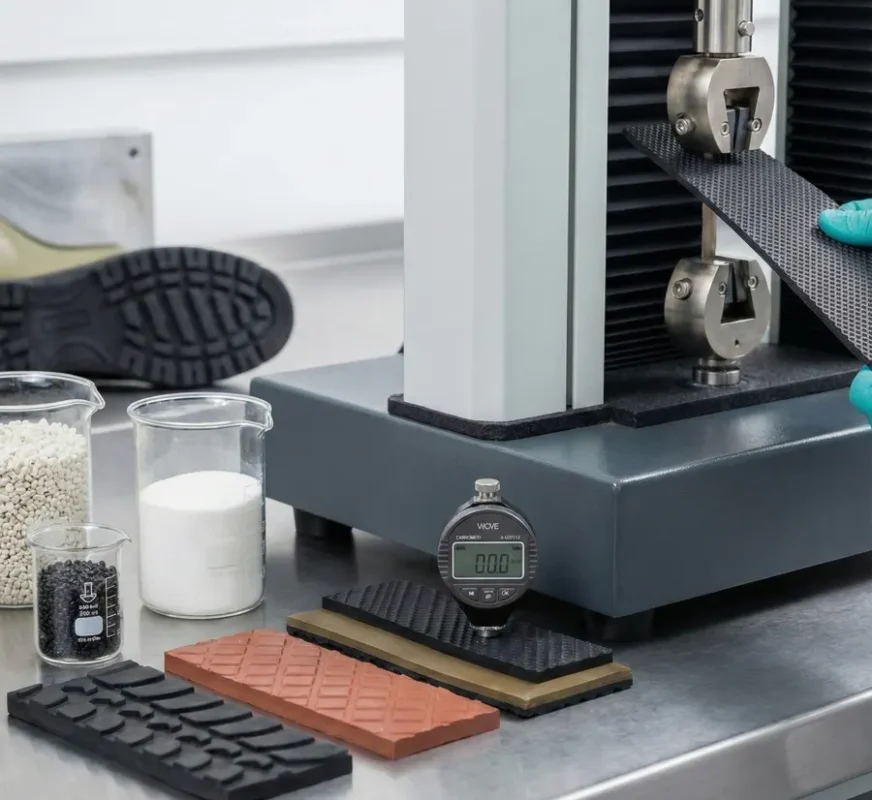
One of the defining advantages of rubber top lifts is their outstanding abrasion resistance — the heel is the highest-impact, highest-wear zone of any shoe, and rubber compound formulation is specifically optimised to extend component life under repeated ground contact. Natural and synthetic rubber compounds can achieve DIN abrasion values of ≤150 mm³, making them one of the most durable materials available for heel applications.
Rubber top lifts also deliver reliable slip resistance on tiles, concrete, polished floors, and outdoor surfaces — a critical safety feature in formal and occupational footwear. Their inherent elasticity provides effective shock absorption at heel strike, reducing stress on both the shoe structure and the wearer.
For manufacturers who want to understand how the ≤150 mm³ abrasion benchmark is measured and what it means for heel component durability, our guide on
One of the defining advantages of rubber top lifts is their outstanding abrasion resistance — the heel is the highest-impact, highest-wear zone of any shoe, and rubber compound formulation is specifically optimised to extend component life under repeated ground contact. Natural and synthetic rubber compounds can achieve DIN abrasion values of ≤150 mm³, making them one of the most durable materials available for heel applications.
Rubber top lifts also deliver reliable slip resistance on tiles, concrete, polished floors, and outdoor surfaces — a critical safety feature in formal and occupational footwear. Their inherent elasticity provides effective shock absorption at heel strike, reducing stress on both the shoe structure and the wearer.
For manufacturers who want to understand how the ≤150 mm³ abrasion benchmark is measured and what it means for heel component durability, our guide on DIN abrasion testing provides a full technical breakdown of the test methodology and performance thresholds.
provides a full technical breakdown of the test methodology and performance thresholds.
A Strategic Choice for Procurement
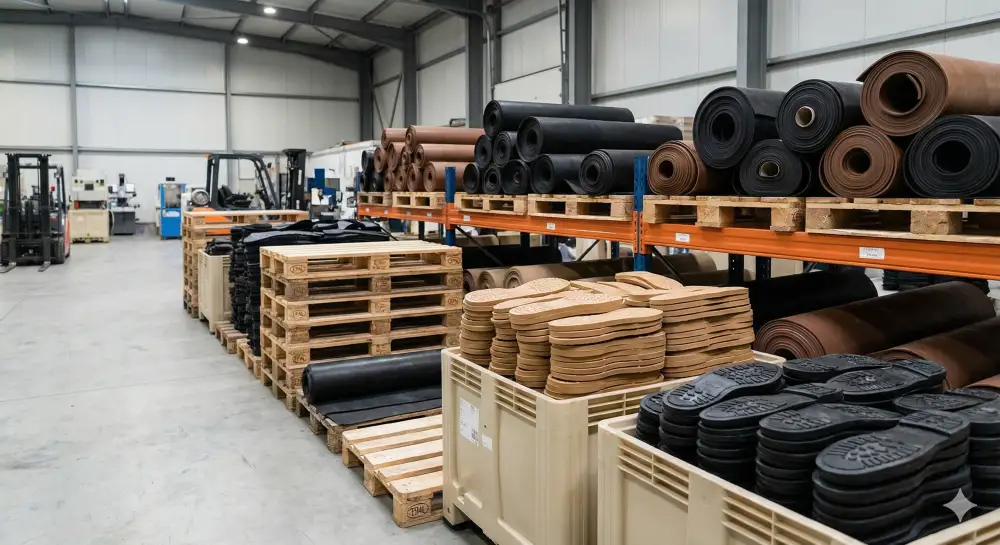
For procurement officers and bulk buyers, rubber top lifts offer a proven combination of durability, compound consistency, and supply reliability. Sourcing from an experienced rubber manufacturer ensures access to compound customisation, technical specifications, and scalable production — supporting efficient heel assembly operations and long-term footwear performance across markets.
Weston Rubber has manufactured rubber soling components for footwear producers across India and international markets since 1987. Overseas buyers can review our international supply page for details on export packaging, lead times, and order minimums. To explore the full range of rubber sole formats available — including blockers, fore parts, and sole sheets — visit the Rubber Soles category.
Manufacturing and Processing Efficiency
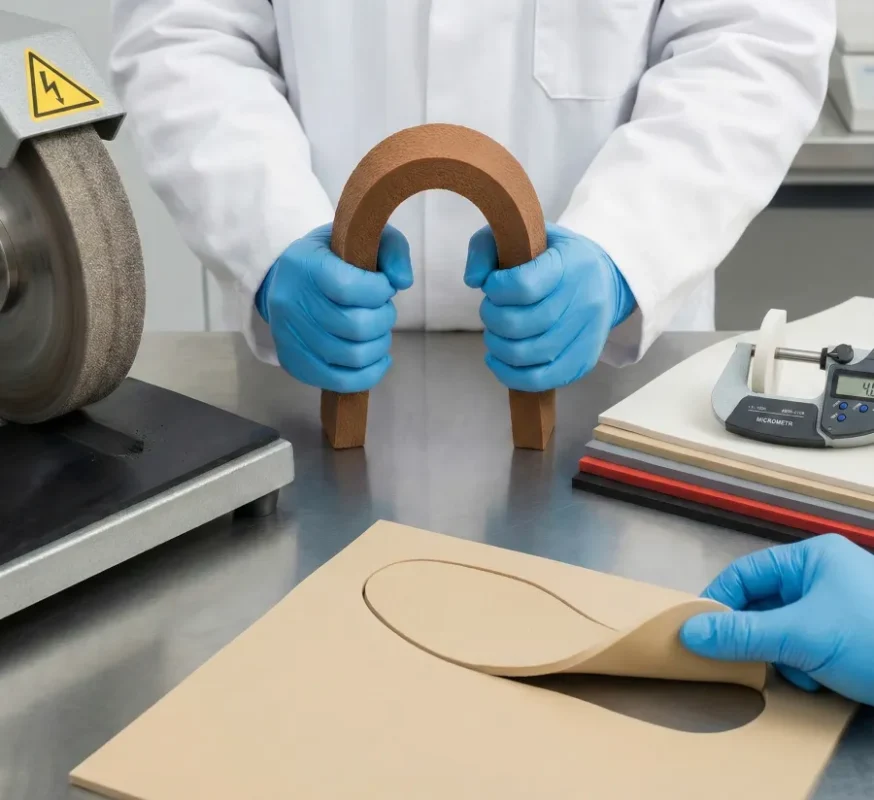
Rubber top lifts are available in a range of sizes, thicknesses, hardness levels (Shore A), and surface textures to match different heel geometries and footwear categories. They can be die-cut, buffed, or press-molded to precise dimensions, and are formulated for consistent compound distribution — minimising batch-to-batch variation and ensuring predictable bonding performance during assembly.
Buyers specifying hardness grades for rubber top lifts can refer to our Shore A hardness guide — which explains how hardness values affect impact absorption, wear resistance, and grip at the heel, and what Shore A ranges are typically used for formal versus heavy-duty footwear applications.
Applications Across Footwear Segments
Rubber top lifts are commonly used in:
- Formal and dress footwear
- Women's heels and fashion shoes
- Casual and everyday shoes
- Safety and industrial footwear
- School and uniform shoes
- Shoe repair and heel replacement applications
Their versatility across heel heights, widths, and sole constructions makes them suitable for both OEM manufacturing and aftermarket supply chains. For manufacturers producing complete sole assemblies that require matching forefoot coverage alongside heel protection, our Rubber Fore Parts are engineered from the same abrasion-resistant compound family — ensuring material consistency across both contact zones of the sole.
We offer flexible customization options to meet specific footwear manufacturing requirements. Products can be supplied in customized sizes, thicknesses, hardness or density levels, surface finishes, and color options based on application needs. Our production setup supports both standard specifications and tailor-made requirements for different footwear categories.
With scalable manufacturing capacity and controlled production processes, we are equipped to handle regular as well as high-volume OEM orders. All supplies are supported by in-house quality checks to ensure consistency, uniformity, and dependable delivery across production batches.
Supply Capability
Bulk and OEM manufacturing support
Consistent batch-to-batch quality
Reliable production scheduling
Secure packaging for safe transport