

Blog
Footwear Soling Components Explained: The Complete Guide to Soles, Fore Parts, Top Lifts, Blockers and Sheets

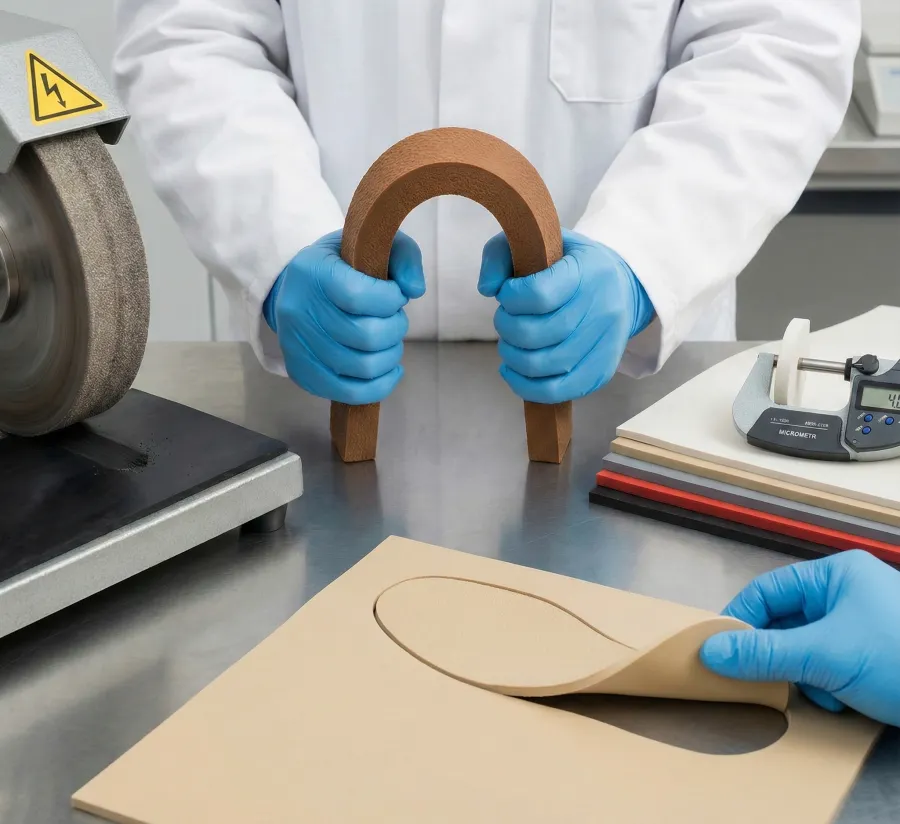
Every shoe you’ve ever worn has a sole construction built from multiple components — each with a specific name, a specific position in the shoe, and a specific performance function. Yet most procurement teams and product developers working in footwear know some of the vocabulary without knowing all of it: they know what a midsole is, but aren’t sure how it relates to the outsole. They know they need a “top lift” without being certain how it differs from a fore part. They know they need rubber, but aren’t sure whether to order a finished component, a sheet, or a block.
This guide maps the entire soling component taxonomy in one place — for buyers at every experience level. Whether you’re a production manager writing a specification, a procurement officer onboarding a new supplier, or a brand team trying to understand what’s actually in your product, this is the reference you’ll use repeatedly. Weston Rubber’s full soling range covers every component type described in this guide — across EVA, rubber, TPR, and cork, in finished, sheet, and blocker formats — from a single manufacturing facility in India.
Anatomy of a Shoe Sole: The Three Zones Every Specification Covers
Before examining individual components, it helps to establish the spatial framework that defines every sole construction. A shoe sole is not a single layer — it is a layered system, each layer occupying a specific zone and performing a distinct function. Understanding that framework makes every downstream specification decision clearer.
Layer 1: The outsole (ground-contact layer)
The outsole is the lowest layer of the shoe — the surface that contacts the ground. It bears the full load of the foot with every step and is the primary determinant of grip, abrasion resistance, and outsole longevity. Within the outsole, two sub-zones have distinct performance requirements. The forefoot zone (fore part) — the front third of the outsole from the ball of the foot to the toe — experiences the highest frequency of flex cycles during walking and running. The heel zone (top lift) — the back portion of the outsole that strikes the ground first — experiences the highest concentration of impact force. These two zones can use the same or different materials, compounds, and component types depending on the shoe’s construction and performance requirements.
Layer 2: The midsole (cushioning layer)
The midsole sits between the outsole and the upper — the primary shock absorption and energy return layer in the shoe. In modern footwear, the midsole is almost always EVA-based: its foam structure delivers the cushioning performance and light weight that no solid material can match. The midsole is one of the most technically specified components in athletic and comfort footwear, with density, hardness, and rebound characteristics all variables in the specification.
Layer 3: The insole and footbed (interior comfort layer)
The insole (or footbed) is the surface the foot rests on inside the shoe. It contributes to comfort, moisture management, thermal regulation, and in orthopaedic applications, pressure distribution and arch support. Materials range from basic EVA foam to cork-based footbeds that offer natural antimicrobial properties and a personalised fit that develops with wear.
| Why zones matter for sourcingA sole specification is never a single-material decision. Each zone has different stress patterns, different performance requirements, and often different material and hardness specifications. A shoe that uses the same compound for the forefoot, heel, and midsole is almost certainly over- or under-specified in at least two of those zones. Understanding the zones before specifying the components is the single most important step in accurate sole procurement. |
The Three Supply Formats: Finished Components, Sheets and Blockers
Every soling component can be supplied in one of three formats — and choosing the right format for your production workflow is as important as choosing the right material. This is one of the most common sources of procurement errors in footwear manufacturing: ordering a sheet when you need a finished component, or a blocker when your operation has no cutting capability.
| Criterion | Finished component | Sheet | Blocker |
| Processing needed | None — bond or stitch | Partial — die cut / laminate | Full — saw / CNC / skive |
| Dimensional flex | Fixed to pre-made size | Medium | Maximum |
| Material yield | Optimised at source | Medium | Highest |
| Equipment required | Bonding / assembly only | Die cutting / press | Band saw / CNC / skiving |
| Best for | Assembly-line operations | High-volume flat production | Custom profiles; max yield |
Finished components are the right choice for brands and manufacturers whose production workflow involves bonding or stitching pre-shaped parts. They eliminate in-house processing but constrain you to the dimensions and profiles available from the supplier. Sheets suit high-volume flat-geometry production where die cutting is standard equipment. Blockers deliver the maximum material yield and dimensional flexibility for manufacturers with in-house band saw, CNC, or skiving capability — and are the preferred format for custom profile production, resoling operations, and non-standard sole geometries. For a full explanation of the blocker format, see the dedicated guide: What Are Shoe Blockers?
Soles and Outsoles: The Ground-Contact Layer
The outsole is the starting point of most sole specifications. It is the most visible part of the sole construction, the primary determinant of traction and durability, and the component that most directly affects how long the shoe will last and how safe it will be in use.
EVA soles
EVA outsoles and midsoles are the dominant specification in lightweight, cushioned, and cost-sensitive footwear. The material’s closed-cell foam structure makes it the lightest of the three mainstream outsole materials, and its energy-absorbing properties make it the standard midsole specification in athletic footwear globally. For outsole applications, EVA suits flat casual footwear, sandals, slippers, and lifestyle shoes where traction demands are moderate. For deep-dive guidance, see the EVA sheets guide. Weston supplies EVA soles, EVA sole sheets, and EVA blockers.
Rubber soles
Rubber remains the outsole material of choice wherever abrasion resistance, grip, and long-term durability are non-negotiable requirements. Safety and work footwear, formal and dress shoes, outdoor and walking footwear, and the shoe repair industry all rely on rubber outsoles as the performance benchmark. Rubber’s superior mechanical strength and slip resistance — measured in Shore A hardness and verifiable against standards including DIN abrasion testing — cannot be matched by foam or thermoplastic alternatives in high-wear categories. For full guidance, see the rubber sole sheets guide. Weston supplies rubber sole sheets and rubber blockers.
TPR soles
Thermoplastic Rubber soles occupy the cost-performance middle ground — lighter than rubber, more durable than EVA for outsole applications, and the best of the three for cold-temperature flexibility. TPR is the dominant outsole specification in mid-market casual, school, lifestyle, and mass-market footwear. Its recyclability is a growing advantage for brands navigating sustainability requirements. For full guidance, see the TPR soling material guide. Weston supplies TPR blockers for custom component production.
Fore Parts: The Forefoot Zone Component
A fore part is the outsole component covering the front third of the shoe sole — from just behind the ball of the foot to the toe. In many footwear constructions, particularly formal, safety, and school shoes, the forefoot is a separate component from the heel, allowing each zone to be specified independently for its specific stress profile.
The forefoot is the highest-frequency flex zone in the shoe. Every walking stride involves a flex cycle at the ball of the foot — and in footwear worn for extended periods, that adds up to thousands of flex cycles per day. The fore part compound must resist fatigue cracking under this continuous bending stress without sacrificing surface grip. This is a different requirement from the heel, which needs impact concentration resistance rather than flex fatigue resistance — and it is why using the same compound for both zones can be a specification compromise.
- Rubber fore parts: highest durability and abrasion resistance; the standard specification for formal, safety, and work footwear. Weston supplies finished rubber fore parts and rubber fore parts sheets for die-cut production.
- TPR fore parts: balanced flexibility and durability; the specification for casual, school, and lifestyle footwear where cold-temperature performance is relevant. Weston supplies finished TPR fore parts.
Top Lifts: The Heel Component That Defines Shoe Longevity
A top lift is the ground-contact component at the bottom of the heel — the surface that strikes the ground first at every step. Despite being one of the smaller components in the shoe, the top lift is disproportionately important to product longevity: the heel strike concentrates impact force on a small contact area, creating wear stress significantly higher than anywhere else in the outsole. In virtually every shoe with a defined heel, the top lift is the first component to show visible wear — and the one most associated with product quality in the consumer’s perception.
For formal, dress, and fashion footwear, this makes top lift compound and quality a brand signal as much as a performance requirement. For safety and work footwear, it is a direct durability specification. For the shoe repair and resoling industry, top lifts are the most frequently replaced component — making consistent compound quality the critical supplier requirement for that buyer segment.
- Rubber top lifts: highest abrasion resistance; DIN abrasion ≤150 cu mm achievable; the specification for formal, dress, safety, and repair applications. Weston supplies finished rubber top lifts and rubber top lifts sheets (3mm–7mm; 24″ × 36″).
- TPR top lifts: lighter and more cost-effective; the specification for casual and everyday footwear. Weston supplies finished TPR top lifts.
Blockers: The Raw Material Format for Custom Component Production
A blocker is not a component type — it is a supply format. EVA blockers, rubber blockers, and TPR blockers are three-dimensional blocks of raw material designed for in-house processing: band saw cutting, CNC machining, die cutting, or skiving into any sole component the manufacturer requires. The block format offers the maximum dimensional flexibility of any supply option, and the highest material yield for operations with cutting capability.
The three blocker materials serve distinct applications. EVA blockers (foam) are the format of choice for midsoles, insoles, and cushioned flat sole components. Rubber blockers (solid) suit outsoles, heels, and safety/formal footwear components where abrasion resistance and grip are primary. TPR blockers (thermoplastic rubber) cover outsoles, heels, and mid-market component production where cost-performance balance and recyclability are considerations.
Weston supplies all three. For the complete guide to blocker types, processing methods, and the decision framework for specifying blockers over sheets or finished components, see the dedicated article: What Are Shoe Blockers? EVA, TPR and Rubber Blockers Explained.
Midsoles and Footbeds: The Comfort and Support Layer
Above the outsole and below the upper, the midsole and footbed layers determine the shoe’s comfort profile — cushioning, thermal regulation, moisture management, and orthopaedic support.
EVA midsole sheets
EVA midsole sheets are the dominant midsole specification in modern footwear across athletic, casual, comfort, safety, and orthopaedic categories. Their closed-cell foam structure delivers shock absorption and energy return that no solid material matches at equivalent weight. Available in 3mm–35mm thickness, with fully customisable tapered profiles and three quality grades (EW, ES, LS), EVA midsole sheets are the most technically specified item in most footwear constructions. For full guidance, see the EVA sheets guide. Weston supplies EVA midsole sheets.
Cork footbeds and cork sheets
Cork is the premium natural footbed specification — the only footbed material that simultaneously offers thermal regulation in both directions, natural antimicrobial properties, moisture wicking, mouldability to the individual foot over time, and genuine sustainability credentials. Cork footbeds are available in Normal grade (rubber-blended, economical) and BS grade (latex-blended, premium textured finish). For brand teams building a sustainable product range, cork footbeds offer verifiable environmental credentials that EVA foam cannot match. For full guidance, see the cork material guide. Weston supplies finished cork footbeds and cork sheets (3mm–8mm; tapered profiles available).
Performa, lightweight, and Tunit sheets
For constructions that require lighter-weight performance characteristics beyond standard EVA, Performa/Lightweight/Tunit sheets offer specialist midsole and sole overlay material options — designed for specific weight-reduction and performance applications where standard EVA grades are not the optimal specification.
The Complete Soling Component Reference: Every Type, Material and Format at a Glance
The table below maps every soling component type covered in this guide against its position in the shoe, available materials, supply formats, and the relevant Weston product. Use it as a reference when writing a specification, evaluating a supplier range, or onboarding new production staff.
| Component | Shoe zone | Materials | Supply formats | Weston product |
| Outsole / Sole | Full ground-contact layer | EVA · Rubber · TPR | Finished · Sheet · Blocker | EVA SoleEVA Sole SheetRubber Sole SheetsEVA / Rubber / TPR Blockers |
| Fore Part | Forefoot — highest flex zone | Rubber · TPR | Finished · Sheet | Rubber Fore PartsTPR Fore PartsRubber Fore Parts Sheets |
| Top Lift | Heel — highest impact zone | Rubber · TPR | Finished · Sheet | Rubber Top LiftsTPR Top LiftsRubber Top Lifts Sheets |
| Midsole | Between outsole and upper | EVA (primary) | Sheet · Blocker | EVA Midsole SheetEVA Blockers |
| Insole / Footbed | Interior — underfoot layer | Cork · EVA | Finished · Sheet | Cork FootbedsCork SheetsEVA Sole Sheet |
| Blocker (EVA) | Raw material — any position | EVA | Block for processing | EVA Blockers |
| Blocker (Rubber) | Raw material — any position | Rubber | Block for processing | Rubber Blockers |
| Blocker (TPR) | Raw material — any position | TPR | Block for processing | TPR Blockers |
| Lightweight sheet | Midsole / sole overlay | Performa / Tunit | Sheet | Performa / Tunit Sheets |
| How to use this tableRead across the row for each component you need. The ‘Supply formats’ column tells you what to order; the ‘Materials’ column tells you what it can be made from. If you’re unsure which format suits your production capability, refer back to the format comparison table in Section 02. If you need deeper guidance on any specific component or material, follow the Weston product links — each one leads to a dedicated product page or published guide. |
Why Footwear Manufacturers Source Their Full Component Range from Weston Rubber
Every component in the master reference table above is available from Weston Rubber Industries. That single fact has a commercial consequence most buyers don’t fully weigh until they’ve experienced the alternative: managing three or four separate suppliers for EVA midsoles, rubber outsoles, TPR fore parts, and cork footbeds means four quality systems, four documentation sets, four lead-time schedules, and four points of failure.
- Complete range, one facility. EVA sheets and soles, rubber sheets and soles, TPR soles, cork footbeds and sheets, and Performa/Tunit sheets — all 16 products manufactured at Weston’s facility in Agra, India. Multi-material constructions are handled by one team.
- Compound matching across components. When a single shoe uses rubber fore parts and TPR top lifts and an EVA midsole, sourcing all three from Weston ensures consistent hardness referencing, matching colour availability across materials, and a single compliance documentation package for export orders.
- 37+ years of material expertise. Weston Rubber Industries has manufactured soling materials since 1987. Process knowledge across natural rubber, synthetic rubber, TPR, EVA, cork, and specialist lightweight materials — in finished, sheet, and block format — is the foundation of the product consistency that 200+ repeat customers rely on.
- In-house QC across all 16 products. Material testing, process monitoring, and pre-dispatch inspection are applied to every product line. Batch-to-batch consistency in hardness, density, thickness, and colour is verified before any order is dispatched.
- OEM and bulk supply at production scale. Scalable production, reliable scheduling, and secure packaging for transport are standard across the full product range. Both regular volume orders and high-volume OEM requirements are supported.
FAQs: Common Questions About Footwear Soling Components
What are the main components of a shoe sole?
A shoe sole is a layered system with three main layers: the outsole (ground-contact layer, determines grip and abrasion resistance), the midsole (cushioning layer between outsole and upper, determines shock absorption and energy return), and the insole or footbed (interior layer underfoot, determines comfort and moisture management). Within the outsole, the forefoot zone (fore part) and heel zone (top lift) are often separate components with different material specifications, because each zone experiences different stress patterns.
What is the difference between a fore part and a top lift in footwear?
A fore part is the outsole component covering the front third of the shoe — from the ball of the foot to the toe. It is the highest-flex zone in the sole, experiencing continuous bending stress with every stride. A top lift is the ground-contact component at the bottom of the heel — the zone with the highest impact force concentration in the shoe. Both are outsole components, but they serve different positions, experience different stress patterns, and are often specified in different compounds and hardness levels.
What is the difference between a shoe sole sheet and a sole blocker?
A sole sheet is a flat, two-dimensional raw material that can be die-cut or laminated into components. It constrains the manufacturer to a fixed thickness and flat geometry. A blocker is a three-dimensional block of the same material that can be band-sawed, CNC-machined, or skived into any profile, thickness, or shape. Blockers offer greater dimensional flexibility and typically higher material yield; sheets offer simpler processing for flat-geometry, high-volume production. Both are available in EVA, rubber, and TPR.
Which material — EVA, rubber, or TPR — is best for shoe outsoles?
It depends on the application. EVA is the lightest and most cost-effective — best for midsoles and casual flat-sole outsoles where weight and cushioning are the priority. Rubber delivers the highest abrasion resistance, grip, and durability — the specification for safety, formal, outdoor, and premium footwear. TPR offers a cost-performance balance between the two — lighter and more recyclable than rubber, more durable than EVA for outsole use, and the best of the three for cold-climate markets. For a full comparison, see the article: EVA vs Rubber vs TPR — Which Sole Material Is Right for Your Footwear Brief?
Can you source EVA, rubber, and TPR components from the same supplier?
Yes — Weston Rubber Industries manufactures and supplies EVA soles and sheets, rubber soles and sheets, TPR soles, and cork footbeds from a single facility in Agra, India. All 16 product variants across these material families are available in finished, sheet, or blocker format as appropriate. Sourcing all components from one supplier simplifies quality management, documentation, and logistics for multi-material constructions. With 200+ repeat customers across India and overseas since 1987, Weston’s full-range supply capability is proven at production scale.
What is a midsole and how does it differ from an outsole?
The outsole is the bottom layer of the shoe — the surface that contacts the ground. It determines grip, abrasion resistance, and outsole longevity. The midsole sits between the outsole and the upper — it is an internal layer that never contacts the ground directly. The midsole’s primary function is shock absorption and energy return, which is why it is almost always made from EVA foam in modern footwear. The outsole is specified for durability and traction; the midsole is specified for cushioning and comfort.
Conclusion
A shoe sole is not a single component — it is a system. The outsole, midsole, and footbed each perform a distinct function; within the outsole, the forefoot and heel zones have different stress profiles and benefit from different specifications. Getting the component taxonomy right before writing a specification prevents the most common procurement errors in footwear manufacturing: the wrong material, the wrong format, or the wrong compound for the zone.
The master reference table in this guide maps every soling component type against its material options, supply formats, and available products. Use it as the starting point for every sole specification, and follow the linked guides for deeper technical detail on any component. Weston Rubber Industries manufactures every component in that table — across EVA, rubber, TPR, and cork, in finished, sheet, and blocker format — from a single facility, backed by 37 years of compound expertise and in-house quality control.