
Blog
What Are EVA Sheets? Properties, Uses and Applications in Footwear Manufacturing

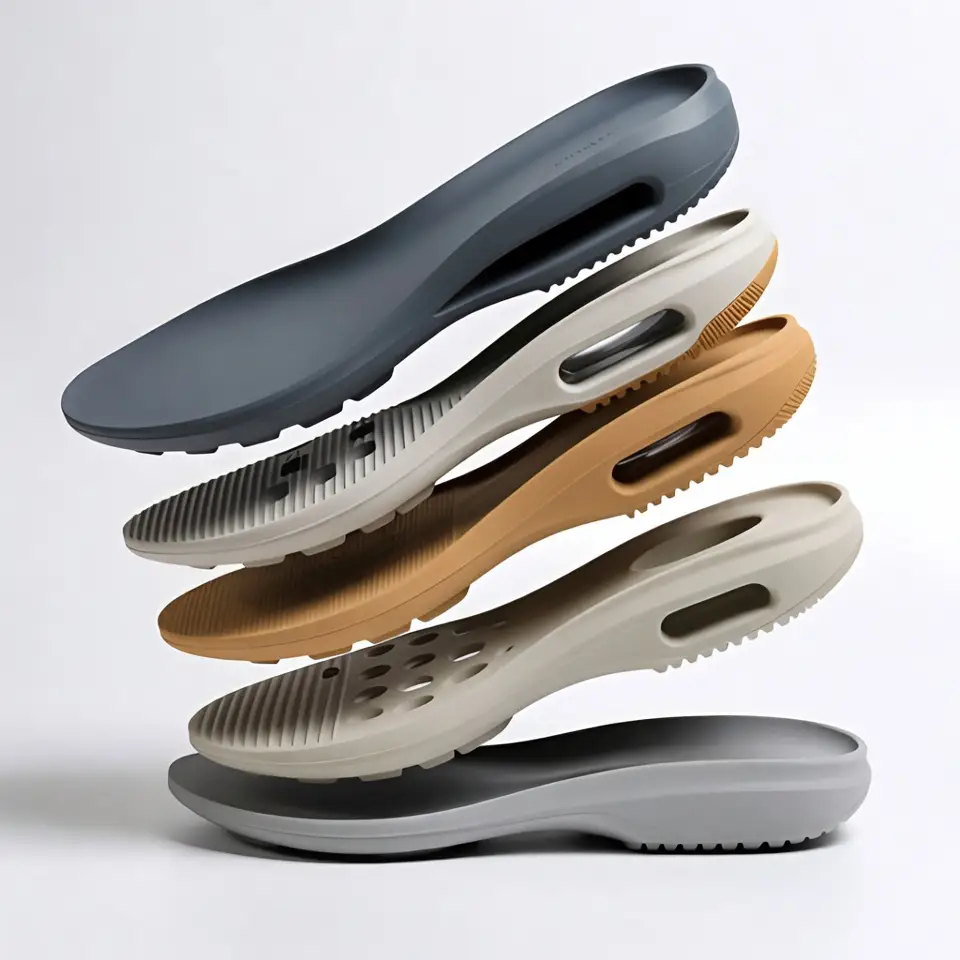
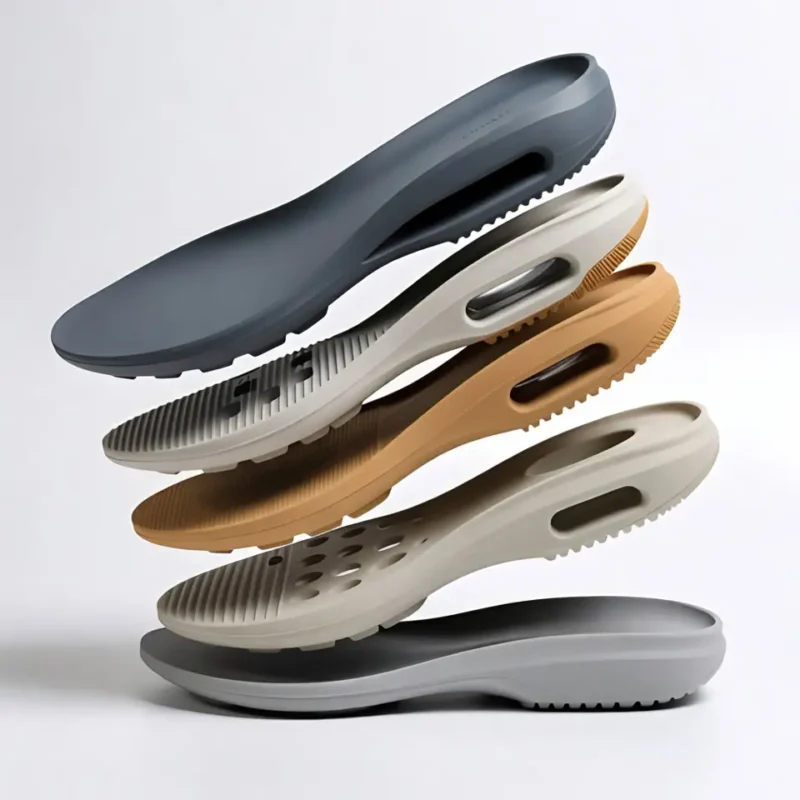
If you’re manufacturing athletic, casual, comfort, or safety footwear at volume, EVA sheets are almost certainly in your supply chain — in the midsole, the outsole, or both. They sit at the foundation of modern shoe construction and yet the questions that matter most to procurement teams — which grade, which thickness, sole sheet or midsole sheet, and what to demand from a supplier — are rarely answered in one place.
This guide covers everything a footwear product developer, sourcing manager, or OEM buyer needs to know about EVA foam sheets: what they are, what makes them perform, how to distinguish between EVA sole sheets and midsole sheets, and how to specify them accurately before placing an order. To see the full range in one place, Weston Rubber’s EVA sheet range covers both types — manufactured and supplied from a single facility in India.
What Are EVA Sheets?
EVA sheets are flat, foam-format raw material produced from Ethylene Vinyl Acetate — a copolymer of ethylene and vinyl acetate. In footwear manufacturing, they are the primary input material from which midsoles, outsoles, and flat sole components are cut, moulded, or machined into finished components.
The material’s defining characteristic is its closed-cell foam structure — a cellular architecture in which each cell is sealed and independent. This is what gives EVA its combination of lightweight cushioning, dimensional stability, and water resistance. Unlike open-cell foams, closed-cell EVA does not absorb moisture, does not compress irreversibly under sustained load, and maintains its dimensional properties through repeated use cycles.
Worth clarifying from the outset: EVA sheets are the raw material form. They are cut, moulded, or machined into the finished components — soles, midsoles, insoles — that go into the shoe. Weston Rubber supplies both EVA sole sheets and EVA midsole sheets as distinct products, each optimised for its position in the footwear construction. That distinction is covered in full in the next section.
The reason EVA sheet dominates footwear production globally comes down to three converging advantages: it is lightweight relative to rubber, cost-effective at scale relative to polyurethane, and highly processable on standard manufacturing equipment. For mid-market footwear at volume, it is the default specification — and has been for decades.
Key Properties of EVA Sheets — Translated for Footwear Performance
The table below maps each material property of EVA foam sheets to its practical outcome in footwear production and end-use performance. Properties are listed using the measurement standards relevant to footwear manufacturing — including Asker C hardness, which is the correct scale for EVA foam (not Shore A, which applies to solid rubber).
| EVA Sheet Property | What It Means for Your Footwear |
| Low density / lightweight | Reduces overall shoe weight — critical for athletic and comfort categories |
| Cushioning & shock absorption | Minimises impact stress during walking or running; the primary midsole requirement |
| Elastic recovery / resilience | Midsole retains shape after repeated compression; longer product lifespan |
| Closed-cell foam structure | Water-resistant; no moisture absorption; suitable for outdoor and all-weather footwear |
| Thermal insulation | Consistent comfort across climates; relevant for cold-weather and indoor categories |
| Processability | Compatible with die cutting, CNC machining, heat moulding, and lamination at scale |
| Hardness (Asker C) — grades EW, ES, LS | Customisable across category requirements; matched to application at the sourcing stage |
| Colour flexibility | Available in multiple colours; no additional surface treatment required for most applications |
Two properties deserve particular attention for procurement teams. First, elastic recovery: EVA midsole sheets are engineered to return to their original thickness after compression. This directly affects how long a shoe maintains its cushioning performance in the field — a variable that matters to brands tracking warranty returns and customer satisfaction. Second, processability: EVA’s dimensional stability under heat and cutting means predictable cycle times, lower reject rates, and consistent output across high-volume production runs. For manufacturers focused on cost control, this is as valuable as the material’s physical properties.
EVA Sole Sheet vs EVA Midsole Sheet: What’s the Difference?
This is the distinction that most generic EVA guides skip — and the one that causes the most procurement errors. Sole sheets and midsole sheets are not interchangeable. They are optimised for different positions in the footwear construction, different processing methods, and different performance requirements. Getting this wrong at the specification stage costs rework time and material.
| Criteria | EVA Sole Sheet | EVA Midsole Sheet |
| Position in shoe | Outsole or full sole | Between outsole and upper |
| Primary function | Ground contact, grip, flat sole | Cushioning, shock absorption, energy return |
| Thickness range | Multiple — per application spec | 3mm–35mm; tapered profiles available |
| Quality grades | Multiple densities & Asker C | EW, ES, LS — advised per requirement |
| Typical applications | Slippers, sandals, flat casuals,promotypical footwear | Athletic, safety, orthopaedic,casual, OEM |
| Processing | Die cutting, flat moulding | Die cutting, CNC, heat moulding, lamination |
EVA Sole Sheet
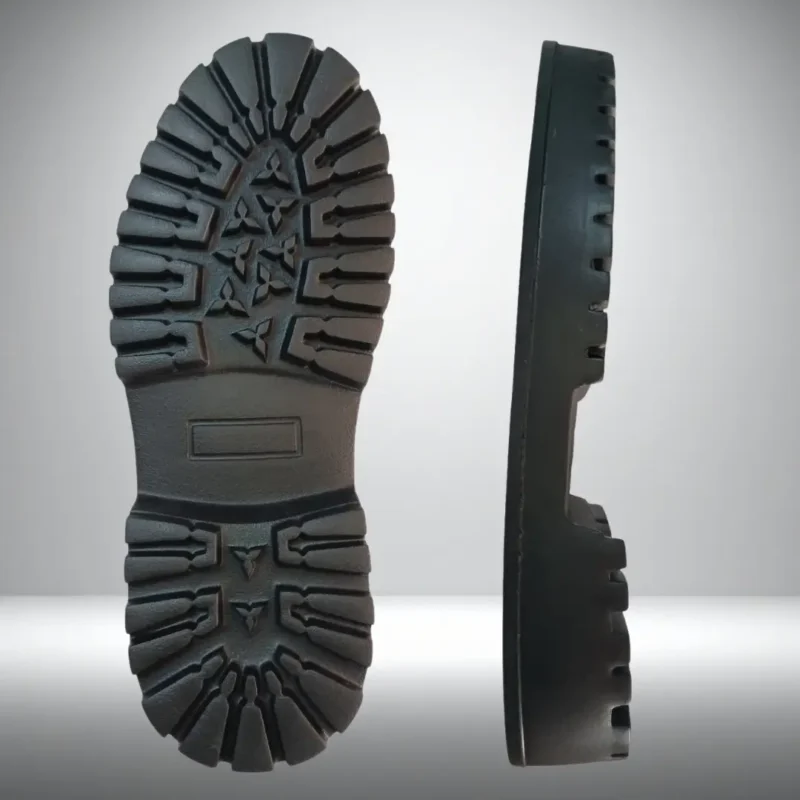
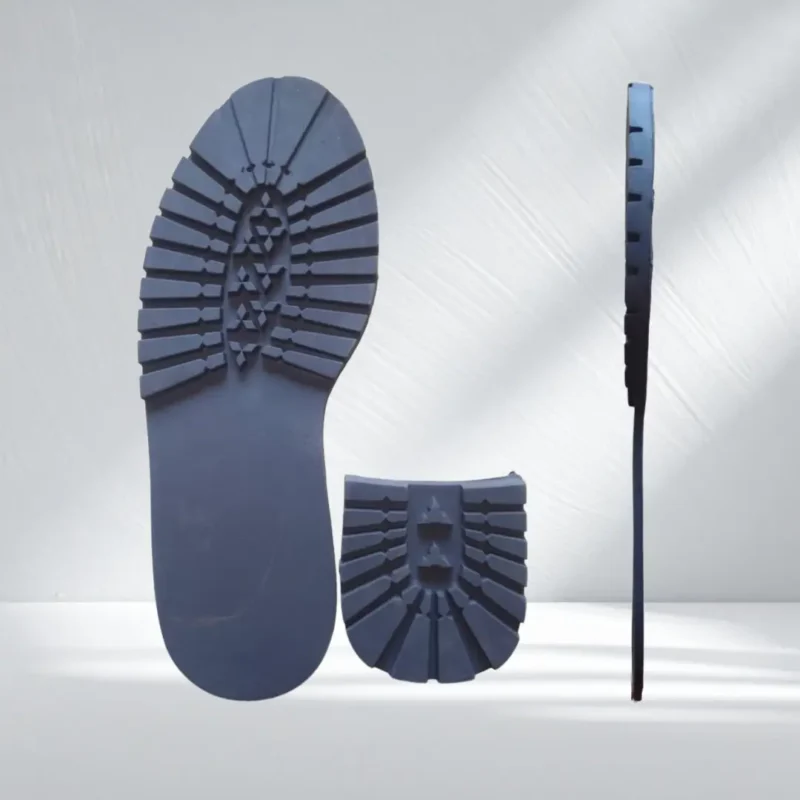
An EVA sole sheet is used for outsole construction or as a complete sole replacement in flat and casual footwear. It is the ground-contact layer — the part of the shoe that faces the floor — and is specified primarily for its hardness (measured in Asker C), density, and surface properties. EVA sole sheets are available in multiple thicknesses, densities, and colours, and are suited to flat die-cut production at high volume. Typical applications include slippers, flip-flops, sandals, flat casual shoes, and promotional footwear.
EVA Midsole Sheet
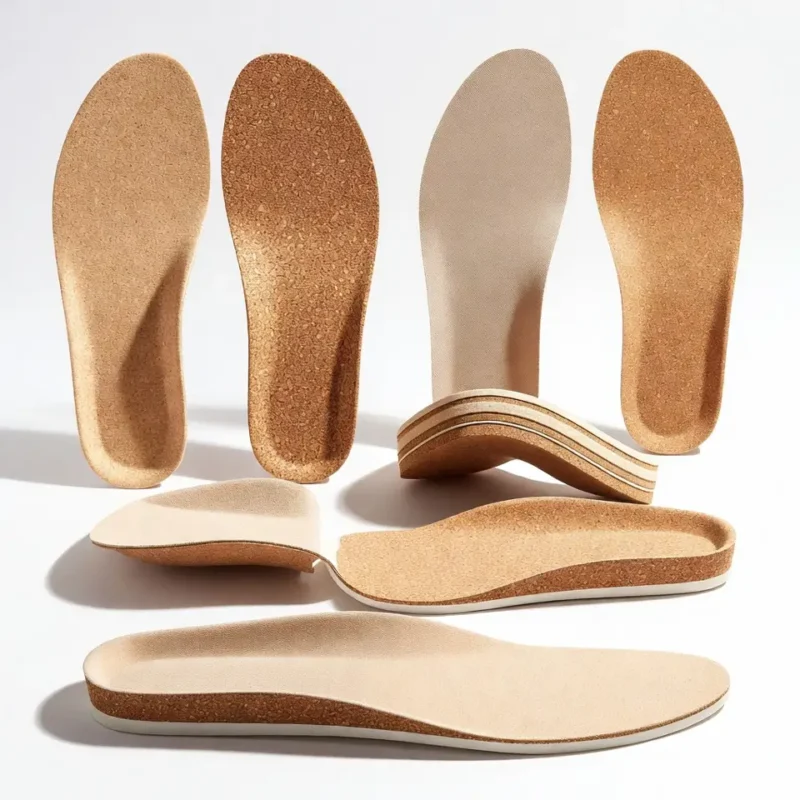
An EVA midsole sheet sits between the outsole and the lasted upper — the primary cushioning layer in the shoe. It is the component most directly responsible for shock absorption, energy return, and long-wear comfort. Weston’s EVA midsole sheets are available in thicknesses from 3mm to 35mm, and can be fully customised for tapered profiles — specifying different front and back thickness, width, and length to match the shoe’s geometry. Three quality grades are available: EW, ES, and LS, advised per customer requirement based on the intended application and performance specification.
| Specification tipIf your footwear uses a distinct outsole material — rubber, TPR, or a harder EVA compound — specify a midsole sheet for cushioning. If the shoe is flat-construction with no separate outsole, an EVA sole sheet handles the full sole function. Mixing the two without understanding the distinction leads to either over-specification (cost) or under-performance (returns). |
EVA Sheet Applications Across Footwear Categories
Buyers think in product categories, not material properties. Here’s how EVA foam sheets map to the footwear types where they are most commonly specified — with the relevant sheet type, grade considerations, and processing method for each.
- Athletic & sports footwear — EVA midsole sheet is the standard specification for cushioning and energy return in running, training, and sport shoes. Medium-to-firm hardness grades (typically ES or EW) are heat-moulded or die-cut into contoured midsole shapes. Paired with a rubber or TPR outsole for grip.
- Casual & lifestyle shoes — Both EVA sole sheets and midsole sheets are used depending on construction. High-volume die-cut production; wide hardness range suited to different price points and comfort profiles.
- Slippers, flip-flops & sandals — EVA sole sheet primary specification. Soft-grade density for indoor comfort; flat die-cut production at high volume. One of the largest-volume applications for EVA sole sheets globally.
- Orthopedic & comfort footwear — EVA midsole sheet, often with a customised taper and density profile. Frequently laminated with fabric or leather lining. The tapered profile capability (front and back thickness specified independently) is critical for orthopaedic applications.
- Safety & work footwear — EVA midsole sheet for shock absorption, paired with rubber or TPR outsole for durability and oil resistance. The midsole absorbs the impact energy that the rubber outsole cannot; both layers serve distinct functions.
- Private-label & OEM manufacturing — EVA sheets across all grades and thicknesses. Batch-to-batch consistency is the critical supply requirement for OEM buyers — colour, density, and thickness must be uniform across production runs to avoid visible or structural variation in the finished product.
How EVA Sheets Are Processed in Footwear Production
EVA foam sheets are compatible with all four of the primary processing methods used in footwear sole and midsole production. This processability — the ability to work reliably across different manufacturing workflows — is one of the material’s most significant commercial advantages.
Die cutting
The fastest and most cost-efficient method for flat sole and midsole production. A steel-rule die cuts components from the EVA sheet in a single press stroke. EVA’s consistent density and dimensional stability across the sheet surface means predictable cut quality, minimal edge deformation, and high nesting efficiency — reducing material waste on large production runs.
CNC machining
Used where precision profiling is required — particularly in orthopaedic, custom, and comfort footwear where the midsole shape is non-standard. CNC machining allows for complex geometries, tapered profiles, and tight dimensional tolerances that die cutting cannot achieve. EVA’s closed-cell structure machines cleanly without tearing or fraying.
Heat moulding / compression moulding
The primary method for producing contoured midsole shapes in athletic and performance footwear. The EVA sheet is placed in a heated mould and compressed into the required profile. EVA’s thermoplastic properties allow it to conform to the mould geometry cleanly and hold its shape after cooling. Midsole thickness and density can be precisely controlled through mould design and processing parameters.
Lamination
EVA midsole sheets are frequently laminated to fabric, leather, or other foam layers in comfort, orthopaedic, and lined footwear construction. EVA’s closed-cell surface bonds reliably with standard adhesives and lamination processes. Low surface porosity means consistent bond strength across the laminated area — a quality-control advantage in high-volume lamination lines.
| Why processability matters to procurementA material’s processability directly affects your cost-per-unit and reject rate. EVA’s dimensional stability — a result of its closed-cell structure — means consistent behaviour across all four processing methods: predictable cycle times, lower reject rates, and less production variability. Sourcing EVA sheets from a manufacturer with in-house QC ensures the sheet consistency that makes that processability reliable. |
What to Look for When Sourcing EVA Sheets — and Why Weston Rubber Delivers It
VA sheets are not a commodity buy in the way that commodity foam is. The grade, hardness, thickness tolerance, and batch consistency of the sheets you source directly determine the consistency of the finisheEd shoes. Here’s the checklist a procurement team should apply — and how Weston Rubber Industries meets each point.
- Batch-to-batch consistency — Uniform density, thickness tolerance, and colour across production runs is the non-negotiable requirement for volume buyers. Weston’s in-house quality control — material testing, process monitoring, and pre-dispatch inspection — ensures this consistency before product leaves the facility.
- Grade and hardness options (Asker C) — Weston offers EVA midsole sheets in three quality grades: EW, ES, and LS — advised per customer requirement based on application. EVA sole sheets are available across multiple densities and Asker C hardness levels. No single-grade supplier: the specification is matched to the brief.
- Thickness range and customisation — Weston midsole sheets are available from 3mm to 35mm. Tapered profiles — specifying front and back thickness, width, and length independently — are fully supported. This is critical for orthopaedic, athletic, and contoured midsole applications where a standard flat sheet doesn’t match the shoe geometry.
- Colour and surface finish options — Multiple colours are available across all grades. Surface finishes can be customised per application requirement. No third-party processing required.
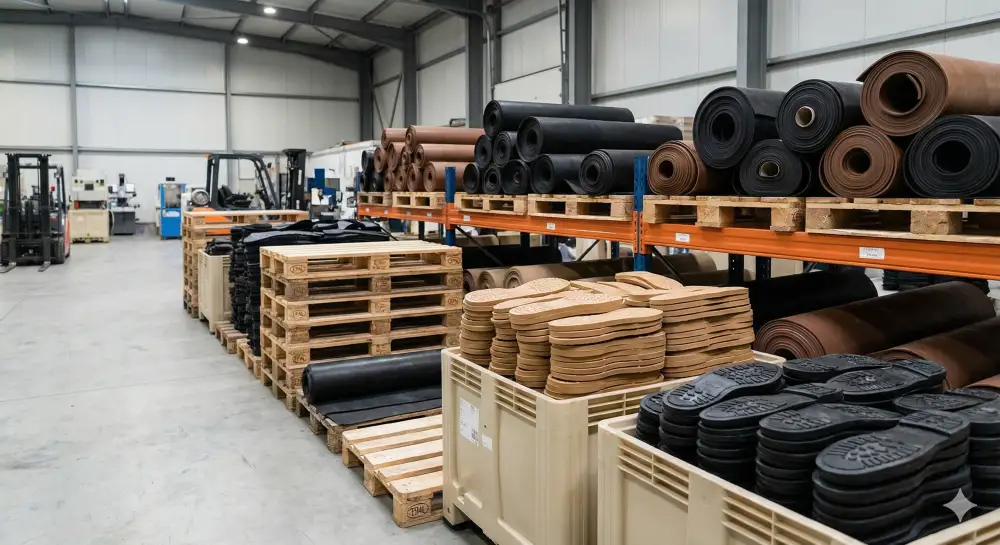
- OEM and bulk supply capacity — Weston’s scalable production setup supports both regular and high-volume OEM orders. Supply capability includes bulk manufacturing support, consistent batch scheduling, and secure packaging for safe transport.
- 37+ years of manufacturing experience — Weston Rubber Industries has manufactured soling materials since 1987. That manufacturing depth means process knowledge that translates directly into sheet consistency — across EVA, rubber, and TPR product lines, from a single facility in Agra, India.
FAQs: What Buyers Ask About EVA Sheets
What is the difference between an EVA sole sheet and an EVA midsole sheet?
An EVA sole sheet is used for outsole construction or as a complete sole in flat footwear — it’s the ground-contact layer, specified for hardness (Asker C), density, and surface properties. An EVA midsole sheet sits between the outsole and the upper and is the primary cushioning layer, specified for shock absorption, elastic recovery, and thickness. The two are not interchangeable; using a sole sheet in a midsole application — or vice versa — leads to either performance failure or unnecessary cost.
What hardness (Asker C) should I specify for athletic vs. casual footwear EVA sheets?
Athletic footwear midsoles typically require firmer EVA grades for energy return and structural support under impact — a medium-to-firm Asker C specification. Casual and comfort footwear generally uses softer grades for cushioning feel. The right specification depends on the shoe’s construction, the outsole material it’s paired with, and the end-use application. Weston’s team advises grade selection (EW, ES, or LS) based on customer requirements rather than applying a single-grade default.
Can EVA midsole sheets be supplied in custom thicknesses and tapered profiles?
Yes. Weston Rubber supplies EVA midsole sheets in thicknesses from 3mm to 35mm. Tapered profiles — where the front and back thickness, width, and length of the sheet are specified independently — are fully supported. This is particularly relevant for orthopaedic, athletic, and comfort footwear where standard flat sheets don’t match the shoe’s geometry.
Is EVA foam recyclable? What are its sustainability credentials?
EVA is a thermoplastic material and can be remelted and reprocessed — unlike vulcanized rubber, which cannot be recycled through standard thermoplastic processes. Compression-moulded EVA off-cuts can be reprocessed, reducing manufacturing waste. Low-VOC grades and REACH-compliant formulations are available. For brands under sustainability pressure from retail partners, EVA’s recyclability is a meaningful advantage over rubber alternatives.
Does Weston Rubber supply EVA sheets for OEM and bulk orders?
Yes. Weston Rubber Industries manufactures and supplies EVA sole sheets and midsole sheets for bulk and OEM orders — with consistent batch-to-batch quality, reliable production scheduling, and secure packaging for transport. Both standard specifications and custom requirements (grade, thickness, taper, colour, density) are supported. With 200+ repeat customers across India and overseas since 1987, Weston’s supply capability is proven at production scale.
Conclusion
EVA sheets are a precision sourcing decision — not a commodity buy. The grade, hardness, thickness, and batch consistency of the sheets you source determine the comfort, durability, and consistency of the finished shoe. Getting the specification right — sole sheet versus midsole sheet, grade selection, thickness profile — is the difference between a product that performs and one that generates warranty claims.
Weston Rubber Industries has been manufacturing EVA sole sheets and midsole sheets since 1987, supplying footwear manufacturers across India and internationally with consistent, specification-matched EVA products backed by in-house quality control. Whether you need a standard grade at volume or a fully customised midsole sheet for a specific construction, the brief starts with a conversation.