

Blog
How Rubber Soles Are Made: Mixing, Milling and Compression Molding Explained Step-by-Step

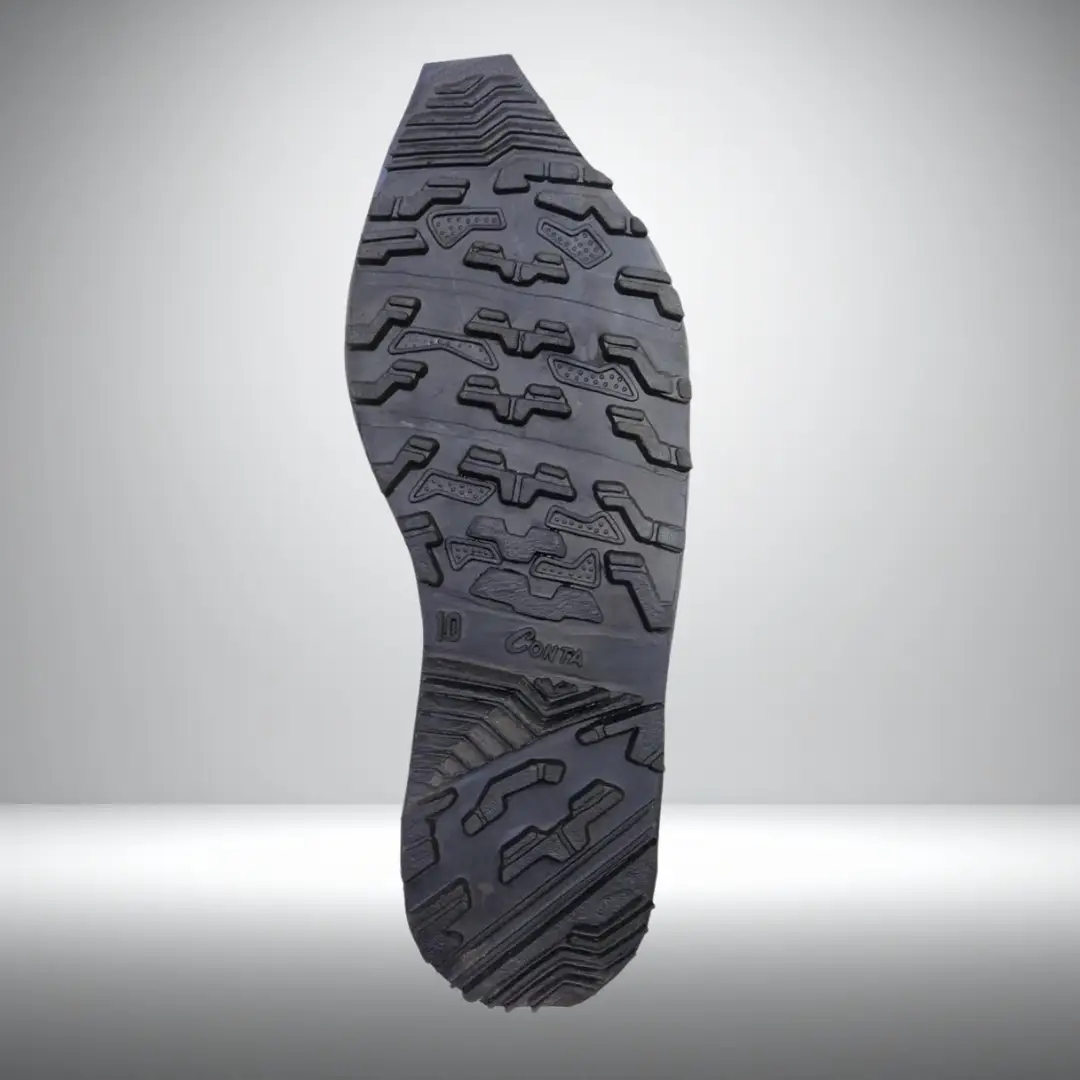
Rubber sole production runs through three main stages before a finished part leaves the factory: mixing, milling, and compression molding. Procurement teams who understand each stage ask sharper questions during supplier audits and catch quality problems earlier in the process. Here is the full production sequence, explained step-by-step.
Stage One: Mixing
Rubber sole production starts with raw natural or synthetic rubber, combined with fillers, curing agents, accelerators, and pigments in a Banbury mixer or a similar internal mixer. The mixer applies heat and mechanical shear to blend every ingredient into a uniform compound.
Mixing temperature and time both affect the final compound properties. Too little mixing leaves ingredients unevenly distributed, which produces soles with inconsistent hardness across a single batch. Too much mixing generates excess heat, which risks early curing inside the mixer, known in the industry as scorching. A scorched batch loses workability and often gets scrapped before reaching the next stage.
Buyers auditing a supplier’s mixing process should ask about batch consistency testing. A supplier who tests hardness samples from multiple points in each mixed batch catches uneven mixing before the compound moves forward, saving cost and time later in the process.
Stage Two: Milling
After mixing, the compound moves to a two-roll mill, where rollers spinning at different speeds work the rubber into a flat, uniform sheet. Milling continues the blending process started in the mixer and brings the compound to a workable sheet thickness for the next production step.
Milling also lets factory teams add any remaining ingredients needing lower-temperature incorporation, since some curing agents degrade under the higher heat generated during initial mixing. Skilled mill operators watch the sheet consistency closely, since a compound tearing or sticking to the rollers signals a formulation problem needing correction before moving forward.
The milled sheet gets cut into pre-forms, sized to match the volume needed for each mold cavity in the next stage. Accurate pre-form sizing matters directly for mold fill quality, since an undersized pre-form leaves gaps in the finished part and an oversized pre-form creates flash needing trimming after molding.
Stage Three: Compression Molding
Compression molding shapes the milled pre-form into the final sole geometry. Workers place a pre-form into a heated mold cavity, then close the mold under high pressure. Heat and pressure combine to cure the rubber compound, triggering a chemical reaction cross-linking the rubber molecules and locking in the final shape, tread pattern, and physical properties.
Cure time depends on compound formulation, sole thickness, and mold temperature, typically running several minutes per cycle. Undercuring leaves a sole soft and prone to premature wear. Overcuring makes a sole brittle and reduces flexibility, which shows up as cracking during flex testing or early field failure.
After curing, workers open the mold and remove the finished sole, then trim any flash along the parting line. Quality inspectors check hardness, dimensional accuracy, and surface finish against the spec sheet before the batch moves to packing.
Why Process Control Matters to Buyers
Every stage in this process affects the final product your factory receives. A mixing error shows up as inconsistent hardness. A milling error shows up as gaps or flash in the molded part. A molding error shows up as cracking, dimensional drift, or surface defects.
Buyers who ask suppliers detailed questions about process control at each stage, not only final product testing, catch quality risks before a full production run ships. Ask your supplier how often they calibrate mixing equipment, how they test milled sheet consistency, and how they monitor mold temperature during compression cycles.
Common Quality Issues Tied to Each Stage
Mixing stage issues: uneven hardness across a batch, color streaking from poor pigment dispersion, and scorching from excess mixing heat.
Milling stage issues: sheet thickness variation, tearing during roll processing, and inconsistent pre-form weight feeding into the molding stage.
Molding stage issues: flash along parting lines, undercuring or overcuring, and dimensional drift from inconsistent mold temperature across cavities in a multi-cavity press.
Ask your supplier which of these issues appeared in recent production runs and what corrective action followed. A supplier with a clear answer and a documented process demonstrates stronger quality control than one who denies any history of production issues.
How Weston Rubber Controls Each Stage
Weston Rubber tests hardness samples from multiple points in every mixed batch, monitors milled sheet thickness continuously during processing, and logs mold temperature across every cavity during compression cycles. This process-level tracking catches variation before a batch reaches your production line, not after your factory finds a problem during assembly.
Comparing Compression Molding to Injection Molding for Rubber Soles
Rubber soles run through compression molding far more often than injection molding, unlike EVA soles, where both methods appear regularly. Rubber compounds cure through a chemical cross-linking reaction requiring sustained heat and pressure over several minutes, a process suited to compression molding’s closed, static mold environment.
Injection molding works better for compounds curing faster or requiring less sustained pressure, which fits many EVA and TPR formulations more naturally than standard rubber compounds. Buyers comparing rubber sourcing options across suppliers should expect compression molding as the standard method, and treat a supplier proposing injection molding for rubber soles as an exception worth a closer technical conversation.
What a Factory Audit Reveals About Molding Quality
A factory audit focused on molding quality goes beyond a walkthrough of the equipment. Ask to see temperature logs from recent production runs, and check whether mold cavities across a multi-cavity press show matching temperature readings. A ten-degree spread between cavities in the same press produces soles with different cure levels from the same production run, even though every part carries the same batch number on paperwork.
Request cure time records alongside temperature logs. A supplier tracking both numbers together, batch by batch, demonstrates a level of process discipline separating strong manufacturing partners from suppliers running on operator experience alone without documented controls.
Frequently Asked Questions
How long does a full rubber sole production cycle take from mixing to finished part?
Timing varies by batch size and compound, but a typical cycle runs from a few hours for mixing and milling through several minutes per mold cycle during compression, with total batch completion often spanning a full production shift.
What causes flash on a compression molded sole?
Flash forms when excess compound escapes along the mold parting line, usually from an oversized pre-form or insufficient mold closing pressure. Trimming removes flash, but frequent flash signals a pre-form sizing or pressure calibration issue worth raising with your supplier.
Why do some rubber soles crack after a short time in use?
Cracking often traces back to overcuring during compression molding, which makes the compound brittle. Undercuring causes a different problem: soft, fast-wearing soles rather than cracking.
Does compression molding produce complex tread patterns?
Yes. Mold cavities carry the tread pattern directly, and compression molding reproduces fine tread detail accurately as long as the pre-form fills the cavity completely during the press cycle.
What should I ask a supplier during a factory audit of their molding process?
Ask how they monitor mold temperature across cavities, how they track cure time per batch, and how they handle a batch failing post-cure quality testing.
Sourcing rubber soles and want a supplier with documented process control at every stage? Weston Rubber tracks mixing, milling, and molding data across every batch. Contact our team for a factory process overview and current compound options.