

Blog
EVA Blockers vs EVA Sheets vs EVA Soles: Which Format Should You Order?

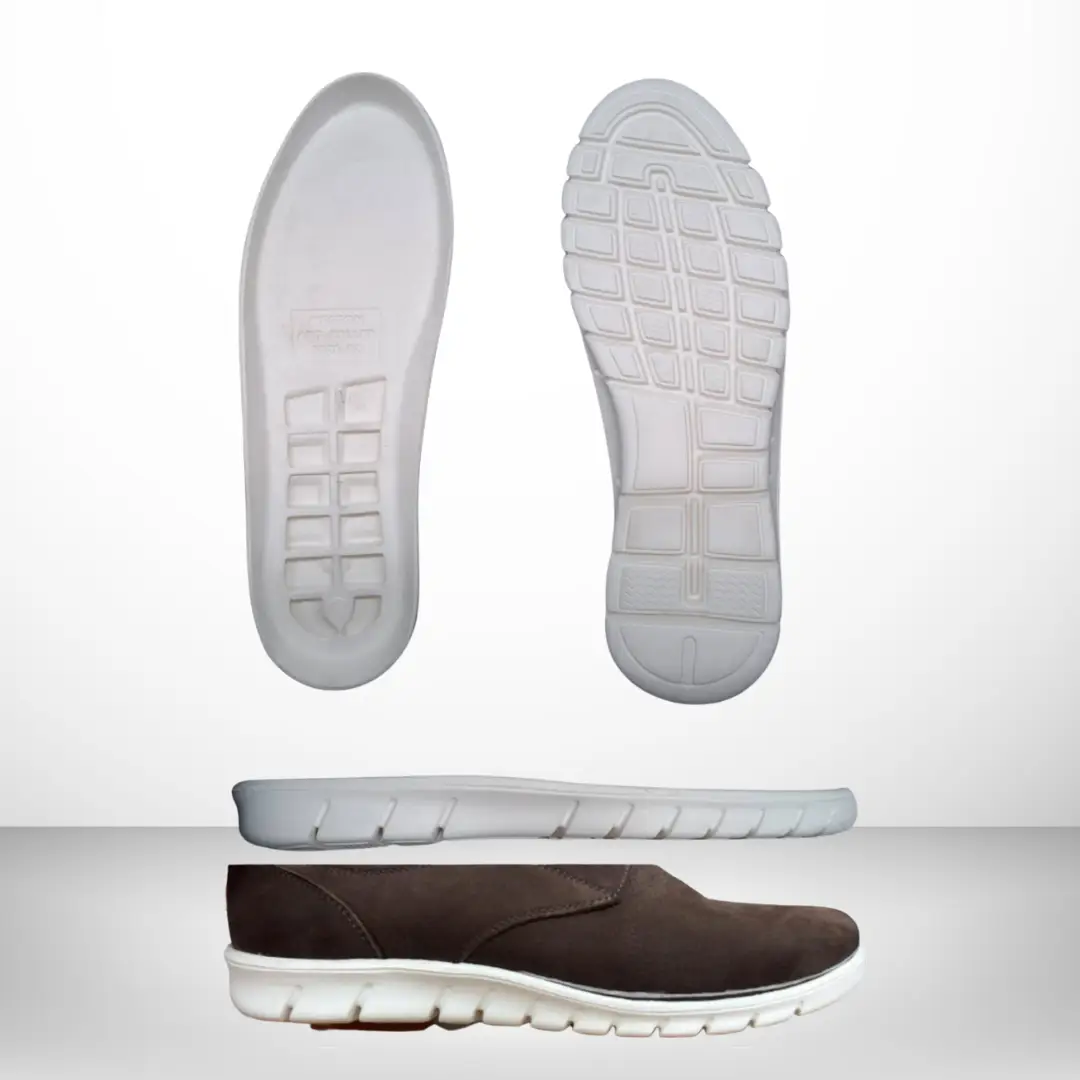
EVA is available in three supply formats: finished soles, flat sheets, and three-dimensional blocks. They’re made from the same material. They are not the same order.
Ordering the wrong format for your production workflow creates a problem before the first component is assembled. Finished soles ordered into a factory with no assembly capability sit unused. Blockers sent to an operation without cutting equipment become an obstacle, not a material. Sheets ordered for a brief that requires a moulded profile produce components that don’t match the specification. The cost of the wrong format — in wasted material, reprocessing, or delayed production — is almost always higher than the time spent choosing correctly.
This guide makes that choice straightforward. By the end, you’ll know which EVA format fits your production operation, what distinguishes each option, and how to specify correctly. Weston Rubber Industries supplies all three — EVA soles, EVA sheets, and EVA blockers — from a single facility in Agra, India.
The Three EVA Formats: What Each One Is
Before comparing the formats, a clear definition of each removes the vocabulary ambiguity that causes ordering errors in the first place.
EVA soles — finished, ready-to-assemble components
EVA soles are complete, pre-shaped sole components produced through injection moulding or compression moulding processes. They arrive dimensioned, profiled, and finished — ready to be bonded to an upper or stitched into a shoe construction without any further processing. They are the furthest point along the value chain in Weston’s EVA product range: the manufacturer has done all the forming work, and the buyer’s operation begins at the bonding stage.
EVA sheets — flat raw material for die cutting and lamination
EVA sheets are flat, two-dimensional raw material supplied for secondary processing. Two distinct types serve different applications. EVA sole sheets are used for flat outsole die-cut production. EVA midsole sheets are the more technically specified option — available from 3mm to 35mm thickness, in three performance grades (EW, ES, and LS), and with fully customisable tapered profiles for wedge and structured constructions. Sheet format constrains the manufacturer to flat-geometry components at a fixed thickness per sheet; but within those parameters, it delivers precise thickness control and high-volume consistency that finished soles cannot match.
EVA blockers — three-dimensional foam blocks for custom processing
EVA blockers are three-dimensional foam blocks of expanded EVA produced through injection moulding and curing. Unlike sheets, which constrain the manufacturer to flat geometry, blockers can be cut, sliced, or skived into any profile, thickness, or combination using a band saw, die cutter, CNC machine, or skiving tool. Asker C hardness is customisable across a wide range. The block format delivers the highest material yield of the three options and the maximum dimensional freedom — at the cost of requiring in-house cutting capability before components are usable.
Head-to-Head: EVA Blockers vs Sheets vs Soles Across 8 Variables
The table below covers every variable that affects which format is right for your production workflow. If you know what you need, scan this table and you’ll have your answer. If you’re less certain, read through Sections 03–05 for context, then use the decision framework in Section 06.
| Variable | EVA Soles (finished) | EVA Sheets | EVA Blockers |
| Processing needed | None — bond or stitch directly | Die cut / press / laminate | Full: saw / CNC / skive |
| Equipment required | Assembly only | Die cutter / press / lamination line | Band saw, CNC, skiving machine |
| Dimensional flex | Fixed (pre-moulded size & profile) | Medium — flat geometry, fixed thickness | Maximum — any profile, any thickness |
| Hardness scale | Asker C | Asker C (EW / ES / LS grades) | Asker C — wide range |
| Thickness range | Pre-determined by mould | 3mm–35mm (midsole); sole as standard | Any (determined by block height) |
| Material yield | Optimised at source | Medium — waste from die cut | Highest — cut exactly to spec |
| Time to component | Fastest — no processing | Medium — die cut before assembly | Slowest — process before assembly |
| Best for | Assembly-only; brands needing ready-to-use soles | High-volume flat production; midsole specs | Custom profiles; max yield; in-house cutting |
| The single most important variable in this tableEquipment capability determines format more than any other factor. If your operation has no die cutting, CNC, or band saw capability, the correct format is finished EVA soles — regardless of cost per unit comparisons or yield calculations. Ordering sheets or blockers into an assembly-only operation creates a processing step you cannot perform and a component you cannot use. |
When to Order EVA Soles: The Right Choice for Assembly-First Operations
EVA soles are the right format when your production operation begins at bonding or stitching — when a finished, ready-shaped component is what you need from your supplier, and in-house forming or cutting is not part of your workflow.
Order EVA soles if:
- Your facility is assembly-focused — you bond uppers to soles and do not have die cutting or CNC equipment.
- You need a specific moulded profile or surface texture — injection and compression moulding produce profiles and grain textures that cannot be replicated by cutting a sheet or block.
- Speed to assembly line is the priority — finished soles require no processing; they move from delivery to assembly without an intermediate production step.
- You produce for mass-market, promotional, or private-label footwear — where consistent moulded components at volume is the requirement.
Constraint to be aware of: finished soles are dimensionally fixed. The profile, thickness, and size are determined at the moulding stage. If your specification requires a non-standard size, a custom thickness profile, or a geometry not available in Weston’s moulded range, sheets or blockers will give you more control. Custom moulds are possible but carry their own lead time and tooling cost implications.
Weston’s EVA soles are produced through injection and compression moulding in multiple colours, textures, and thickness profiles, with Asker C hardness and density customisable per formulation. See: EVA Sole and EVA Soles range.
When to Order EVA Sheets: Precision Midsole Specs and High-Volume Flat Production
EVA sheets suit operations with die cutting, pressing, or lamination capability in-house. They’re the dominant format for midsole production, where precise thickness control and foam density grade selection are the primary specification variables, and for flat outsole production where die cutting is the standard component-forming method.
The sole sheet vs midsole sheet distinction matters. These are not interchangeable orders. An EVA sole sheet is flat sheet material for cutting outsole components. An EVA midsole sheet is a technically specified product in its own right — 3mm to 35mm thickness range, three performance grades (EW, ES, LS), and fully customisable tapered profiles for wedge and dutch constructions. Ordering a sole sheet when you need a midsole sheet produces a component that will not meet your cushioning specification.
Order EVA sheets if:
- You need precise midsole thickness control — midsole sheets are available from 3mm to 35mm with tight thickness tolerances not achievable from a finished moulded sole.
- Foam grade matters to your specification — grades EW, ES, and LS represent different density and performance profiles; grade selection is the most important midsole specification variable after thickness.
- You run high-volume flat-geometry production — die cutting sheets at scale produces consistent components efficiently at cost structures that finished soles cannot match.
- Your construction requires tapered profiles — length and thickness taper specifications for wedge and structured constructions are available in midsole sheets but not in standard finished soles or blockers.
Constraint to be aware of: sheet format is limited to flat geometry and a fixed thickness per sheet. You cannot produce bevelled edges, complex contoured profiles, or non-standard combined thicknesses from a single flat sheet cut. Those requirements point to blockers.For a full technical guide to EVA midsole and sole sheets, grades, and thickness specifications, see: What Are EVA Sheets? Properties, Uses and Applications in Footwear Manufacturing. Weston product pages: EVA Midsole Sheet and EVA Sole Sheet.
When to Order EVA Blockers: Maximum Flexibility for Custom and High-Yield Production
EVA blockers are the right format for manufacturers who need to produce components that sheets cannot accommodate — non-standard profiles, custom thickness combinations, bevelled or contoured geometries — and who have the in-house cutting capability to process a block into finished components.
The block format is not a more complex or specialised version of the sheet. It is simply a different supply geometry: a three-dimensional volume of EVA foam from which the manufacturer cuts what they need, at the dimensions they need, with the profile they need. For operations with the right equipment, blockers deliver the highest material yield (no pre-cut thickness waste), the most dimensional freedom, and the ability to produce profiles that flat sheets structurally cannot.
Order EVA blockers if:
- You have band saw, CNC, die cut, or skiving equipment in-house — blockers require processing before assembly; without cutting capability, this format creates a production step you cannot complete.
- You need non-standard profiles or thicknesses — bevelled midsole edges, combined-thickness components, contoured insole profiles, or any geometry not achievable from a flat sheet are all possible from a block.
- You produce custom, orthopaedic, or small-batch footwear — where the dimensional specification changes frequently and the ability to cut to any profile from a single raw material format is more valuable than volume efficiency.
- Maximum material yield is a production priority — cutting from a block produces less waste than die cutting from a flat sheet, because the manufacturer determines the cut geometry precisely rather than working around a pre-cut flat thickness.
Hardness specification note: EVA blockers are specified in Asker C — the correct hardness scale for EVA foam. Not Shore A, which applies to solid rubber and TPR. This distinction matters when cross-referencing supplier datasheets. For a full explanation, see: What Is Shore A Hardness? A Footwear Manufacturer’s Guide
For a full guide to EVA blockers alongside rubber and TPR blockers, see: What Are Shoe Blockers? The Role of EVA, TPR and Rubber Blockers in Footwear Manufacturing. Weston product page: EVA Blockers.
The Format Decision Framework: 5 Questions That Tell You Which to Order
Work through these five questions in order. Each question has a definitive answer that either routes you to a format or moves you to the next question. If you reach the end without a clear answer, the final step is to contact Weston with your brief directly.
| Q1: Does your operation have die cutting, CNC machining, or band saw capability?No → Order EVA Soles (finished components).If you have no in-house cutting equipment, you need a component that requires no processing. Sheets and blockers both require forming before assembly — finished soles do not. |
| Q2: Do you need a non-standard profile, bevelled edge, combined thickness, or contoured geometry?Yes → Order EVA Blockers.Flat sheets cannot produce these geometries. Blockers give you a 3D volume to cut any profile from. If your specification is flat geometry at standard thickness, proceed to Q3. |
| Q3: Is this for a midsole or cushioning layer where density grade and thickness precision matter?Yes → Order EVA Midsole Sheets (specify grade EW, ES, or LS; thickness 3mm–35mm; tapered profile if required).Midsole sheets are the technically specified format for cushioning layer production. Grade selection — EW, ES, LS — is the most important midsole performance variable. If this is for an outsole, proceed to Q4. |
| Q4: Is this for a flat outsole component that will be die cut to shape from sheet material?Yes → Order EVA Sole Sheets.EVA sole sheets are the flat raw material for high-volume die-cut outsole production. If you need a pre-shaped, moulded outsole profile with a specific texture or design, proceed to Q5. |
| Q5: Do you need a pre-shaped, moulded sole with a specific texture, moulded profile, or branded design?Yes → Order EVA Soles (finished moulded components).Injection and compression moulding produces surface textures, sole profiles, and three-dimensional designs that cannot be replicated by cutting a sheet or block. This is the format for branded and designed sole units. |
| Still unsure which format fits your brief?Send Weston your application details, production capability, and volume requirement — the team will advise on the right format and supply samples for testing before you commit to an order. Getting the format right before ordering costs nothing. Getting it wrong costs a production run. |
Why Sourcing All Three EVA Formats from Weston Rubber Makes Sense
Production requirements change. An operation that currently uses finished EVA soles may add die cutting capability and move to sheets. A manufacturer currently cutting from sheets may scale up to blockers for better yield control. When that happens, switching formats should not mean switching suppliers and re-qualifying material performance.
- All three formats from one facility. EVA soles, EVA sole sheets, EVA midsole sheets, and EVA blockers are all manufactured at Weston’s facility in Agra, India. Format changes don’t require a new supplier relationship, a new QC review, or a new compliance documentation set.
- Same Asker C hardness specification across formats. Density and hardness specifications transfer directly when you move between formats. A midsole sheet compound can be matched in block format for the same application; finished sole performance can be replicated in sheet or block with the same Asker C baseline.
- Midsole grade depth. Grades EW, ES, and LS in EVA midsole sheets represent distinct density and cushioning performance profiles. Understanding which grade suits which application is the kind of technical knowledge that only comes from decades of midsole production. Weston has manufactured EVA sheets and components since 1987.
- In-house QC across all four EVA product types. Material testing, process monitoring, and pre-dispatch inspection are applied consistently across every EVA format. Batch-to-batch Asker C consistency and thickness tolerance are verified before any order is dispatched.
OEM and bulk supply at production scale. All three EVA formats are available for regular and high-volume OEM orders. Scalable production scheduling and secure packaging for transport are standard across the range.
FAQs: Common Questions About EVA Format Selection
What is the difference between an EVA sole and an EVA sole sheet?
An EVA sole is a finished, pre-shaped component produced by injection or compression moulding — it arrives ready to bond or stitch into the shoe with no further processing required. An EVA sole sheet is flat raw material supplied for die cutting into outsole components; the manufacturer performs the cutting step in-house. The key difference is where in the production chain the forming step happens: at the supplier (finished sole) or at the manufacturer’s facility (sole sheet).
Can EVA blockers replace EVA sheets in production?
Blockers and sheets are not direct substitutes — they suit different production requirements. EVA blockers offer greater dimensional flexibility (any profile, any thickness) and higher material yield, but they require more processing before the component is usable: the block must be sawn, CNC-machined, or skived to the required geometry. EVA sheets are faster to process at volume for flat-geometry components and are the correct format for precision midsole thickness and grade specifications (including tapered profiles). Choose based on your equipment capability and component geometry, not cost comparison alone.
What are EVA midsole sheet grades EW, ES, and LS?
EW, ES, and LS are the three performance grades available in Weston’s EVA midsole sheets, each representing a different foam density and cushioning performance profile. Grade selection is the most important midsole specification variable alongside thickness: different grades suit different footwear categories and end-use requirements. The correct grade depends on the cushioning performance requirement of your specific application — Weston’s team can advise on grade selection based on your brief. For detailed guidance, see the EVA sheets article.
Do I need special equipment to process EVA sheets or blockers?
EVA sheets require a die cutter, press, or lamination equipment to form components from flat material. EVA blockers require a band saw, CNC machine, die cutter, or skiving machine to produce finished components from the block. If your facility has none of these, the correct format is finished EVA soles, which require only bonding or stitching equipment to assemble into a shoe. The equipment question is the first and most important step in the format selection decision.
Does Weston Rubber supply EVA soles, sheets, and blockers from the same facility?
Yes. Weston Rubber Industries manufactures EVA soles (finished components), EVA sole sheets, EVA midsole sheets (3mm–35mm, grades EW/ES/LS), and EVA blockers from a single facility in Agra, India. All four EVA product formats share the same Asker C hardness specification range, in-house QC process, and compound expertise. Sourcing all three formats from Weston means format changes as your operation evolves don’t require a supplier change or material re-qualification.
Conclusion
The format decision is driven by three questions: what equipment does your operation have, what geometry does your component require, and where in the production chain does the forming step happen? Assembly-only operations order finished EVA soles. High-volume flat-geometry and midsole production orders EVA sheets. Custom profiles and maximum-yield operations with cutting capability order EVA blockers. If your production requirements sit across more than one of those categories — which they frequently do — Weston supplies all three formats from one facility, with consistent Asker C specifications and in-house QC across every product type.