

Blog
Sole Requirements for Sandals and Open Footwear: Grip and Durability Without a Closed Upper

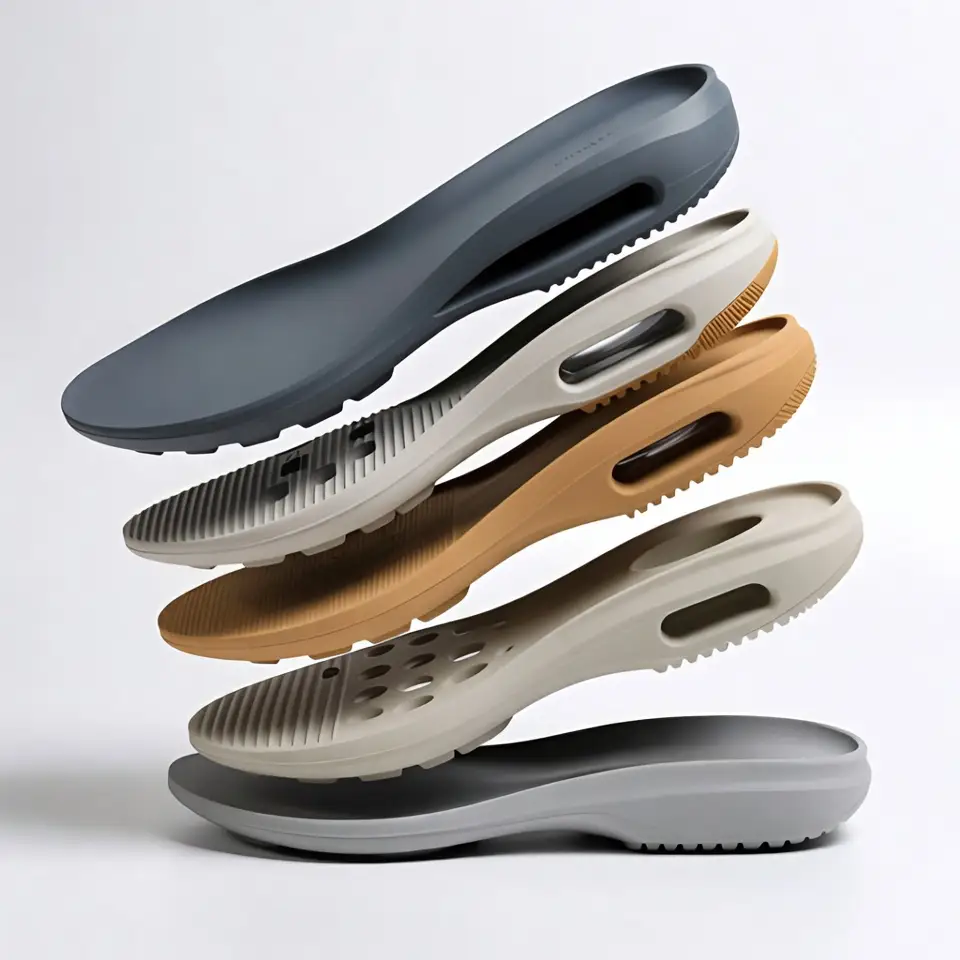
A closed shoe upper holds the foot over the sole. A sandal does not. Straps, thongs, and open toes leave the sole to carry more of the work on grip, stability, and comfort. Open footwear also meets water, sand, heat, and bare skin every day. This guide shows you what to specify for sandal soles, so your product grips on wet ground, survives a full season, and stays comfortable from the first wear.
Why Open Footwear Needs a Different Sole Spec
A closed shoe wraps the foot and shares the load between the upper and the sole. In a sandal, the sole takes most of the load alone. Six factors shape your spec.
- Less support. Without a closed upper, the sole controls stability. A sole too flexible or too slick lets the foot slide.
- Water exposure. Pools, beaches, rain, and sweat keep the sole wet for long periods.
- Bare skin contact. The footbed touches skin directly, so comfort, texture, and material safety matter more.
- Strap stress. Straps anchor into the sole, and each anchor point carries pull and tear forces.
- Exposed edges. Toes, heels, and sidewalls take knocks and abrasion without upper protection.
- Visible construction. Customers see the sole, so color, finish, and edge quality shape the buying decision.
The Layers of a Sandal Sole
Sandals use fewer layers than closed shoes, but each layer still has a job.
The footbed sits under the foot. This layer drives comfort, skin feel, and grip against the sole of the foot. The midsole, where a sandal has one, adds cushioning and often uses EVA. The outsole meets the ground and carries tread, abrasion resistance, and wet grip.
Many sandals merge these layers into one or two components. A flip-flop often uses a single molded unit or two bonded layers. A sport sandal uses a full stack with a cushioned midsole and a rugged outsole. Confirm with your supplier which layers your design needs, since a single compound rarely serves comfort and durability equally well.
Grip on Wet Surfaces
Wet grip decides whether a sandal feels safe. Open footwear meets wet tile, pool decks, boat decks, and muddy paths, so you specify slip resistance for wet conditions, not dry conditions alone.
Tread design matters as much as the compound. Deep, well-spaced channels move water out from under the sole. Smooth or shallow patterns skate on wet tile. Review the tread drawing before you approve a mold, and ask for a test report under a recognized method such as EN ISO 13287, with both wet and dry results.
Rubber and TPR both offer strong grip when formulated for the job. Ask your supplier for a compound tested on the surfaces your customers use, since pool decks and kitchen floors behave differently.
Durability Without an Upper
An upper shields the sole from many stresses. A sandal sole faces them head on, and three failure modes show up most often.
Strap pull-out. Anchor points carry repeated pull as the foot moves. A weak anchor tears out, and the sandal fails in the first month.
Flex cracking. Sandals flex at the ball of the foot with every step, and thin flex zones crack over time. Ask for flex fatigue results for your sole thickness.
Edge and heel abrasion. Walking drags the toe area and wears the heel edge. Specify abrasion resistance under ISO 4649 and compare results across compounds.
Add tear strength to your spec. Standard methods such as ISO 34 measure how well a compound resists a tear starting and spreading, which maps directly to strap hole failures.
Strap Attachment and Anchor Points
Strap anchors fail more often than any other part of a sandal. Treat the anchor as a design feature, not an afterthought.
- Check sole thickness around each anchor. Thin material tears easily under pull.
- Match hardness to the anchor method. Plug-and-post anchors, stitched straps, and molded-in straps each need different hardness and thickness.
- Request pull-out test data on finished samples, not on a flat compound plaque.
- Place anchors away from the sole edge to leave enough material around each hole.
- Add reinforcement where strap loads concentrate, such as a molded boss or a harder insert.
Material Choices for Sandal Soles
Rubber suits rugged outsoles for sport sandals, work sandals, and heavy-wear styles. Rubber resists abrasion well and holds tread detail through a long season. Weight is the tradeoff.
TPR suits outsoles, sandal straps, footbeds, and traction pads. TPR processes through injection molding, which supports fast, consistent production of high-volume styles. TPR does not suit midsoles, so use a foam for cushioning layers.
EVA suits footbeds and cushioning layers. The closed cell structure resists water absorption, and the foam keeps weight low. Do not use EVA as a bare outsole on rough ground, since the foam wears quickly under abrasion.
Performa/Tunit sheets suit lightweight sandals needing better surface durability than EVA alone. The sheets blend rubber compounds, including EPDM, neoprene, nitrile, silicone, and SBR, with EVA, and come in 80 plus or minus 3 Shore A and 90 plus or minus 3 Shore A qualities. Factories process the sheets through die cutting, laser cutting, CNC routing, or manual fabrication, which suits frequent style changes.
For a premium natural option, consider cork footbeds.
Comfort Factors in a Footbed
The footbed touches bare skin, so comfort drives reviews and returns. Specify three things.
Hardness. A footbed too hard feels harsh in the first hour, and one too soft bottoms out and loses support. Test candidate hardness levels on foot with real wearers.
Contour and texture. A contoured footbed supports the arch and keeps the foot in place. A light surface texture improves grip between skin and sole when feet are wet.
Heat and sweat. Footbeds warm in the sun, and hot, sweaty feet slide. Ask your supplier about surface finish and how the material behaves in warm conditions.
Skin Contact and Compliance
Materials touching bare skin face closer scrutiny on restricted substances. Request test reports for the footbed and strap compounds under the rules of your destination market, such as REACH in Europe. Keep full reports on file, not summary certificates alone, since retailers and auditors ask for documents long after production.
Sun, Water and Color Stability
Sandals live outdoors. Sunlight fades colors and dulls surfaces, and pool and sea water add further stress. Ask your supplier how the compound holds color after light exposure, and whether the surface keeps its finish after repeated wetting and drying. Pale colors and bright pigments need extra care, since they show fading first.
Requirements by Sandal Category
| Category | Main Demand | Typical Materials |
|---|---|---|
| Flip-flops and thongs | Low weight, low cost, strap anchor strength | EVA, rubber, TPR |
| Slides | Footbed comfort, easy wear | EVA footbed, TPR or rubber outsole |
| Strap sandals | Fit stability, strap durability | EVA midsole, rubber or TPR outsole |
| Sport and outdoor sandals | Wet grip, rugged wear | Rubber outsole, EVA midsole |
| Wedge sandals | Light weight, heel stability | EVA or Performa/Tunit platform, rubber or TPR top piece |
Tests to Request From Your Supplier
- Wet and dry slip resistance under a recognized method such as EN ISO 13287
- Abrasion resistance under ISO 4649
- Tear strength under a method such as ISO 34
- Flex fatigue at your sole thickness
- Strap pull-out strength on finished samples
- Color stability after light exposure
- Restricted-substance test reports for skin-contact parts
Working With Weston Rubber on Sandals
Weston Rubber supplies rubber, EVA, TPR, and Performa/Tunit materials, so you compare every option for your sandal in one conversation. Share your sandal category, strap method, and target market. Our team recommends materials by layer, and a sample batch lets your quality team test grip, strap strength, and comfort before you commit to a production order.
Frequently Asked Questions
Which sole material gives the best wet grip for sandals?
Rubber and TPR both deliver strong wet grip when formulated for the job, and tread design matters as much as the compound. Request wet slip test results on the surfaces your customers use.
Is TPR suitable for sandal soles?
Yes, for outsoles, sandal straps, footbeds, and traction pads. TPR does not suit midsoles, so use EVA or another foam for cushioning layers.
Why do sandal straps pull out of the sole?
Thin material around the anchor, a mismatch between hardness and anchor method, or weak tear strength usually cause pull-out. Request pull-out data on finished samples.
Is EVA waterproof enough for beach and pool sandals?
EVA has a closed cell structure, which resists water absorption, so EVA suits wet use as a footbed or midsole. Pair EVA with a rubber or TPR outsole for abrasion resistance.
Where does Performa/Tunit fit in a sandal?
Performa/Tunit suits lightweight sandals needing better surface durability than EVA alone, such as wedge platforms and comfort styles. The sheets come in 80 plus or minus 3 and 90 plus or minus 3 Shore A qualities.
Developing a sandal or open footwear line? Weston Rubber supplies rubber, EVA, TPR, and Performa/Tunit materials matched to grip, strap strength, and comfort needs. Contact our team to discuss specifications and request samples.