

Blog
Sole Materials for Humid and Tropical Climates: What to Specify for Hot-Weather Footwear

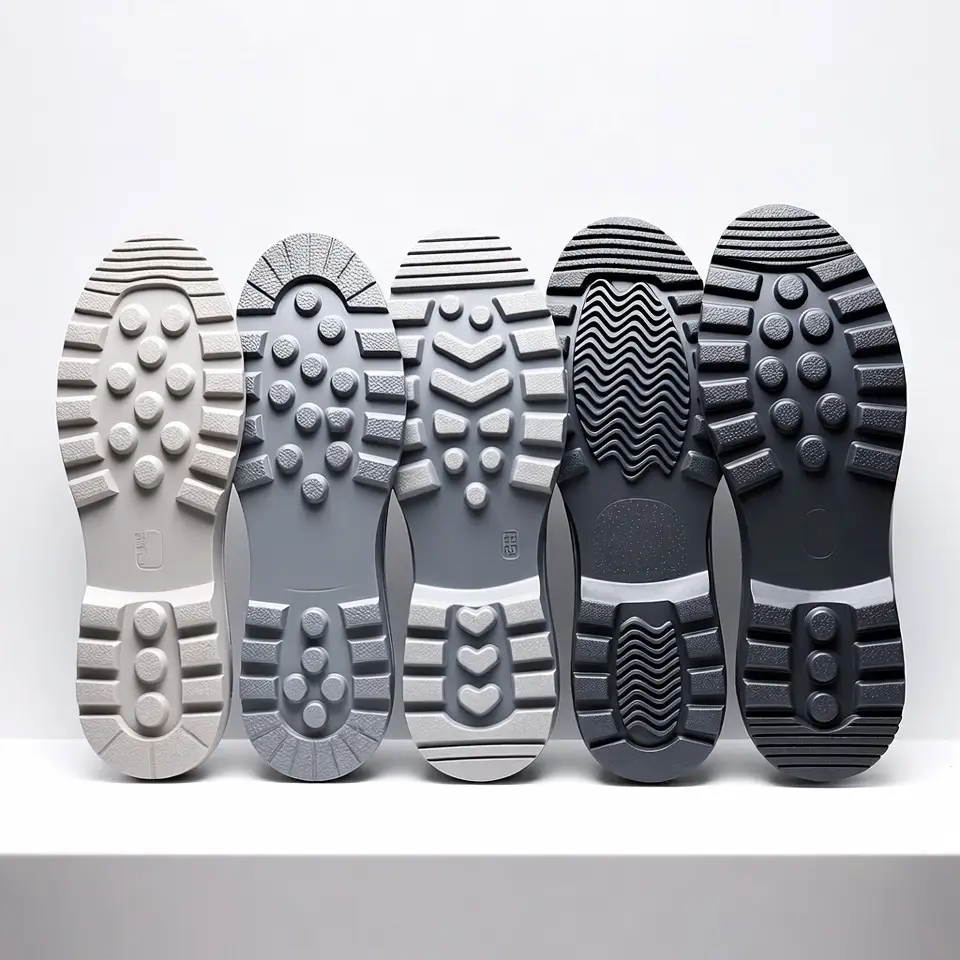
Footwear sold in tropical markets faces heat, humidity, rain, and sweat every day. A sole spec built for a temperate climate wears out faster in these conditions, and your returns data shows the gap within one season. This guide shows you what to specify for rubber, EVA, TPR, and Performa/Tunit soles, so your product holds up in hot-weather markets.
What Heat and Humidity Do to Soles
Hot climates stress soles in five ways. Know each one before you write a spec.
- Heat softens compounds. Pavement under direct sun runs far hotter than the air above the pavement, so soles meet temperatures well beyond the weather forecast.
- Heat speeds compression set. Foam layers lose thickness faster when warm, and cushioning fades earlier in the product life.
- Humidity affects bonding. Moisture on bonding surfaces during production weakens adhesive joints, and humid storage adds to the problem.
- Wet floors create slip risk. Monsoon rain, wet tile, and tropical storms put grip to the test.
- Sunlight and ozone age surfaces. Light colors discolor, and untreated rubber surfaces crack over time.
Rubber Soles in Hot Climates
Cured rubber holds its shape under heat better than thermoplastic compounds, since cross-linked rubber does not melt back into a flowing state. This makes rubber a strong baseline for hot-weather outsoles, particularly for work boots, school shoes, and rugged sandals.
Specify protection against ageing. Ask your supplier whether the compound carries antioxidants and antiozonants, since sunlight and ozone attack rubber surfaces in tropical regions. Request heat ageing results, not a general durability claim.
Rubber carries a weight penalty compared to foam and blended materials. For hot-weather footwear sold on comfort, weigh this tradeoff against the lighter options below.
EVA in Hot Climates
EVA offers the lightest cushioning among the four materials, and the closed cell structure resists water absorption. These traits suit warm-weather midsoles in sandals, slides, and casual shoes.
Heat is the main concern. EVA foam loses cushioning faster under sustained warmth through compression set. Specify a density suited to the climate, and request compression set data tested at an elevated temperature, not at room temperature alone.
Do not use EVA as a bare outsole in harsh conditions. The foam lacks the abrasion resistance of rubber or TPR on hot, rough pavement. Pair EVA midsoles with a rubber or TPR outsole.
TPR in Hot Climates
TPR is a thermoplastic. This means the compound softens as temperature rises, and hardness readings drop in the heat. A TPR outsole feeling firm in a showroom feels softer on hot asphalt.
Ask your supplier for hardness data at elevated temperature, and ask whether a firmer grade suits your market. Confirm heat performance on the specific part, such as a heel lift or outsole component, since thin parts and thick parts respond differently.
TPR suits outsoles, heel lifts, wedge inserts, sandal straps, footbeds, and traction pads in warm markets, provided your supplier backs the compound with heat test data. TPR does not suit midsoles.
Performa/Tunit in Hot Climates
Performa/Tunit sheets blend rubber compounds, including EPDM, neoprene, nitrile, silicone, and SBR, with EVA. The blend targets lighter weight than solid rubber with better surface durability than EVA alone. Two hardness qualities exist: 80 plus or minus 3 Shore A for a flexible feel, and 90 plus or minus 3 Shore A for a firmer feel.
For warm-weather casual and comfort footwear, the weight advantage matters, since heavy shoes feel worse in the heat. Choose the hardness quality by flex feel and by how the product sits on hot ground. Request heat ageing and compression set data for the grade you plan to use, as with any material.
Performa/Tunit sheets process through die cutting, laser cutting, CNC routing, or manual fabrication. This suits factories running varied styles for seasonal tropical collections without dedicated molding tools for every design.
Slip Resistance on Wet Surfaces
Tropical markets mean wet floors in markets, shops, bus stops, and kitchens. Specify slip resistance under wet conditions, not dry conditions alone. Request test results under a recognized method such as EN ISO 13287, and ask for results on both dry and wet surfaces.
Tread design matters as much as compound choice. Deep, well-spaced channels move water away from the contact area. Smooth, shallow patterns lose grip fast on wet tile. Review the tread drawing with your supplier before you approve a mold.
Bonding and Adhesion in Humid Factories
Humidity affects production, not only wear. Soles stored in a damp warehouse or bonded on a humid factory floor carry moisture into the adhesive joint. This weakens the bond and shows up as sole separation weeks after the shoe ships.
Control the process. Store soles in dry, ventilated space. Prepare bonding surfaces according to your adhesive supplier’s instructions. Run a bond strength test on production samples, and repeat the test after exposure to humid conditions. Separation at the toe and heel edges ranks as the most common failure in hot, wet markets.
Tests to Request From Your Supplier
Ask for data, not claims. Request these tests for any sole material you source for a tropical market.
- Heat ageing under a standard method such as ISO 188, with hardness and tensile results before and after
- Compression set under a standard method such as ISO 815 or ASTM D395, tested at elevated temperature
- Hardness readings at room temperature and at an elevated temperature
- Abrasion resistance under ISO 4649
- Slip resistance on wet and dry surfaces
- Bond strength before and after humid exposure
- Color stability under light for pale or bright colors
A Specification Checklist for Hot-Weather Footwear
- Match the outsole material to the surface and activity: rubber for heavy wear, TPR for cost-sensitive lines, Performa/Tunit for lightweight comfort.
- Pair foam midsoles with a durable outsole.
- Confirm hardness at temperature, not only at room temperature.
- Specify wet slip performance and approve the tread pattern.
- Require adhesive and bonding guidance for humid production sites.
- Protect pale colors against light with a stable pigment system.
Working With Weston Rubber on Hot-Weather Footwear
Weston Rubber supplies rubber, EVA, TPR, and Performa/Tunit materials, so you compare all four against the same climate requirements in one conversation. Share your target market, your outsole and midsole construction, and your test requirements. Our team recommends materials, and a sample batch lets your quality team test heat, wet grip, and bonding before you commit to a production order.
Heat in Transit and Storage
Heat damage starts before the shoe reaches a customer. Containers sitting at a port or in a closed yard in a tropical region build up significant heat, and cartons stacked high add pressure to the heat. Soft compounds and foam layers deform under this combination.
Protect your shipment. Ask your supplier about carton strength and stacking limits, and keep stacks below the limit. Store soles in shaded, ventilated, dry space at your factory, away from direct sunlight. Inspect a sample from the middle and bottom of each pallet on arrival, since the bottom of a stack carries the most load.
Plan seasonal orders early. Tropical markets often buy ahead of a rainy season or a festival period, and a late shipment means soles ship in peak heat. Early orders give you time to run sample tests and approve compounds without a rush.
Frequently Asked Questions
Which sole material performs best in tropical heat?
Rubber holds shape best under sustained heat, since cured rubber does not soften like a thermoplastic. Performa/Tunit offers a lighter alternative, and EVA suits midsoles. The right choice depends on your footwear category and wear conditions.
Does TPR work for hot-weather footwear?
Yes, for outsoles, heel lifts, wedge inserts, sandal straps, footbeds, and traction pads, provided your supplier supplies heat performance data. TPR softens as temperature rises, so confirm hardness at elevated temperature.
Why do soles separate faster in humid climates?
Moisture weakens adhesive bonds during production and storage, and wet wear adds stress at the toe and heel edges. Control humidity in storage, follow surface preparation steps, and test bond strength after humid exposure.
How do I specify slip resistance for monsoon markets?
Request wet and dry test results under a recognized standard such as EN ISO 13287, and review the tread pattern for water channeling.
Is EVA safe to use as an outsole in hot climates?
EVA wears too fast on rough, hot pavement. Use EVA as a midsole and pair the foam with a rubber or TPR outsole.