

Blog
What Are Rubber Fore Parts? The Forefoot Component That Keeps Shoe Soles Performing Longer

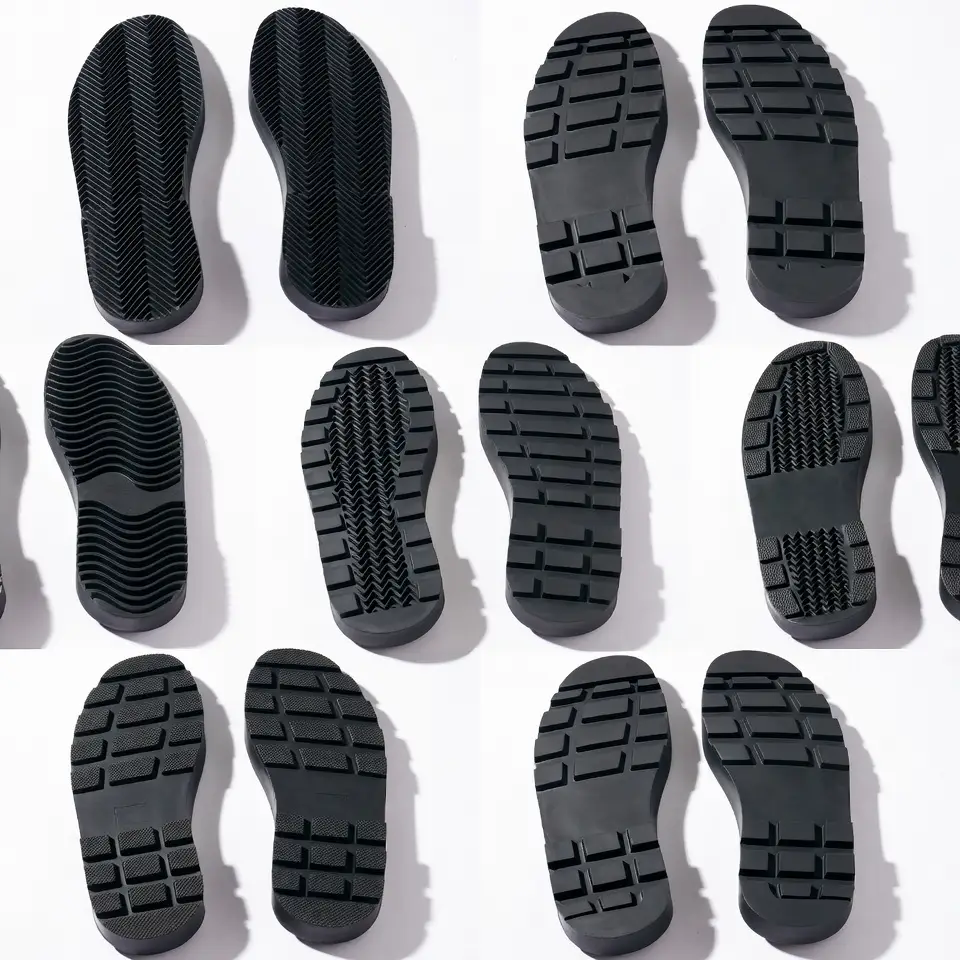
You know that moment when you look down at a pair of shoes that should have lasted another year and notice the front of the sole is starting to peel or crack right at the toe? That’s not bad luck. That’s the forefoot zone failing — and it almost always fails before anything else in the shoe.
Here’s why. Every single step you take bends the front third of your shoe sole through a full flex cycle. Ball of the foot lands, toe levers forward, sole bends, foot lifts off. Repeat. Thousands of times a day, every day. The forefoot zone takes more bending stress than any other part of the sole construction — and if the component there isn’t built specifically for that stress, it’s going to show it.
The rubber fore part is the component that handles that job. This guide explains what it is, why it works, and how to choose the right one for your production. Whether you’re sourcing for a formal shoe range, school footwear, safety boots, or a repair shop — the forepart spec matters more than most buyers realise. Weston Rubber’s rubber fore parts are finished, ready-to-assemble components made in Agra, India. Let’s dig in.
So What Exactly Is a Rubber Fore Part?
Think of it as the front shoe of the shoe sole. The rubber fore part is a pre-shaped outsole component that covers the forefoot zone — from roughly the ball of the foot to the toe. It arrives already formed, and it’s bonded or stitched directly into the shoe construction without any cutting or machining on your end.
It’s made from natural rubber, synthetic rubber, or an engineered compound blend depending on what the application demands. Shore A hardness is customisable. Finishes and colours are customisable. The compound grade — whether you go natural, synthetic, or a blend — is chosen based on what that particular shoe needs to survive.
And here’s the thing that’s worth understanding before anything else: the forefoot zone doesn’t need the same spec as the heel. The heel takes impact — a concentrated downward force every time your foot strikes the ground. The forefoot takes bending. Continuous, repetitive, cumulative bending. Those are different mechanical stresses, and they respond to different material properties. A compound optimised for heel impact resistance isn’t optimised for forefoot flex fatigue. Specifying the same material for both is a compromise that underserves one of them — usually the forefoot.
| The short version: Heel component: specify for impact and abrasion at the strike point. Forepart: specify for flex fatigue resistance — the ability to bend thousands of times without cracking. Different job, different brief, different component. |
Wait — Are Fore Parts and Fore Parts Sheets the Same Thing?
They’re not, and this trips people up more than you’d think. Weston makes both, and both show up in search results for “rubber fore parts.” So let’s clear it up fast.
| Rubber Fore Parts (finished) | Rubber Fore Parts Sheets | |
| What arrives | Pre-shaped component, ready to use | Flat sheet of raw rubber |
| What you do with it | Bond or stitch it in. Done. | Cut it to shape first, then assemble |
| Equipment needed | Just your bonding line | Die cutter, press, or CNC machine |
| Who it suits | Assembly-focused operations | Manufacturers with in-house cutting |
Basically: if your factory has die cutting equipment and you want to cut forepart profiles yourself, order the sheets. If your operation bonds or stitches components together without in-house cutting, order the finished fore parts. Two different products, two different buyers, two different workflows. More detail on the sheet format is over in the rubber sole sheets guide if that’s what you’re actually after.
What Rubber Actually Does in the Forefoot Zone
Here’s what you’re actually buying when you specify rubber for the forepart. Not abstract material science — real, practical outcomes for the shoe and the person wearing it.
| What the rubber does | What that actually means for your shoe |
| Bends without cracking | Thousands of flex cycles per day, day after day — rubber absorbs them without splitting at the toe zone |
| Resists surface wear | The forefoot drags and scuffs on every stride. Rubber holds up where softer materials wear through quickly |
| Grips reliably | Whether it’s wet tiles or outdoor pavement, rubber fore parts maintain traction at the highest-friction point of the sole |
| Absorbs push-off impact | That moment when you lever off your toes with every step? Rubber cushions the stress so the shoe structure doesn’t take the hit |
| Springs back to shape | Elastic recovery means it doesn’t permanently deform. The sole feels the same at month six as it did on day one |
| Handles tough environments | Oil, moisture, temperature swings — compound grade determines how much of this the forepart can take |
| Shore A hardness — your call | Choose softer grades (50–65A) for comfort and flex. Go harder (65–80A) for safety footwear and heavy-duty use |
| Finish and colour options | Grip patterns, smooth finishes, any colour — consistent across every batch, not just the samples you approved |
The two things at the top of that table — bending without cracking and resisting surface wear — are the ones that matter most. Everything else is supporting cast. And if you’re not sure which Shore A hardness you need, the Shore A hardness guide breaks that down in plain language. Short version: 50–65A for comfort and flex-priority footwear, 65–80A for safety and heavy-duty applications.
Rubber or TPR? Here’s How to Choose
Look, I’m not going to tell you rubber is always the answer. It isn’t. Weston makes both rubber and TPR fore parts, and the honest truth is that TPR is the better call for certain applications. Here’s where each one wins.
| Rubber Fore Parts | TPR Fore Parts | |
| Wears longer | Yes — highest abrasion resistance | Good, but not quite rubber-level |
| Flexes without cracking | Excellent | Excellent. Edges ahead in cold weather |
| Weight | Heavier | Lighter |
| Cold-climate use | Can stiffen in extreme cold | Stays flexible. Clear TPR advantage here |
| Recyclable | No — vulcanized rubber can’t be | Yes |
| Sweet spot categories | Formal, safety, outdoor, premium | Casual, school, mid-market, cold climates |
Go with rubber fore parts when:
- You’re producing formal or dress shoes where material quality is part of the product story
- Safety or industrial footwear is the brief — oil resistance, slip ratings, and abrasion performance are hard to replace
- The forepart is going to take serious wear and you need it to last
- You’re replacing a rubber forepart in a repair job and need compound match
Go with TPR fore parts when:
- Weight matters and mid-market cost efficiency is the priority — TPR fore parts are the right call for casual, school, and lifestyle footwear
- Cold climates are part of the picture — TPR stays flexible where rubber can stiffen up
- You want a recyclable material and sustainability is part of your brand brief
And if you’re genuinely unsure, the TPR soling material guide goes deeper on what TPR does well and where it falls short.
Who Actually Uses Rubber Fore Parts? (And Why)
why they’re the right spec in each case.
Formal and dress footwear
Dress shoes worn all day put relentless cumulative flex stress on the forefoot zone. Rubber’s elastic recovery means the forepart springs back to shape after each cycle instead of slowly compressing and deforming. And honestly, the material quality signals something at this price point. Rubber feels like quality because it is.
Safety and industrial footwear
This one’s not really optional. Oil resistance, slip-resistance credentials, and abrasion performance under heavy sustained use are things you can’t compromise on when a forepart failure is a safety issue rather than just a warranty claim. Compound grade needs to align with the certification requirements for your market — something worth confirming with your supplier before you spec.
School and uniform footwear
Kids’ shoes are brutal. Running, kneeling, dragging feet, jumping off things — the forefoot flex frequency in a child’s shoe is genuinely extreme compared to adult wear. Rubber’s flex fatigue resistance — that ability to keep bending without cracking — is exactly what you need here. TPR is fine for a lot of school shoe applications, but when parents are expecting the shoes to survive a full school year, rubber in the forepart is what actually delivers that.
Casual and everyday shoes
Not every casual shoe needs a rubber forepart — TPR handles plenty of mid-market applications. But if longevity at the forefoot zone is part of the brief and you want the shoe to hold up past six months of daily wear without the toe area failing, rubber extends product life meaningfully at that point. Worth the spec, worth the conversation with your buyer.
Shoe repair and resoling
This is the buyer segment that doesn’t always get talked about, but it’s worth understanding. The forepart is one of the most commonly replaced outsole components in shoe repair. And repair shops have a specific requirement that regular production buyers don’t: batch-to-batch consistency. When you’re replacing a forepart, you need the new component to perform like the original — not slightly softer, not a different compound grade, not a different finish. A supplier with documented in-house QC and compound verification on every batch is essential here, not optional.
What to Look for in a Rubber Fore Parts Supplier
Honestly, the spec on the data sheet matters less than most buyers think. What actually determines whether a rubber forepart works in your shoe is whether the compound is consistent across every batch you receive — not just the first one. Here’s what to look for.
- Shore A options across a proper range. Not just one hardness grade and take it or leave it. Weston supplies rubber fore parts across multiple Shore A grades — and which one you need is advised based on your brief, not defaulted.
- Compound grade choice. Natural rubber for premium formal footwear. Synthetic compounds for chemical resistance in safety applications. Engineered blends for specific flex-abrasion profiles. The right compound for the application, not a one-size-fits-all answer.
- Surface finish and colour. Not just ‘available in multiple colours’ — consistent across every production batch. That’s the part that actually matters when you’re producing at volume.
- Processing quality. Die cutting, press moulding, buffing, CNC machining — Weston’s fore parts are engineered for clean edges and consistent thickness tolerances. That’s what produces reliable bonding surfaces at assembly.
- Rubber and TPR from one place. If you spec rubber foreparts in some constructions and TPR in others, getting both from Weston means one QC system, one documentation set, one supplier relationship to manage.
- Real batch QC. Material testing, process monitoring, pre-dispatch inspection. Compound hardness and thickness verified before anything ships. Non-negotiable for repair operations, genuinely valuable for everyone else.
- Thirty-seven years of doing this. Weston Rubber has been manufacturing soling components since 1987. That’s a lot of compound knowledge, a lot of production problem-solving, and a lot of institutional understanding of what actually fails in the forefoot zone and why.
Frequently Asked Questions
What’s the difference between a rubber fore part and a rubber fore parts sheet?
A rubber fore part is a finished component that arrives pre-shaped and ready to bond or stitch into your shoe — no cutting needed on your end. A rubber fore parts sheet is flat raw material that you die cut or CNC machine into forepart components yourself. Which one you need depends entirely on whether your operation has in-house cutting capability. Assembly-only operations order the finished fore parts. Factories with cutting equipment may prefer the sheets for volume flat production.
What part of the shoe does the fore part cover?
The front third of the outsole — roughly from behind the ball of the foot to the toe. This is the zone that bends with every stride, which is why it’s often specified separately from the heel. The heel takes impact; the forefoot takes bending stress. Different jobs, different specs.
Why does rubber work better than TPR for formal and safety foreparts?
It comes down to abrasion resistance and material credentials. Rubber delivers the highest abrasion performance for the forefoot zone and carries the material quality signal that formal footwear at a certain price point demands. For safety footwear, rubber’s oil resistance and slip-resistance performance often align directly with certification requirements. TPR is excellent for casual, school, and mid-market footwear — but rubber is the right call when you need maximum durability or safety compliance.
What Shore A hardness should I spec for rubber foreparts?
It depends on the application. Comfort and casual footwear typically works best in the 50–65A range — soft enough to flex comfortably, firm enough to hold up. Safety and heavy-duty work footwear usually calls for 65–80A, where structural integrity under load matters more than flex compliance. The Shore A hardness guide on Weston’s site goes through this in more detail if you want to dig in.
Does Weston Rubber supply rubber fore parts in custom Shore A grades and compounds?
Yes. Multiple Shore A grades, natural rubber, synthetic rubber, and engineered compound blends — all available, all advised based on your specific application rather than defaulted to a single grade. Surface finish, colour, and thickness are customisable too. OEM and bulk orders are supported with in-house QC and batch consistency verification. Weston ships to India and overseas from their Agra facility.
The Bottom Line
The forefoot zone is where shoes fail first. Not because of bad materials necessarily — often because the material chosen wasn’t spec’d for the specific stress that zone actually takes. Rubber fore parts exist precisely for that job: continuous bending, surface friction, grip, and wear resistance at the highest-stress point of the outsole.
Get the compound grade right, get the Shore A right, and get it from a supplier who tests every batch. That’s the whole brief. Weston’s been doing exactly that since 1987. If you’re ready to specify, start with a quote.