

Blog
TPR Blockers vs TPR Fore Parts vs TPR Top Lifts: Which TPR Format Should You Order?

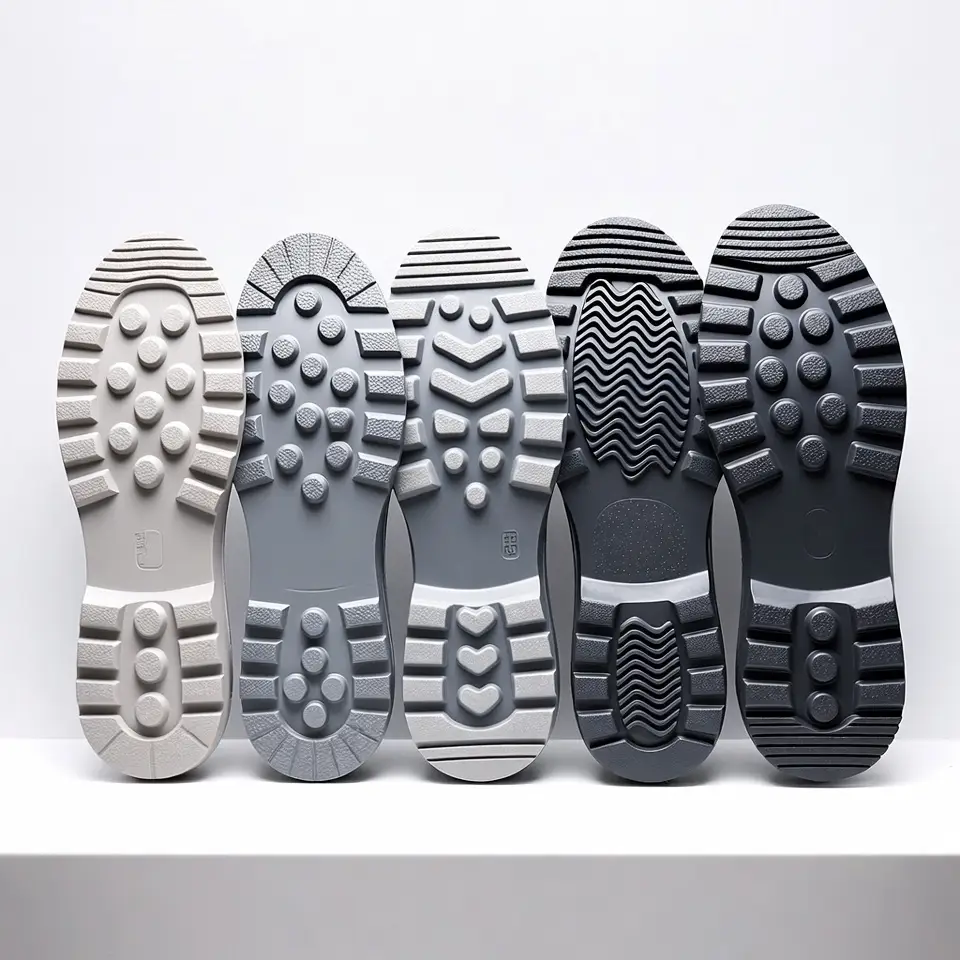
Procurement teams ordering thermoplastic rubber run into three format names on nearly every quote sheet: blockers, fore parts, and top lifts. Each format serves a different stage of shoe production, and picking the wrong one costs your team time, money, or both. Here is a straight comparison of all three, so your next purchase order matches your actual production setup.
The Short Answer
Blockers are raw, uncut slabs your factory shapes in-house. Fore parts are pre-cut components shaped for the front section of the sole. Top lifts are pre-cut heel components, usually the visible piece touching the ground under the heel. Order blockers if your factory cuts in-house. Order fore parts or top lifts for finished components ready for assembly.
TPR Blockers Explained
A TPR blocker arrives as a solid slab with no shape, no tread, and no branding. Factories with cutting dies or skiving machines turn one blocker into several different parts, which gives procurement teams flexibility across multiple shoe styles from a single raw material order.
Blockers cost less per kilogram than finished parts, since the supplier skips cutting and finishing labor. The tradeoff: your factory takes on the cutting work, the equipment cost, and the scrap risk tied to cutting your own components.
Blockers make sense when your production volume justifies in-house cutting equipment, and when your design team wants control over exact part geometry.
TPR Fore Parts Explained
A fore part is a pre-cut TPR component shaped for the front section of a shoe sole, covering the ball and toe area. Suppliers cut fore parts to match a specific mold or last profile, so the part arrives ready for lasting and assembly.
Fore parts save your factory the cutting step entirely, which reduces labor cost on your production line and cuts down on scrap from cutting errors. The tradeoff runs the other way from blockers: you pay more per unit, and design changes require a new cutting specification from your supplier rather than an adjustment on your own floor.
Fore parts fit smaller factories without cutting equipment, or larger factories running a standard shoe style at high volume where custom in-house cutting adds cost without adding value.
TPR Top Lifts Explained
A top lift is the heel component sitting at the base of the heel stack, usually the part in direct contact with the ground. Top lifts arrive pre-cut and shaped to match a heel profile, ready for attachment during assembly.
Top lift specifications focus heavily on abrasion resistance, since this component takes direct wear with every step. Buyers ordering top lifts should confirm slip resistance ratings alongside hardness specs, since heel grip affects safety compliance for work boots and industrial footwear.
Weston Rubber corrected an earlier content placement error where TPR top lift copy appeared under the Rubber product line Top Lifts page. If you found conflicting information across our site previously, the TPR Top Lifts page now carries the correct thermoplastic rubber specifications, separate from our rubber compound top lift line.
Side-by-Side Comparison
| Format | Cutting | Cost per Unit | Lead Time | Design Flexibility | Best Fit |
|---|---|---|---|---|---|
| TPR Blocker | Done by your factory | Lowest | Shorter, since suppliers stock raw slabs | Highest | Factories with cutting equipment and multiple styles |
| TPR Fore Part | Done by supplier | Mid-range | Longer, tied to cutting schedule | Fixed to agreed spec | Standard shoe styles at steady volume |
| TPR Top Lift | Done by supplier | Mid-range, spec-dependent | Longer, tied to cutting schedule | Fixed to agreed spec | Heel components for boots and work footwear |
How to Decide Which Format Fits Your Order
Start with a straightforward question: does your factory own cutting equipment today, and does your team have spare capacity to run it? If yes, blockers give you the lowest cost and the most control. If no, fore parts or top lifts remove the cutting step from your workflow entirely.
Next, check your production volume against your product mix. A factory running five different shoe styles from the same TPR compound gets more value from blockers, since one raw batch covers every style. A factory running one shoe style at high volume often gets a better total cost from pre-cut fore parts, since the supplier’s cutting line runs more efficiently at scale than a smaller in-house operation.
Finally, confirm lead times with your supplier before committing to a format. Pre-cut parts often carry longer lead times, since cutting schedules queue behind other customer orders. Blockers ship faster in many cases, since suppliers hold raw stock ready to go.
Working With One Supplier Across Formats
Sourcing all three formats from one supplier keeps your compound specifications consistent across your product line. Hardness, density, and color match across blockers, fore parts, and top lifts when the same mixing process feeds every format, which reduces variation between components on the same shoe.
Weston Rubber produces TPR blockers, fore parts, and top lifts from the same compound batches, so procurement teams sourcing multiple formats get matched material properties across every component ordered.
A Buying Checklist Before You Commit to a Format
Run through this checklist before your team signs off on a format decision.
- Cutting equipment on hand. Confirm whether your factory owns the dies, presses, or skiving equipment needed to cut blockers in-house.
- Style count per compound. Count how many different shoe styles draw from the same TPR compound, since blockers pay off fastest across multiple styles.
- Lead time tolerance. Check your production calendar against typical supplier lead times for each format, since pre-cut parts often queue behind other orders.
- Scrap rate history. Review your factory’s own scrap rate on cutting operations, since a high scrap rate on in-house cutting erodes the cost advantage blockers offer.
- Compound match across formats. Confirm hardness and density stay consistent if your order spans blockers, fore parts, and top lifts together.
A procurement team walking through these five points before ordering avoids the most common format mismatch: choosing blockers without cutting capacity to support the decision, or choosing pre-cut parts at a volume where in-house cutting would have cost less.
Communicating Format Requirements to Your Supplier
Clear communication with your supplier prevents the most frequent order mistake in this category: a mismatch between the format name on the purchase order and the format your factory expects. Confirm the format name, the exact dimensions, and the intended application with your supplier in writing before production starts, not verbally on a call your team forgets to document.
Attach a reference drawing or sample photo to your purchase order whenever your product uses a non-standard shape or size. A drawing removes ambiguity, closing gaps a text description alone leaves open to interpretation, especially across teams working in different languages or time zones.
Frequently Asked Questions
Is switching from fore parts to blockers mid-production possible without changing my compound spec?
Yes, as long as your supplier produces both formats from the same compound formulation. Confirm the Shore hardness and density match before switching.
Do top lifts need different compound properties than fore parts?
Often yes. Top lifts take direct ground contact and wear faster, so buyers frequently spec higher abrasion resistance for top lifts than for fore parts on the same shoe.
Which format has the shortest lead time?
Blockers, in most cases, since suppliers stock raw slabs ahead of demand. Pre-cut fore parts and top lifts often queue behind a cutting schedule.
Is cutting TPR blockers in-house difficult for a factory without experience?
Cutting TPR requires the right blade type and cutting temperature, and a factory new to the process should expect a learning curve. Ask your supplier for cutting guidance before your first in-house run.
Do fore parts and top lifts arrive with the same certification documents as blockers?
Reputable suppliers provide REACH, RoHS, or other compliance documentation across all three formats, since the underlying compound stays the same.
Not sure which TPR format fits your next order? Weston Rubber supplies blockers, fore parts, and top lifts from matched compound batches. Reach out to our team for a format recommendation based on your production setup.