

Blog
Sole Materials for Women’s Heeled Footwear: Weight, Flexibility and Heel Height Considerations

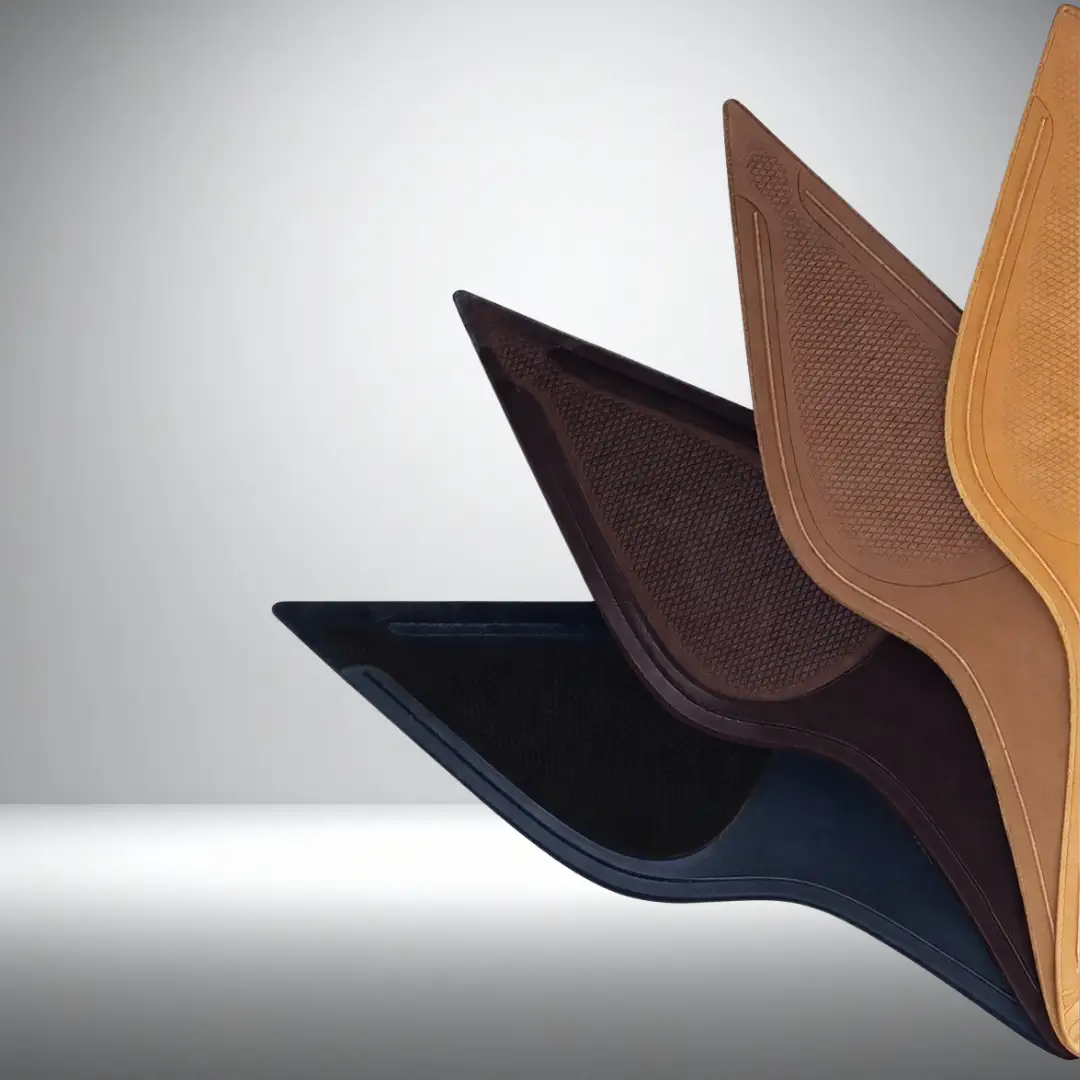
Heeled footwear puts different demands on sole materials than flat footwear. Weight shifts toward a small contact point at the heel, flex points move, and a shoe designed for an eight-hour retail shift needs different properties than one built for occasional wear. This guide walks procurement and production teams through the material decisions mattering most when sourcing soles for heeled styles.
Why Heel Height Changes Your Material Requirements
A flat shoe distributes body weight across the full length of the sole. A heeled shoe concentrates a large share of the body’s weight onto the heel component alone, especially at heel heights above two inches. The higher the heel, the smaller the ground contact area and the higher the pressure per square centimeter at the contact point.
This pressure concentration changes what you need from a heel lift or top piece. A soft compound performing fine under a flat sole wears through fast under a stiletto heel, since the same body weight now pushes through a fraction of the surface area. Buyers sourcing heel components should treat heel height as a primary spec input, not an afterthought addressed after material selection.
Low, Mid, and High Heels: Different Load Profiles
Low heels, generally under one inch, spread load closer to a flat shoe profile. Standard rubber or TPR compounds in the 60 to 70 Shore A range handle low heel applications without special reinforcement, and buyers have flexibility to prioritize cost and color matching over pure durability.
Mid heels, roughly one to two and a half inches, shift more load onto the heel top piece and narrow the contact area meaningfully. Buyers should raise hardness specifications into the 70 to 85 Shore A range for the heel lift component, since a softer compound compresses unevenly and wears at an angle, which throws off shoe balance over time.
High heels, above two and a half inches, concentrate load onto a contact point often smaller than a coin. This category calls for dense, high-abrasion compounds, frequently rubber rather than TPR, since rubber resists point-load wear better than most thermoplastic compounds at this pressure level. Some brands reinforce the top piece with a harder core material under a softer outer layer to combine grip with wear resistance.
Weight Considerations for Heeled Footwear
Weight matters more in heeled footwear than buyers often assume, since added sole weight at the heel changes how a shoe feels during extended wear and affects balance for the wearer. A heavy heel lift shifts the shoe’s center of gravity downward and backward, which fatigues the wearer faster over a full day.
EVA components work well for midsole cushioning in wedge and platform styles, where the material sits under the arch rather than at a concentrated heel point. TPR and rubber remain the standard choice for the heel top piece itself, since this component takes direct ground contact and needs abrasion resistance EVA does not provide at comparable weight.
Weston Rubber’s Performa/Tunit line offers a lightweight alternative for wedge platforms and mid-sole layers in heeled styles, combining natural or synthetic rubber compounds with EVA for a lighter alternative to solid rubber without sacrificing the surface durability heeled footwear needs at ground contact points.
Flexibility and Flex Point Placement
Flat shoes flex primarily under the ball of the foot. Heeled shoes flex less overall, since the raised heel changes the angle of the foot and reduces the range of motion through the sole. This shift means flexibility specs for heeled footwear focus less on whole-sole bend and more on the forefoot flex zone alone.
Buyers should confirm flex testing methods with suppliers, since a flex test designed for flat athletic shoes does not translate directly to a heeled dress shoe. Ask your supplier how they test flex resistance for heeled constructions specifically, and request sample flex data at the heel height your product uses, not a generic flex rating pulled from flat-shoe testing standards.
Common Failure Points in Heeled Soles
Heel lift separation ranks as the most frequent failure point in heeled footwear, where the top piece detaches from the heel base after repeated impact. This failure traces back to adhesive selection and bonding surface preparation more often than material choice alone, so buyers should raise bonding methodology with suppliers alongside material specs.
Uneven wear at the heel edge shows up when hardness sits too low for the heel height in use, causing the compound to compress unevenly under concentrated load. Cracking at the base of a high heel lift often points to a compound with insufficient tensile strength for the point-load stress the application places on the material.
What to Specify When Ordering Heel Components
Confirm four details with your supplier before placing a purchase order for heeled footwear sole components.
- Heel height range for the target product line, since specifications should scale with height rather than apply a single standard across all styles.
- Shore hardness target for the heel top piece, adjusted upward as heel height increases.
- Abrasion resistance data specific to point-load wear, not a generic flat-sole abrasion rating.
- Bonding recommendation for attaching the component to the heel base, including adhesive type and surface preparation guidance.
Suppliers with experience across heel height categories give clear, height-specific answers to each of these points, rather than a single generic spec sheet applied across your full product range.
Sourcing Considerations for Multi-Style Heel Collections
Brands running a heeled footwear collection across several heel heights in one season face a sourcing tradeoff: standardize on one compound across the range, or spec a different compound for each height tier. Standardizing simplifies purchasing and inventory, but risks under-specifying the tallest heels or over-specifying the lowest ones, since a single compound rarely performs optimally across the full height range at once.
Most experienced buyers land on a middle path: two or three compound tiers matched to low, mid, and high heel groupings within the collection, rather than either extreme. This approach keeps purchasing manageable while still matching material properties to the load each height category places on the heel component.
Ask your supplier whether they support tiered compound sourcing within a single order, since some suppliers charge a premium for splitting one purchase order across multiple formulations. A supplier experienced in heeled footwear sourcing typically has a streamlined process for this kind of tiered order already in place.
Working With Weston Rubber on Heeled Footwear Components
Weston Rubber supplies rubber, TPR, and Performa/Tunit materials across the hardness and density ranges heeled footwear applications need, with compound consultation available before your team commits to a full production order. This step matters especially for brands introducing a new heel height into their range for the first time, where prior experience with lower or higher heels does not always translate directly to the new height tier.
Sample testing before full production remains the most reliable way to confirm a compound performs as expected under your specific heel geometry and target weight, rather than relying on spec sheet data alone.
Frequently Asked Questions
Does TPR work for high heel top pieces?
TPR works for low and mid heel applications, but high heel top pieces generally perform better with rubber compounds, since rubber resists point-load wear more effectively at the small contact areas high heels create.
How does heel height affect adhesive selection for heel lifts?
Higher heels place more shear stress on the bond between the heel lift and heel base, so bonding strength matters more as heel height increases. Confirm your supplier’s adhesive recommendation scales with your heel height range.
What Shore hardness works best for wedge heel platforms?
Wedge platforms often use a softer EVA or Performa-based midlayer for cushioning, paired with a firmer rubber or TPR ground-contact layer. The exact hardness split depends on wedge height and target cushioning feel.
Why does a heel lift crack after limited wear?
Cracking often points to insufficient tensile strength in the compound for the point-load stress a high heel places on the material. Confirm tensile strength specs alongside hardness when sourcing components for taller heel heights.
Does color matter for heel lift material selection?
Color availability varies by compound. Confirm color consistency and dye matching capability with your supplier early, since heel lifts often sit in visible, high-contrast positions on the finished shoe.
Sourcing sole components for a heeled footwear line? Weston Rubber supplies rubber, TPR, and Performa/Tunit materials matched to heel height, weight, and flex requirements. Contact our team to discuss specifications for your next collection.