

Blog
EVA Sole Injection Molding vs Compression Molding: What Footwear Buyers Should Know

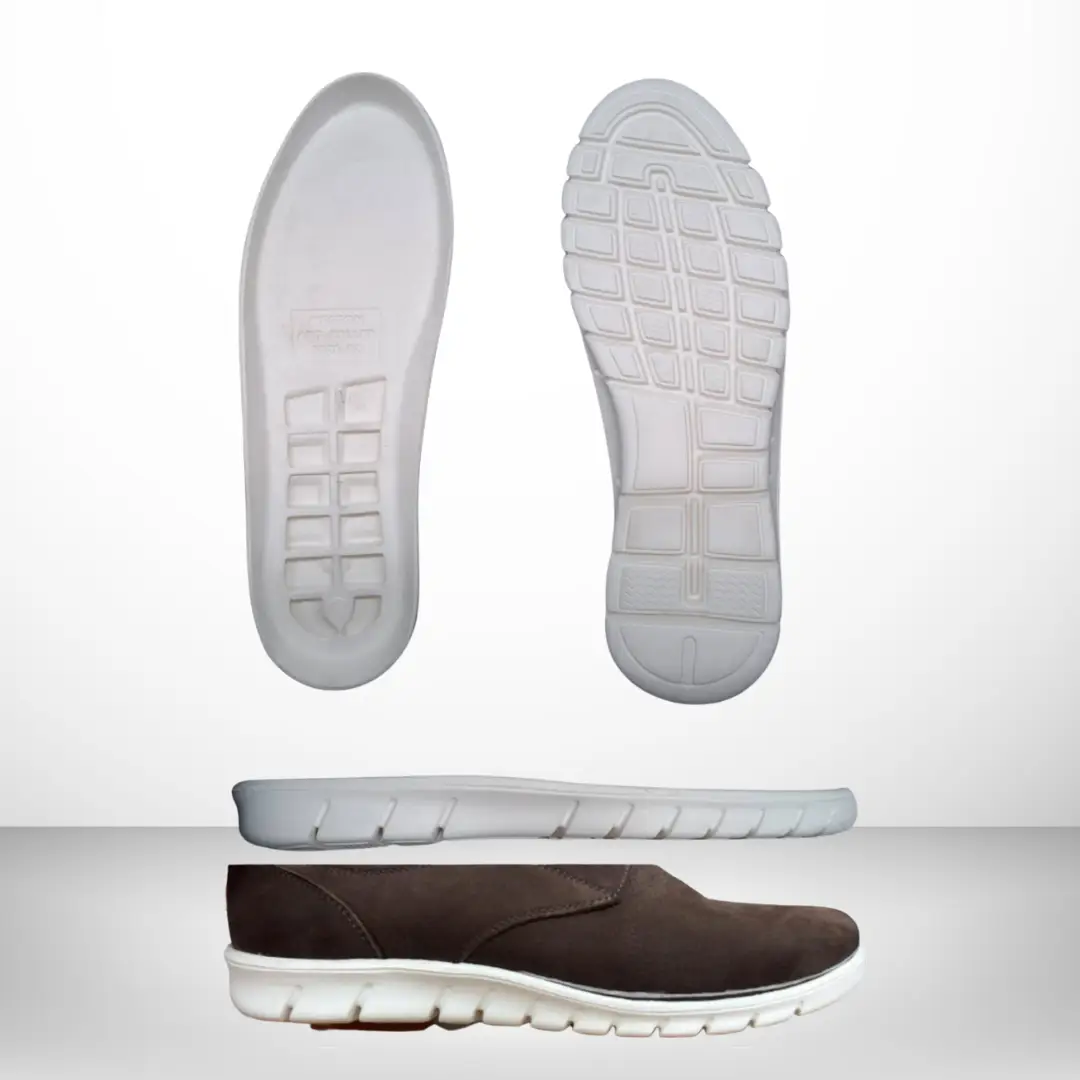
EVA soles reach your factory through one of two production methods: injection molding or compression molding. Each method produces a different cell structure, weight, and cost profile, and picking the right method for your product changes your unit economics more than most buyers expect. Here is a direct comparison, so your next sourcing decision matches your product requirements.
How EVA Injection Molding Works
Injection molding starts with EVA pellets fed into a heated barrel, where a screw mechanism melts and mixes the material along with a chemical blowing agent. The molten compound gets injected directly into a closed mold cavity under pressure. Inside the mold, heat triggers the blowing agent to release gas, which expands the compound and forms the cellular foam structure giving EVA its cushioning properties.
The mold stays closed throughout the full expansion and cooling cycle, which produces a part with a denser, smoother skin on the outer surface and a consistent cell structure throughout the core. Injection molding cycles run faster than compression molding in most production setups, since the process combines melting, expansion, and shaping into one continuous cycle inside a single mold.
How EVA Compression Molding Works
Compression molding starts differently. A pre-expanded EVA sheet, already containing a partially activated blowing agent, gets cut into a pre-form sized for the mold cavity. Workers place the pre-form into an open mold, then close the mold under heat and pressure. The remaining expansion happens inside the closed mold, and the material takes on the mold shape as the compound cures.
Compression molding often produces a part with a more open, less dense cell structure compared to injection molding, since the expansion process differs at the pre-form stage. This open structure gives compression molded EVA a lighter weight in many cases, though the exact comparison depends on the specific formulation and mold pressure used by your supplier.
Weight and Cushioning Differences
Buyers targeting a lightweight product often lean toward compression molded EVA, since the open cell structure trims weight from the finished midsole. Running shoe brands and other performance categories where weight savings matter directly to the end consumer commonly specify compression molding for this reason.
Injection molded EVA trades some weight savings for a denser, more consistent structure, which holds up well under repeated compression cycles. Casual footwear and work boots, where durability matters more than shaving grams, often specify injection molded EVA for the added structural consistency.
Cost and Production Volume Considerations
Injection molding equipment costs more upfront, but the faster cycle time reduces per-unit labor and machine time at high production volumes. Factories running large volumes of a single midsole design recover the equipment investment quickly and benefit from lower per-unit costs at scale.
Compression molding requires less upfront equipment investment, but the process runs on longer cycle times and needs a separate pre-forming step before molding. Factories running lower volumes or a wider range of midsole designs often find compression molding more cost-effective, since the process avoids the high fixed cost of injection tooling for every new design.
Design Flexibility
Injection molding locks a design into a fixed mold cavity, so design changes require a new mold, which adds cost and lead time for every design revision. Compression molding offers more flexibility for design iteration in smaller volumes, since pre-forms cut to different shapes work across similar mold setups without a full retool in every case.
Buyers running frequent seasonal design changes across a footwear line should weigh this tradeoff carefully against production volume. High-volume single designs favor injection molding economics. Frequent design changes across lower volumes favor compression molding flexibility.
Quality Control Differences Between the Two Methods
Injection molding quality control focuses heavily on melt temperature consistency and blowing agent dosing accuracy, since both directly affect cell structure uniformity across a production run. A supplier who monitors melt temperature continuously catches density drift before a full batch ships.
Compression molding quality control focuses more on pre-form weight consistency and mold closing pressure, since variation in either creates uneven density across the finished part. Ask your supplier how they verify pre-form weight before each mold cycle, since a pre-form outside the target weight range produces a part outside spec regardless of mold conditions.
Which Method Fits Your Product
Match your production method to three factors: target weight, production volume, and design change frequency. A high-volume athletic midsole with a stable design favors injection molding. A lower-volume product line with frequent design updates, or a product where minimum weight matters most, favors compression molding.
Ask your supplier which method they recommend for your specific product, and request sample parts from both methods if your weight and cushioning requirements sit close to the line between the two approaches.
Shrinkage and Dimensional Stability
EVA foam shrinks slightly after leaving the mold, as the cell structure settles and residual heat dissipates. Injection molded parts and compression molded parts shrink at different rates, since the cell structure and skin thickness differ between the two methods. A mold designed for one process rarely transfers cleanly to the other without dimensional adjustment.
Ask your supplier for post-shrinkage measurements, taken after the part reaches room temperature and full cure, rather than measurements taken directly off the press. A part measured too early looks correct on paper, then arrives smaller than spec once fully settled, creating fit problems during lasting.
Environmental and Sustainability Considerations
Injection molding generates less scrap during the shaping process, since the mold captures the compound directly without a separate pre-forming and trimming step. Compression molding generates trim waste from pre-form cutting and flash removal, though many suppliers grind and reincorporate this waste into lower-grade compound batches rather than discarding the material outright.
Buyers working with brands under pressure to reduce production waste should raise scrap handling directly with their supplier, regardless of which molding method the order uses. A supplier with a documented scrap reclaim process supports sustainability reporting further down your supply chain, an increasingly common request from footwear brands responding to retailer and regulatory pressure.
Frequently Asked Questions
Which EVA molding method produces a lighter midsole?
Compression molding generally produces a lighter part due to the more open cell structure, though the exact weight difference depends on formulation and mold pressure. Confirm actual weight figures with sample testing rather than relying on general assumptions.
Is injection molded EVA more durable than compression molded EVA?
Injection molded EVA often holds up better under repeated compression due to the denser, more consistent cell structure, which makes the method a common choice for work boots and casual footwear where long-term durability matters.
Which method costs less for a small production run?
Compression molding typically costs less for smaller runs, since the process avoids the high fixed cost of injection tooling required for every new mold design.
Does one supplier switch between both methods for the same shoe design?
Some suppliers run both processes, but a design built for one method often needs adjustment to work well with the other, since cell structure and shrinkage behavior differ between the two approaches.
What should I ask a supplier when deciding between injection and compression molding?
Ask about target weight, expected production volume, design change frequency over your product lifecycle, and request sample parts from both methods for side-by-side testing before committing to a full production order.
Weighing injection molding against compression molding for your next EVA sole order? Weston Rubber produces EVA components using both methods and will recommend the right fit for your weight, volume, and design requirements. Contact our team to request samples.