

Blog
What Are Rubber Top Lifts? The Heel Component That Determines How Long Your Shoes Last

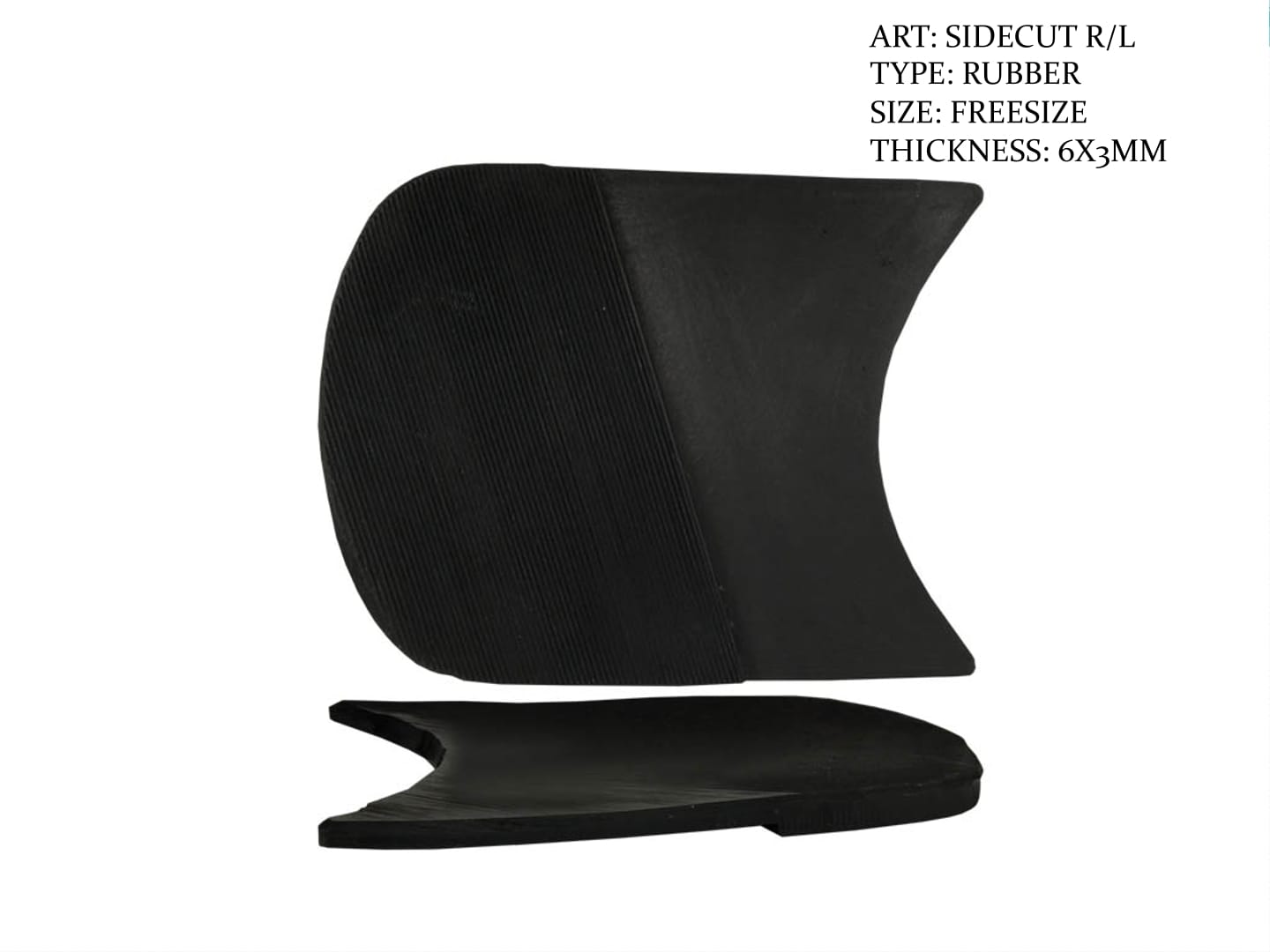
Think about the last pair of shoes you owned that you genuinely liked — really good shoes that you wanted to last. Now think about where they started showing their age. The heel. Specifically, the very bottom of the heel. The bit that’s already looking worn-down while the rest of the shoe still looks fine.
That’s not a manufacturing defect. It’s physics. The toplift — the bottommost ground-contact component of the heel — is the smallest contact point in the entire shoe taking the biggest repeated impact. Every step, your full body weight lands on it first. And because it’s a small area, that force concentrates rather than spreads. The heel wears out first because it has to.
Which means the material you choose for that component determines, more than almost anything else in the construction, how long the shoe looks good and holds up. This guide explains what rubber top lifts are, why rubber specifically is often the right call for that job, and how to spec them correctly. Weston Rubber’s rubber top lifts are finished, ready-to-attach components made in Agra, India — let’s get into it.
So What’s a Top Lift, Exactly?
A top lift is the outermost layer at the bottom of a shoe heel — the part that literally touches the ground with every heel strike. It sits below the heel block or heel stack, and it’s typically the first component that gets replaced when a shoe goes in for repair.
Here’s the mechanical reality of what it deals with. The forefoot takes bending stress — continuous, repetitive flex across a relatively wide zone. The toplift takes something different: concentrated impact. Your heel strikes the ground first on most walking strides, and that force lands on a contact area that’s smaller than your fist. All of your body weight, every step, compressed into that point. Over and over.
A rubber top lift is a pre-shaped, finished component made from natural rubber, synthetic rubber, or an engineered compound blend — manufactured to be bonded, nailed, or stitched directly to the shoe heel without any cutting or machining on your end. Shore A hardness is customisable. Compound grade is chosen based on what that particular application needs to survive. And the DIN abrasion benchmark — ≤150 cubic millimetres under 10N load — is achievable in Weston’s rubber toplift compound, which is the same performance standard used across their rubber heel sheet range.
| Why the toplift is the quality signalIn formal and dress footwear especially, the heel is what people notice first when a shoe starts aging. Worn-down toplifts signal a cheap product or a neglected one before the upper or the welt or the insole shows any wear at all. Get the toplift spec right, and the shoe earns its price point every time someone glances down. |
Rubber Top Lifts vs Rubber Top Lifts Sheets — Quick Disambiguation
Weston makes both, and both will show up when you search for “rubber top lifts.” They’re different products for different production workflows, so it’s worth being clear before you order.
| Finished Rubber Top Lifts | Rubber Top Lifts Sheets | |
| What arrives | Pre-shaped component, ready to attach | Flat rubber sheet, 3mm–7mm, 24″×36″ |
| What you do with it | Bond, nail, or stitch. Done. | Cut it to toplift profile, then attach |
| Equipment needed | Assembly or repair tools only | Die cutter or CNC machine |
| Best for | Production lines and repair operations | Volume cutting with in-house equipment |
Simple rule: if you bond, nail, or stitch components in-house without cutting equipment, order the finished rubber top lifts. If you have die cutting or CNC equipment and want to cut toplift profiles from sheet material yourself, order the rubber top lifts sheets (3mm–7mm thickness, 24″×36″ standard sheet). More detail on the sheet format is in the rubber sole sheets guide.
What Rubber Actually Does at the Heel
Here’s what you’re specifying when you choose rubber for the toplift — in plain terms, not material science.
| What the rubber does | What that means for the heel |
| Abrasion ≤150 cu mm (DIN) | That’s a formally measurable wear standard. Not a vague ‘durable’ claim — a number you can test against and hold a supplier to |
| Takes heel strike all day | Cushions the concentrated impact of every step at the smallest contact point in the shoe. Repeatedly. Without collapsing. |
| Grips on the surfaces that matter | Tiles, concrete, polished floors — where heels actually meet the ground. Rubber doesn’t slip where softer materials might. |
| Holds its profile under load | Doesn’t flatten or permanently deform. The heel looks right at month six because the material recovered every time it compressed. |
| Handles moisture, oil, temperature | Compound-dependent — but natural and synthetic blends can be formulated for environmental resistance well beyond everyday wear. |
| Shore A hardness — your call | Harder grades (75–85A) for formal and safety applications. Softer grades for everyday use where some give underfoot is a feature. |
| Finish and colour consistency | Every batch, not just the first one. That’s the part that actually matters in production. |
That first line — the ≤150 cu mm DIN abrasion figure — is worth pausing on. DIN abrasion testing (DIN 53516 / ISO 4649) measures how much material a rubber compound loses under a standardised abrading force. The lower the number, the better the wear resistance. ≤150 cubic millimetres is the same benchmark cited for Weston’s rubber top lifts sheets and their rubber toplift component. It’s a real, verifiable number — not a claim you have to take on faith. If you’re a procurement manager and your current supplier can’t give you a DIN abrasion figure for their toplift compound, that’s worth asking about.
On Shore A: for formal and heavy-duty applications, the 75–85A range is typically the right spec — firm enough to resist rapid wear at the heel strike point. For everyday and comfort-priority footwear, you can go softer. The Shore A hardness guide explains the full scale if you want to dig into what the numbers actually mean.
Rubber or TPR Top Lifts? The Honest Answer
Weston makes both rubber and TPR top lifts. I’m not going to tell you rubber is always the right answer — it isn’t. Here’s where each one actually makes sense.
| Rubber Top Lifts | TPR Top Lifts | |
| Wears longer | Yes — ≤150 cu mm DIN abrasion achievable | Good, but lower abrasion resistance |
| Handles heel impact | Excellent — built for concentrated stress | Good, slightly lighter underfoot |
| Weight | Heavier | Lighter |
| Cold-climate use | Can stiffen in extreme cold | Stays flexible — TPR advantage |
| Recyclable | No — vulcanized rubber | Yes — thermoplastic |
| Best categories | Formal, dress, safety, premium, repair | Casual, school, fashion heels, mid-market |
Go with rubber top lifts when:
- You’re producing formal or dress footwear where heel wear is a quality and brand signal
- Safety footwear is the brief — certification-grade abrasion performance isn’t optional
- The shoe is going to take serious repeated heel strike and you need the toplift to hold up
- You’re a repair shop replacing a rubber toplift and need compound match
Go with TPR top lifts when:
- Weight is part of the spec and mid-market cost efficiency matters — TPR top lifts are the right call for casual, school, and fashion footwear
- Cold-climate markets are in scope — TPR stays flexible where rubber can get stiff
- Recyclability is part of your sustainability brief
Who Actually Uses Rubber Top Lifts — and Why
More categories than you’d expect. And in each case, the reason rubber wins at the heel comes back to the same thing: the stress concentration at that contact point is too high for softer materials to hold up.
Formal and dress footwear
The heel is the quality tell. A dress shoe can have a beautiful upper and a clean welt, but if the toplift is wearing down visibly after three months, the whole shoe reads as cheap. Rubber toplift compounds that hold their profile and surface integrity through extended wear — instead of rounding off and scuffing up — are what actually makes a shoe look like it’s worth what was paid for it.
Women’s heels and fashion footwear
High heels concentrate the stress on an even smaller contact area than flat shoes. The physics get more extreme the higher the heel — all of the body weight through a contact point sometimes smaller than a coin. Rubber is the practical material choice here because nothing else gives you the abrasion resistance to survive that level of concentrated impact across months of wear.
Safety and work footwear
This isn’t just a durability question — it’s sometimes a compliance question. Abrasion performance at the heel can be part of the certification brief for safety footwear in certain markets. Compound grade selection needs to align with those requirements, which is another reason to source from a manufacturer who can give you verified DIN abrasion data for their compound rather than a product description.
Shoe repair and resoling
Honestly, the toplift is the #1 component replaced in shoe repair. Far more common than forepart replacement or full resoling. And repair shops have a specific need that regular production buyers often don’t think about: batch-to-batch compound consistency. When you’re fitting a new toplift to a customer’s shoes, it has to perform like the original — same hardness feel underfoot, same grip, same profile stability. A supplier whose compound drifts between batches makes that impossible. Verified in-house QC on every batch is the non-negotiable requirement for this buyer segment.
OEM and volume production
For OEM manufacturers producing at volume, consistency is the brief. Not just the compound — the finish, the colour, the dimensional tolerances across every production run. A toplift that looks slightly different from one batch to the next creates rework and quality headaches that don’t show up in the first sample approval.
What to Look for in a Rubber Top Lifts Supplier
Here’s the thing about toplift procurement that most buyers figure out only after a bad experience: the first batch is never the problem. It’s batch six, or batch twelve, when compound consistency drifts or the finish changes slightly or the hardness comes in softer than it should. For a heel component that’s this visible and this high-stress, that’s the standard to hold suppliers to.
- Verified DIN abrasion data. Not ‘excellent abrasion resistance’ in the product description — an actual figure. ≤150 cu mm at 10N load is achievable in Weston’s rubber toplift compound. If a supplier can’t give you a number, ask why not.
- Shore A range. Multiple grades, advised per application. Harder for formal and safety (75–85A range); softer for everyday wear. Not a single compound applied to every brief.
- Compound grade options. Natural rubber for premium applications. Synthetic compounds where chemical or environmental resistance matters. Engineered blends for specific performance profiles. The right compound for the job.
- Finish and colour consistency across batches. Not just the sample. Every delivery.
- In-house QC with batch documentation. Compound hardness and thickness verified before dispatch. Critical for repair operations; genuinely valuable for everyone else.
- Rubber and TPR from one facility. If your range uses both — rubber for formal lines, TPR for casual — sourcing both from Weston means one QC system and one supplier relationship to manage.
Thirty-seven years of compound knowledge. Weston has been manufacturing rubber soling components since 1987. That’s a lot of production learning about what actually holds up at the heel and what doesn’t.
Questions People Actually Ask About Rubber Top Lifts
What is a rubber top lift and what does it do?
A rubber top lift is the ground-contact component at the very bottom of a shoe heel — the layer that strikes the ground first with every step. It’s made from natural or synthetic rubber, pre-shaped and ready to bond or nail to the heel construction. Its job is to absorb the concentrated impact of heel strike, provide grip on contact surfaces, and resist wear at the highest-stress point of the shoe — which is why it’s the component that wears out first in most shoes.
What’s the difference between a rubber top lift and a rubber top lifts sheet?
A rubber top lift is a finished, pre-shaped component that attaches directly to the heel — no cutting or machining needed. A rubber top lifts sheet is flat raw material (3mm–7mm thickness, 24″×36″ standard size) that you cut into toplift profiles using a die cutter or CNC machine. If you’re an assembly-focused operation or a repair shop, order the finished top lifts. If you have in-house cutting equipment and want to produce your own profiles from sheet material, order the sheets.
Why does the heel wear out before the rest of the sole?
Pure physics. The heel is the smallest ground-contact point in the shoe, and it takes the first and hardest impact with every stride. That concentrated force — your full body weight through a very small area, repeatedly — creates a much higher wear rate than the forefoot zone, which spreads bending stress across a wider area. The toplift compound is specifically engineered to handle that concentrated stress without wearing down rapidly.
What Shore A hardness should a rubber top lift be?
For formal, dress, and safety footwear, the 75–85A range is typically the right starting point — firm enough to resist rapid wear at the heel strike point while maintaining structural integrity under load. For everyday casual footwear where some give underfoot is acceptable, softer grades work fine. Final spec should be confirmed with your supplier and validated with samples before going to volume production. The Shore A hardness guide on Weston’s site covers the full scale if you want to dig into the numbers.
Does Weston Rubber supply rubber top lifts in custom compounds and Shore A grades?
Yes. Multiple Shore A grades, natural rubber, synthetic rubber, and engineered compound blends — all available, with grade and compound advised per application. Surface finish, colour, and dimensional specifications are customisable. Verified DIN abrasion performance of ≤150 cubic millimetres at 10N load is achievable in Weston’s rubber toplift compound. OEM and bulk orders are supported with in-house QC and batch consistency verification from Weston’s Agra facility.
The Bottom Line
The heel wears first. That’s not going to change. But how quickly it wears, and whether it wears gracefully or badly, is almost entirely down to the toplift compound. Get the Shore A right for the application, get a verified abrasion figure from your supplier, and make sure the compound is consistent across every batch — not just the first approval sample.
Weston’s rubber top lifts have been doing this job since 1987, in natural rubber, synthetic rubber, and compound blends, with in-house QC on every order. If you’re ready to specify, start below.