
Blog
TPR Soling Material: What Footwear Brands Need to Know Before Choosing a Sole

Choosing the wrong soling material doesn’t just affect product performance — it affects margins, timelines, and customer returns. For footwear manufacturers evaluating sole options, the decision between TPR, EVA, TPU, and rubber carries real commercial consequences: failed wear tests, rejected samples, or costs that balloon when a premium-specified material was never actually needed.
This guide is written for product developers, sourcing managers, and footwear brand buyers who are evaluating TPR as a soling material. By the end, you’ll know exactly how TPR performs, where it excels, where it falls short, and how to assess whether a supplier can actually deliver to your spec. If you’re already considering Weston Rubber’s TPR sole range, this article will help you ask better questions before placing an order.
What Is TPR Material? The Short Answer for Buyers
TPR stands for Thermoplastic Rubber — a category of material that sits at the intersection of plastic and rubber. Technically, it’s a block copolymer (most commonly Styrene-Butadiene-Styrene, or SBS) that behaves like rubber at room temperature but can be melted, moulded, and reprocessed like a thermoplastic. That combination is what makes it commercially significant.
Unlike traditional vulcanized rubber, TPR doesn’t require a curing process. It can be injection-moulded on standard machinery, which dramatically reduces tooling complexity and production time. That’s why it became the default soling material for mid-market footwear: it delivers rubber-like performance at plastic-like processing costs.
A quick disambiguation worth making upfront: TPR is a subset of TPE (Thermoplastic Elastomer) — the broader family. TPU (Thermoplastic Polyurethane) and EVA (Ethylene-Vinyl Acetate) are separate materials entirely, with different performance profiles and price points. We’ll compare all of them properly in a table later in this guide.
Key Properties of TPR Soles — Framed for Footwear Performance
Most material guides list properties in isolation: tensile strength, elongation at break, Shore A hardness. Those numbers matter in a lab. What matters on the production floor and in the field is what those properties actually translate to for your product. Here’s the practical read:
| TPR Property | What It Means for Your Footwear |
| Abrasion Resistance | Longer outsole lifespan — fewer warranty returns and replacement costs |
| Temperature Flexibility | Remains pliable from −40°C to +80°C — suitable for cold-weather markets |
| Shore A Hardness (40–85A) | Customizable across casual, work, and safety footwear in a single material |
| Slip Resistance | Can meet EN ISO 13287 and ASTM F2913 anti-slip test standards |
| Lightweight Density | Weight-competitive with EVA — no compromise on comfort or handling |
| Colorability | Pigment-friendly — solid, marbled, and two-tone options for branded soles |
One property worth calling out separately: recyclability. Unlike vulcanized rubber, TPR can be remelted and reprocessed. For brands under pressure to demonstrate sustainable sourcing practices, this is a meaningful differentiator — particularly in European and North American markets where material recyclability is increasingly a procurement criterion.
Where TPR Soles Perform Best: Footwear Applications by Category
TPR is a versatile material — but it’s not the right answer for every brief. Understanding where it excels, and where it doesn’t, is what separates a well-specified product from an expensive rework.
Where TPR Excels
- Casual & Lifestyle Footwear — The highest-volume application for TPR. It offers the right balance of durability, grip, and price for everyday shoes, loafers, and mules. This is TPR’s strongest commercial ground.
- School & Children’s Shoes — Flexibility and safety are the priorities here. TPR’s wide hardness range allows softer compounds for younger age groups, and its latex-free formulation is an advantage for allergy-sensitive product lines.
- Work & Safety Footwear — Oil-resistant grades of TPR are available, and the material can be compounded to meet anti-slip requirements for industrial and occupational footwear.
- Slippers & Indoor Footwear — Soft-grade TPR (Shore A 40–55) delivers the indoor grip and comfort feel that this category demands, at a cost point that works for high-volume production.
- Budget Athletic — In price-sensitive athletic lines, TPR outsoles compete effectively with EVA. Where cushioning is handled by the midsole, TPR provides durable ground contact without the cost of a rubber outsole.
Where TPR Is Not the Right Specification
It’s worth being direct here. TPR is not ideal for high-performance running shoes, where EVA and TPU midsole compounds offer superior energy return and long-run cushioning. Premium hiking and trail footwear typically specifies natural rubber outsoles for their grip-to-weight ratio on technical terrain. If your brief sits in either of those categories, a conversation about alternative materials is worthwhile.
TPR vs TPU vs EVA vs Rubber: Which Sole Material Fits Your Brief?
This is the comparison most sourcing managers are working through when they land on a guide like this. The table below is framed around the decision variables that matter at the brief stage — not chemistry.
| Material | Cost | Durability | Weight | Cold Flex | Best Fit | Recyclable |
| TPR | Low–Med | ★★★★☆ | ★★★☆☆ | ★★★★★ | Casual, work, school, slippers | Yes |
| TPU | High | ★★★★★ | ★★★★☆ | ★★★☆☆ | Performance, hiking, safety | Yes |
| EVA | Low | ★★★☆☆ | ★★★★★ | ★★★★☆ | Midsoles, athletic, lightweight | Yes |
| Natural Rubber | High | ★★★★★ | ★★☆☆☆ | ★★★★★ | Premium outsoles, high-grip | No |
| PVC | Very Low | ★★☆☆☆ | ★★★☆☆ | ★★★★☆ | Budget, indoor, flat soles | No |
Reading the table: if your priority is cost-performance balance across mid-market volumes, TPR is your specification. If you need maximum durability in high-stress performance applications, move the conversation to TPU. If lightweight cushioning is the primary driver — particularly for midsoles — EVA is worth evaluating. For premium grip in a heritage or artisan product context, natural rubber justifies the cost premium.
The reality for most mid-market footwear manufacturers is that TPR delivers what you need, at a cost structure that protects your margins, with the production flexibility to scale. That’s why it remains the dominant outsole material in its category.
Why Footwear Manufacturers Choose Weston Rubber for TPR Soles
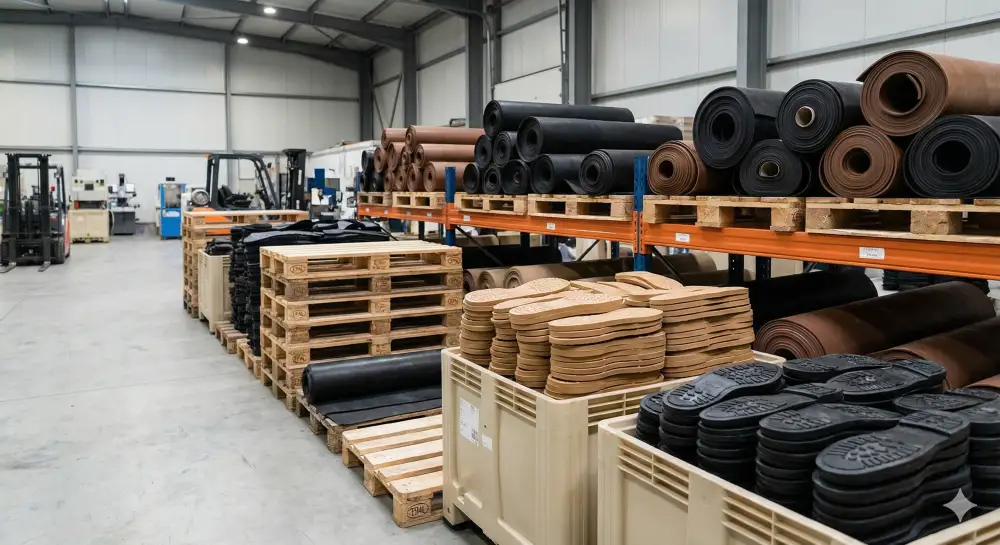
Understanding the material is one half of the sourcing decision. The other half is whether the manufacturer behind it can actually deliver — consistently, at scale, to specification. Here’s why 200+ footwear manufacturers across India and overseas work with Weston Rubber Industries.
37+ Years of Specialist Manufacturing
Weston Rubber Industries has manufactured soling materials since 1987. That’s not a marketing figure — it means four decades of process refinement, material knowledge, and production discipline. The team understands how TPR behaves across different compounds, hardness ranges, and production volumes, because they’ve worked through every variable.
A Full TPR Sole Product Range
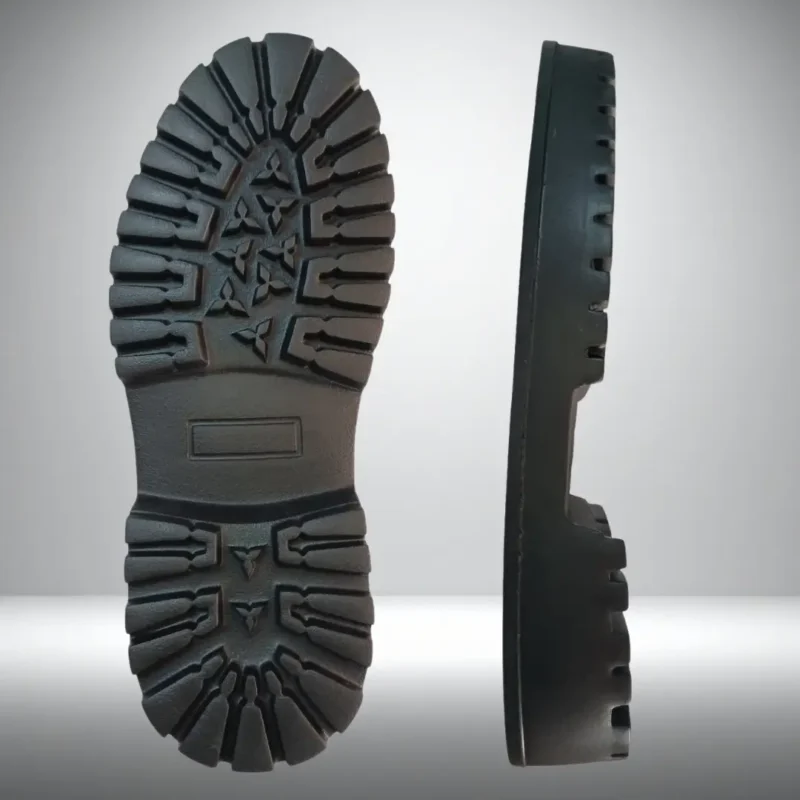
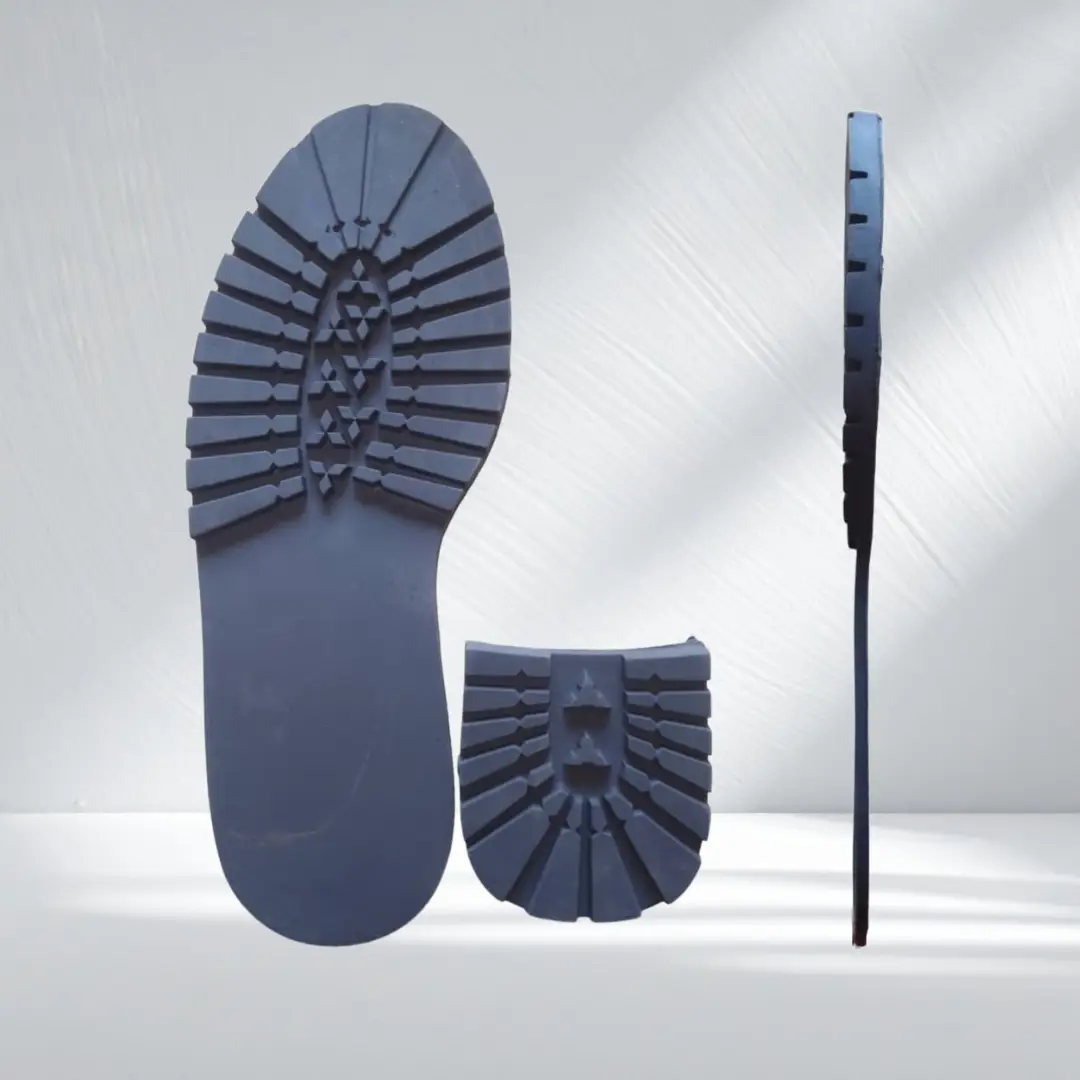
Weston’s TPR range covers the complete soling portfolio that footwear manufacturers need: TPR Blockers for full outsole applications, TPR Fore Parts for front-of-foot construction, and TPR Top Lifts for heel lift components. Each product is available in a range of hardness specifications and colours to match your product brief.
In-House Quality Control at Every Stage
Quality isn’t a final inspection — it’s built into the process. Weston operates in-house material testing and process monitoring at every production stage, with a dedicated pre-dispatch review before any order leaves the facility. For manufacturers who’ve experienced batch inconsistencies from trading houses or low-overhead suppliers, this matters.
Customisation to Your Specification
Shore A hardness, colour, grain texture, sole thickness — Weston’s production capability allows customisation across all these variables. Whether you need a soft-compound slipper sole at Shore A 45 or an oil-resistant work sole at Shore A 75, the brief can be matched without routing through a third-party compounder.
FAQs: What Footwear Buyers Ask About TPR Soles
Is TPR sole material suitable for bonding to leather or textile uppers?
Yes — TPR outsoles bond reliably to leather, synthetic, and textile uppers using standard cement adhesion processes. For high-stress applications, surface preparation (roughing and priming) is recommended to optimise peel strength. If your construction involves direct injection, confirm compound compatibility with your machinery settings.
What Shore A hardness should I specify for casual vs. work footwear?
For casual and lifestyle footwear, Shore A 50–65 delivers a good balance of flexibility and wear resistance. For work and safety applications where greater rigidity and oil resistance are required, Shore A 70–85 is the more appropriate range. Weston’s team can advise on the right compound for your specific application.
Can TPR soles meet slip-resistance certification requirements?
TPR can be compounded and patterned to achieve slip-resistance performance aligned with EN ISO 13287 (footwear slip resistance) and ASTM F2913 standards. Sole geometry and tread pattern play a significant role alongside material compound, so certification testing should be conducted on the final sole design.
Does Weston Rubber supply TPR soles for export orders?
Yes. Weston Rubber Industries supplies soling materials to footwear manufacturers across India and internationally, with 200+ repeat customers across both domestic and overseas markets. Compliance documentation is available for export orders. To discuss your requirements, contact the team directly.
Conclusion
TPR remains one of the most versatile and cost-effective soling materials for mid-market footwear — combining rubber-like performance with the processing advantages of thermoplastics. For brands producing casual, work, school, or indoor footwear at volume, it is almost always the right specification when the brief is evaluated honestly against cost, durability, and production practicality.
But the material is only as good as the manufacturer producing it. Consistent Shore A values, reliable batch quality, and the ability to customise to your specific brief are what separate a capable soling supplier from one that creates problems downstream. Weston Rubber Industries has been delivering that consistency to footwear manufacturers since 1987 — and the 200+ repeat customers across India and overseas reflect it.