
Blog
EVA vs Rubber vs TPR: Which Sole Material Is Right for Your Footwear Brief?

Every footwear brief comes back to the same decision: which sole material do you specify? Get it right and you hit the performance target, protect your margin, and avoid costly sample reworks. Get it wrong and you’re back to the drawing board six weeks before production — with a supplier relationship strained and a launch date at risk.
EVA, rubber, and TPR are all proven soling materials. Each has a genuine use case, a real performance advantage, and a cost profile that makes it the right answer — for the right brief. The problem is that most comparison guides either oversimplify (picking one winner) or go so deep into chemistry that they’re not useful at the brief stage.
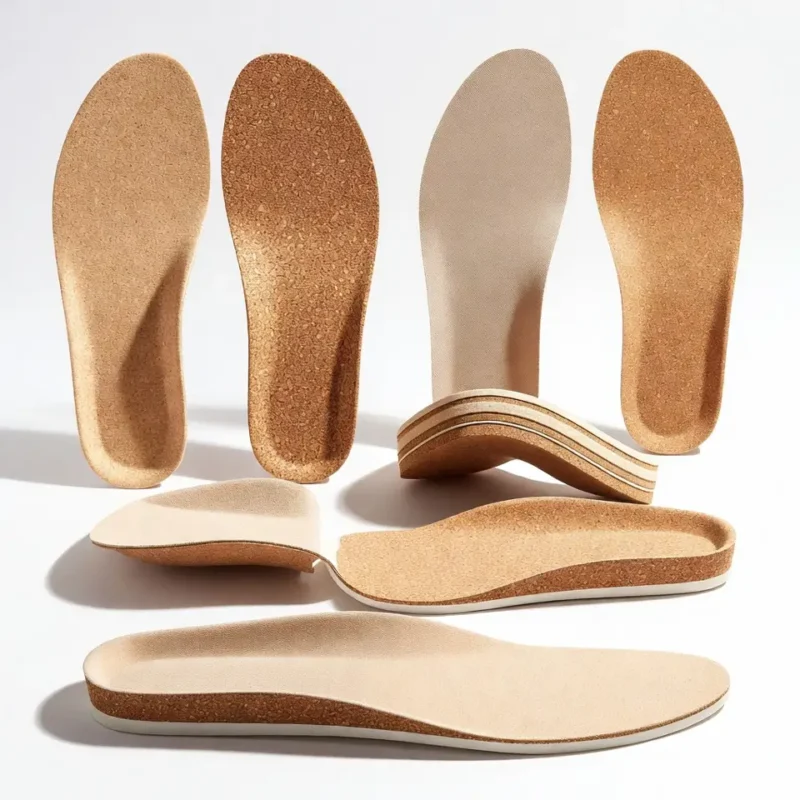
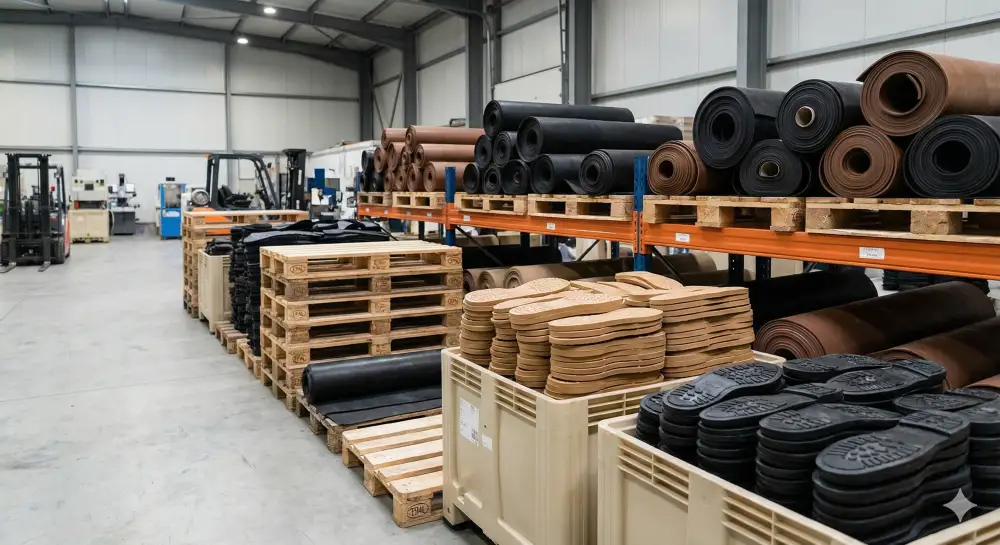
This guide is written for footwear product developers, sourcing managers, and brand owners who are evaluating sole materials before committing to a specification. By the end, you’ll know exactly how each material performs, where it excels, where it doesn’t, and how to match it to your product category. If you want to see the full soling range in one place, Weston Rubber’s product portfolio covers all three materials — plus cork footbeds — from a single manufacturing facility.
Quick Material Profiles: What Each One Actually Is
Before comparing them, it helps to have a clear picture of what each material is and why it exists. These aren’t interchangeable — they were developed to solve different problems in footwear construction.
| EVA | Rubber | TPR |
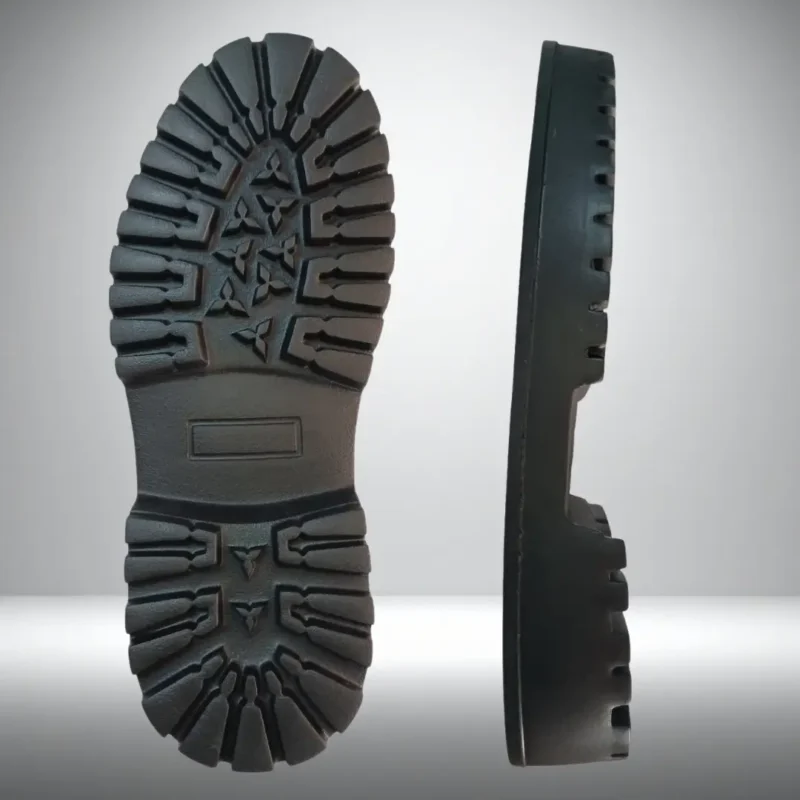
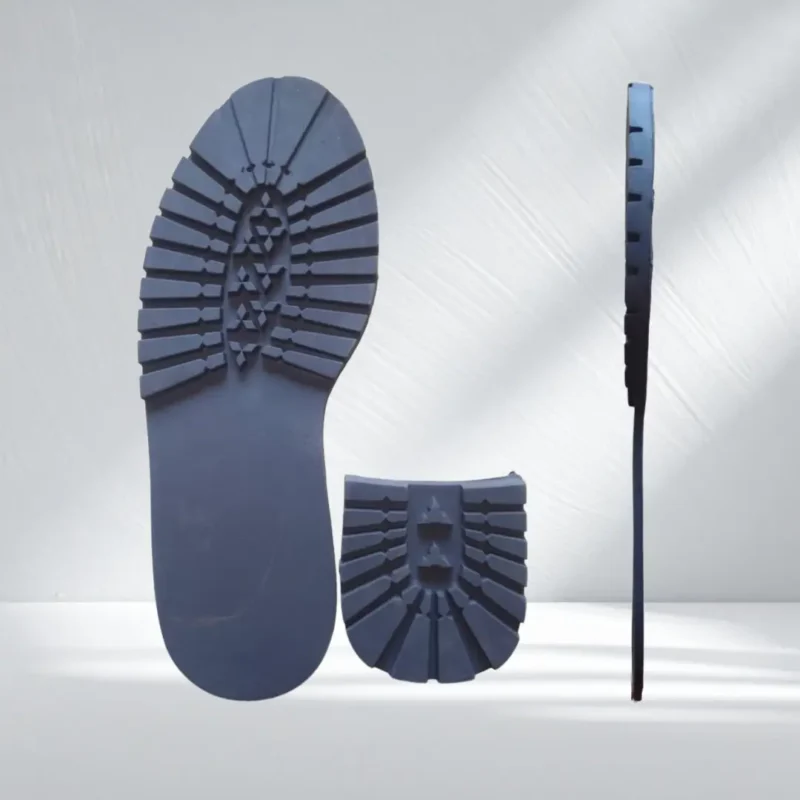
| Ethylene-Vinyl Acetate Lightweight, foam-like Primary use: midsoles & cushioned outsoles Known for energy return and low weight | Natural or synthetic vulcanized Dense, durable, high-grip Primary use: outsoles demanding traction The benchmark for wear resistance | Thermoplastic Rubber (SBS-based) Processes like plastic, feels like rubber Primary use: outsoles & heel components Best cost-performance balance at volume |
One clarification worth making: TPR is a subcategory of TPE (Thermoplastic Elastomer), not the same thing as rubber. It processes like a thermoplastic but behaves elastically — which is precisely what makes it commercially attractive. Natural rubber requires vulcanization (a curing process); TPR does not. EVA is a foam compound, not a rubber at all — it’s the lightest of the three and behaves very differently under load. All three are available from Weston Rubber Industries as soles, sheets, and component forms.
Head-to-Head: Performance Properties Compared
The table below compares EVA, rubber, and TPR across eight performance variables that matter in a footwear brief. Each property is framed in terms of the finished product — not raw material science.
| Property | EVA | Rubber | TPR |
| Weight | Lightest | Heaviest | Mid-range |
| Cushioning / energy return | Excellent | Minimal | Low |
| Durability / abrasion | Moderate | Highest | High |
| Grip / traction | Moderate | Best | Good |
| Cold-temp flexibility | Good | Stiffens | Best |
| Cost (relative) | Lowest | Highest | Mid |
| Design / colour flex | Excellent | Limited | Excellent |
| Recyclability | Yes | No (vulcanized) | Yes |
A few properties are worth expanding on:
- Weight: EVA is the clear leader — its foam structure makes it the default choice for weight-sensitive applications like athletic footwear. Rubber’s density is a genuine trade-off for its durability. TPR sits between the two and is weight-competitive for most casual and work categories.
- Cold-temperature flexibility: TPR retains flexibility at low temperatures — down to approximately −40°C — making it the preferred specification for cold-climate markets. Natural rubber stiffens and becomes brittle in cold conditions. EVA performs reasonably well but can harden at extreme low temperatures.
- Recyclability: Both EVA and TPR are thermoplastics and can be remelted and reprocessed. Vulcanized rubber — the kind used in most outsoles — cannot be recycled through standard thermoplastic processes. For brands under sustainability pressure from retail partners, this is an increasingly important procurement criterion.
Which Material Fits Which Footwear Category?
Buyers think in product categories, not material properties. Here’s how each material maps to the footwear types where it genuinely excels — and where it doesn’t belong.
EVA — Best For:
- Athletic & performance footwear — EVA midsoles are the industry standard for energy return and cushioning in running, training, and sport shoes.
- Lightweight sandals & open footwear — EVA footbeds deliver comfort with minimal weight, particularly in leisure and summer categories.
- Slippers & indoor footwear — Soft-grade EVA provides the cushioning and indoor grip that this category demands, at a cost point suited to high-volume production.
- Budget lifestyle footwear — EVA outsoles offer a cost-efficient option where traction demands are modest.
Rubber — Best For:
- Work & safety footwear — Oil resistance, high grip, and long-wear durability make rubber the right specification for industrial, occupational, and safety categories.
- Premium & heritage footwear — Rubber outsoles carry quality connotations in dress shoes, boots, and heritage product lines where feel and longevity justify the cost premium.
- High-traction applications — Hiking, outdoor, and technical footwear where surface grip is a primary performance requirement.
TPR — Best For:
- Casual & lifestyle footwear — The highest-volume application for TPR. The right balance of durability, grip, and cost for everyday shoes, loafers, and mules.
- School & children’s shoes — Wide hardness range for different age groups; latex-free; cost-competitive at volume.
- Budget athletic — Where EVA handles the midsole cushioning, TPR provides a durable, cost-efficient outsole contact layer.
- Cold-climate markets — TPR’s flexibility at low temperatures makes it the outsole material of choice for footwear sold into cold regions.
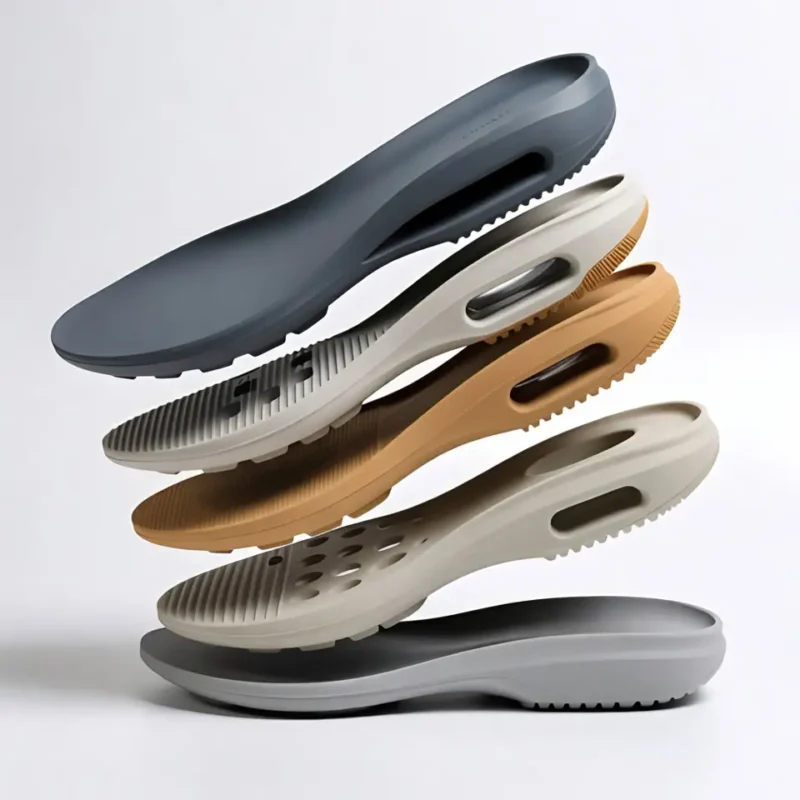
| Multi-material construction noteEVA midsole + rubber or TPR outsole is the most common construction in mid-to-premium footwear. The midsole handles cushioning (EVA’s strength); the outsole handles grip and abrasion (rubber or TPR’s strength). Sourcing both components from a single manufacturer — like Weston Rubber — reduces lead time and simplifies quality control. |
Cost, Manufacturing & Scalability: The Production Reality
Performance specs tell you how a material behaves in use. But footwear manufacturers also need to know how it behaves in production — because tooling complexity, cycle times, and cost at scale all affect whether a material decision works in practice.
EVA
EVA is processed by injection moulding or compression moulding. Cycle times are fast, tooling is well-understood across most manufacturing facilities, and cost-per-unit is the lowest of the three materials at scale. Density consistency across batches needs QC attention — variation in EVA density affects cushioning performance and shoe weight, and it’s one of the more common failure points in lower-grade supply chains.
Rubber
Natural rubber outsoles are produced by compression moulding. Vulcanization adds time to the cycle — longer than both EVA and TPR — and tooling costs are higher. Post-cure, design changes are difficult: rubber’s rigidity once cured limits the flexibility that injection moulding allows. The cost premium is real, but justified in categories where durability and grip are primary.
TPR
TPR is injection-moulded on standard thermoplastic machinery — the fastest processing of the three. No curing step means shorter cycle times and lower energy costs. Hardness is customizable across a wide Shore A range (typically 40–85A) without changing machinery or tooling significantly. Colour and grain texture options are broad, making TPR the most design-flexible outsole material in the mid-market.
Sustainability & Compliance: What Buyers Are Increasingly Being Asked
Sustainability criteria are moving from brand aspiration into procurement specification. Retail partners in Europe and North America increasingly require material compliance documentation at the sourcing stage — which means your sole material choice now has implications beyond performance and cost.
- EVA: Recyclable in thermoplastic form; low-VOC grades available; REACH-compliant formulations standard. Some brands are moving toward bio-based EVA variants. Compression-moulded EVA off-cuts can be reprocessed, reducing manufacturing waste.
- Natural rubber: Biodegradable but not recyclable post-vulcanization. FSC-certified natural rubber sources are available. Latex allergy is a compliance consideration for children’s and medical-adjacent footwear categories. REACH documentation is available from quality suppliers.
- TPR: Fully recyclable through standard thermoplastic reprocessing. Latex-free — an advantage for allergy-sensitive product lines. REACH and RoHS compliant grades are available. SGS testing documentation can be provided for export orders from suppliers with in-house testing capability.
| For export orders to EU or North American markets, always confirm your supplier can provide material compliance documentation (REACH, RoHS, SGS test reports) with your order. Weston Rubber provides compliance documentation for international orders across all three material lines. |
Decision Guide: How to Choose Based on Your Brief
No single material wins across all briefs. The right answer depends entirely on what you’re building, who you’re building it for, and what constraints you’re working within. Here’s the framework:
- If cushioning and lightweight construction are the priority — EVA is your specification. It’s the default midsole material in athletic and comfort footwear for good reason.
- If maximum grip, durability, and a premium product positioning matter most — Rubber is your specification. The cost premium is justified when performance and longevity are non-negotiable.
- If you need cost-performance balance at volume with design flexibility — TPR is your specification. It’s the dominant outsole material in mid-market casual and work footwear because it delivers exactly this.
- If you’re building a multi-component construction — EVA midsole + TPR or rubber outsole is the most proven high-value pairing. Let each material do what it does best.
- If sustainability compliance is a buyer or retail requirement — EVA and TPR are the stronger options; both are recyclable. Confirm REACH and RoHS documentation from your supplier at the sourcing stage.
- If your product ships into cold-climate markets — Specify TPR for the outsole. It retains flexibility at temperatures where natural rubber stiffens and becomes unreliable.
The most important thing to understand is that these materials aren’t competing in most real-world constructions — they’re complementary. The best footwear often combines two of them. Weston Rubber Industries manufactures all three from a single facility, which means a brief that spans more than one material doesn’t require managing multiple suppliers, documentation sets, or lead-time schedules.
Why Footwear Manufacturers Source All Three from Weston Rubber
Understanding the materials is the first part of the sourcing decision. The second part is whether the manufacturer behind them can deliver — consistently, to specification, at the volumes your production requires.
- 37+ years of specialist manufacturing. Weston Rubber Industries has manufactured soling materials since 1987. That’s four decades of process refinement across EVA, rubber, and TPR — not a generalist supplier that added soling as a product line.
- Full soling portfolio from one facility. EVA sheets and soles, rubber sheets and soles, TPR blockers, fore parts, and top lifts — plus cork footbeds. Multi-material briefs are handled by one team, one quality system, and one dispatch process.
- In-house quality control at every stage. Material testing, process monitoring, and pre-dispatch inspection are built into the production workflow — not applied as a final check. Batch consistency is controlled before it becomes a problem.
- Hardness and colour customization. Shore A hardness, grain texture, and colour can be customized across all three material lines to match your product brief without routing through a third-party compounder.
200+ repeat customers across India and overseas. The repeat rate reflects production reliability. Weston supplies domestic manufacturers and international brands, with compliance documentation available for export orders.
FAQs: Common Questions from Footwear Buyers
Is EVA or rubber better for outdoor footwear?
It depends on the outdoor category. For trail and technical hiking footwear where grip and durability are primary requirements, rubber is the stronger outsole specification. For lightweight outdoor sandals or casual hikers where weight and comfort take priority, EVA — particularly in the midsole — is the better choice. Many outdoor constructions use both: EVA midsole for cushioning and rubber outsole for traction.
Can I use EVA and rubber together in the same sole construction?
Yes — and it’s one of the most common constructions in mid-to-premium footwear. A compression-moulded EVA midsole paired with a rubber or TPR outsole combines the cushioning advantage of EVA with the traction and wear resistance of rubber or TPR. Sourcing both components from the same manufacturer simplifies quality control and lead-time management significantly.
What is the most durable sole material for work boots?
For general-purpose work and safety footwear, rubber outsoles deliver the highest durability and oil resistance. TPR is a strong alternative for work categories where cold-temperature flexibility matters and a cost reduction is needed — TPR oil-resistant grades can be compounded to meet anti-slip requirements. The construction decision depends on the specific work environment and certification requirements.
Does Weston Rubber supply all three materials — EVA, rubber, and TPR?
Yes. Weston Rubber Industries manufactures EVA sheets and soles, rubber sheets and soles, and TPR soles — as well as cork footbeds — from a single facility. With 200+ repeat customers across India and overseas since 1987, Weston supplies both domestic footwear manufacturers and international brands. Compliance documentation is available for export orders.
What sole material is best for children’s shoes?
TPR is the most widely specified outsole material for school and children’s footwear. Its wide Shore A hardness range allows softer compounds for younger age groups, it is latex-free (an important consideration for allergy-sensitive product lines), and its cost-performance profile works well for the high production volumes this category typically requires. EVA is commonly used in the midsole for cushioning in children’s athletic and casual styles
Conclusion
There is no single winner in the EVA vs rubber vs TPR comparison — because the right material depends entirely on what you’re building. EVA delivers where weight and cushioning are the brief. Rubber delivers where grip, durability, and premium positioning matter most. TPR delivers where cost-performance balance and design flexibility define the specification. In many constructions, two of them work together.
What matters as much as the material choice is the manufacturer behind it. Consistent Shore A values, reliable batch quality, and the ability to customise to your specific brief are the variables that determine whether a sourcing decision holds up in production. Weston Rubber Industries has been delivering that consistency since 1987 — across all three material lines, from one facility, to manufacturers across India and internationally.